
Richlands, QLD 4077

Good to know:
Richlands, a suburb located in Brisbane, Queensland, carries the postcode 4077. It is situated approximately 16 kilometres southwest of the Brisbane CBD, offering a convenient blend of suburban living with easy access to the city's amenities. The area is well-served by public transport, including the Richlands railway station, and is close to major highways such as the Ipswich Motorway. Richlands is known for its diverse community, with a mix of residential, commercial, and industrial zones. Key amenities include parks, schools, and shopping centres, providing a balanced lifestyle for families, professionals, and retirees alike.
Read More
Richlands QLD 4077 houses: the suburb shows a high typical price ($1,095,282), median rent of $663/week and a gross yield of 3.15% in the current property market data. House prices in Richlands are supported by strong rental tightness (vacancy 0.67%) and quick sales (DOM 19 days), but the suburb also presents affordability stress (estimated 50 years to own) and structural supply pressure (building approvals ratio 6.28%). For investors assessing Richlands QLD 4077 property investment, the market leans toward capital-growth opportunity with modest rental returns and notable supply and tenure risks to manage.
Property market outlook
Richlands QLD 4077 house market shows mixed signals. Demand-side indicators are favourable: low vacancy (0.67%) and fast days-on-market (19) point to tight rental conditions and active buyer interest. IRSAD at 966 is in the opportune range, supporting longer-term price resilience among higher socio‑economic cohorts. Conversely, supply dynamics are a concern — Building Approvals Ratio at 6.28% signals above-average new housing pipeline that could add meaningful stock and cap long-run rental growth. The rental yield (3.15%) is above a conservative 3% threshold but remains low relative to many investment-grade markets, implying investors will rely more on capital growth than cashflow. High renter share (Renter/Owner 71%) and a Units/Houses ratio of 57% indicate a suburb with substantial investor/tenant presence and a material proportion of multi-dwelling stock, which alters market behaviour compared with owner-occupied suburbs. Overall: short-to-medium term rental fundamentals are solid, but longer-term outcomes will be sensitive to the pace of new supply and affordability pressures.
Pros
- Low vacancy (0.67%): strong rental tightness supports rent growth potential and low downtime between tenancies.
- Quick turnover for houses (DOM 19 days): high buyer demand or market velocity that supports price resilience.
- IRSAD 966: above-neutral socio-economic profile, which typically correlates with better long-term capital performance.
- Typical price above $1.09m: indicates an established price band that can attract higher quality tenant pools and owner-occupiers nearby.
- Confidence of data: High — usable for comparative decision-making and shortlist filtering.
Cons
- Affordability index 50 years: extreme affordability pressure relative to a 30-year benchmark — limits broad owner-occupier participation and increases reliance on investors and higher-income buyers.
- Renter/Owner ratio 71% (unfavourable): a high proportion of renters can lead to greater investor-driven price dynamics and potentially higher volatility around rental policy or finance changes.
- Units/Houses ratio 57% (unfavourable): significant unit stock may compress median house market metrics and indicate development-led density; for house buyers this can translate to changing neighbourhood character.
- Building Approvals Ratio 6.28%: elevated incoming supply risks depressing medium-term capital and rental growth if absorption is weak.
- Yield 3.15%: while above a 3% cutoff, the gross yield is modest — investors seeking cashflow should expect limited margins unless value-add or leverage strategies are applied.
Investment strategies
- Growth-focused buy-and-hold: Given strong socio-economic indicators (IRSAD 966) and tight rental market, target solid houses in well-located pockets for capital appreciation over a 7–10+ year horizon. Prepare for sensitivity to new supply; a longer hold horizon mitigates cyclical risk.
- Selective value-add: Where possible, acquire stock with scope for renovation or subdivision (subject to local planning) to lift rental yield and capital value, particularly if the property is near transport or amenity nodes that sustain demand.
- Defensive cashflow management: Because yields are modest, structure financing conservatively (lower LVR, interest rate buffers) to withstand rate shocks and potential rent plateaus as new supply comes online.
- Development arbitrage / off-market opportunities: High building approvals suggest active developers; buyers’ agents should monitor development wind-ups and consider buying completed stock off-market when developer disposal can create pricing opportunities.
- Tenant-profile management: With a high renter population, prioritise properties that attract stable, long-term tenants (small families, professionals) over transient cohorts to reduce turnover and maintenance volatility.
- Monitor supply cadence: Use monthly BA and approvals reporting to time acquisitions or to scale exposure — avoid heavy purchases in precincts with concentrated pipeline deliveries.
Is Richlands QLD 4077 a good suburb to invest in?
Richlands QLD 4077 can be a good suburb for investors prioritising capital growth and willing to accept modest rental yields and elevated supply and affordability risks. The market’s strengths are low vacancy, quick sales and a favourable socio-economic profile, which support price resilience. However, the very high affordability years (50) and strong building approvals mean capital growth is not guaranteed and rental upside may be capped as new stock arrives. For yield-focused investors or those seeking low-leverage cashflow, Richlands is less attractive; for growth-oriented investors and buyer’s agents seeking strategic entry into a well‑demanded suburban market near Brisbane, Richlands can be appropriate if acquisitions are selective and finance is conservatively structured.
About HtAG Analytics Data
HtAG reports a base set of suburb metrics (reported per dwelling type where relevant): Typical Price, Median Rent, Sales and Rentals activity, Periodic Change (1M/1Q/1Y/3Y), Gross Rental Yield, Capital Growth (with low/high bounds), Total RoI, Projected Rent Increase, Volatility Index, Confidence, and a Relative Composite Score™. We also include supply measures (Stock on Market, SoM%, Inventory/Months of Supply, Building Approvals & BA Ratio, Hold Period), demand metrics (Days on Market, Discounting, Vacancy Rate, Vacancies, DoRM, Buy & Rent Search Index, Auction Clearance Rates) and advanced contextual fields (Population, Estimated Dwellings, School Rank, Non‑residential Approvals per Capita, Annual Sales Volume, Distance to CBD). There are additional indicators beyond this base set that HTAG provides on suburb dashboards; the above list highlights core metrics typically used in comparative market analysis.
The guiding principle behind HtAG metrics is to capture both current market conditions and historical trends so analysts can perform relative comparisons close to the point of purchase. In the context of Richlands QLD 4077 this means our figures are tuned to reflect how recent sales, rental listings and approvals interact with longer-term movement in house prices and rents — not just headline public feeds. While other firms may rely primarily on public aggregates to report broad trends, HtAG’s methodology is focused on producing suburb-level signals that assist buyer’s agents and investors when evaluating specific entry points; similar metric names may exist elsewhere but our curation and calculation approach includes distinct nuances tailored to micro-market analysis.
It’s important to note the snapshot above describes current value metrics for Richlands houses but does not capture the direction or momentum of every metric, which can materially alter investment outcomes. Some metrics (for example vacancy or BA ratio) will often outweigh others depending on investor objectives and timeframe. Market selection always depends on individual budgets, borrowing capacity, risk appetite and intended hold or refinance horizons; different strategies and investor profiles will therefore lead to different suburb choices. HtAG excels at shortlisting and ranking markets against bespoke criteria rather than applying a one‑size‑fits‑all rule set — for serious investors and professionals we recommend running relative analysis across a tailored set of suburbs aligned to your strategy.
Updated: 1 Jun 2026
Read Less
Quick Area Stats

Dwellings

Population

EDI

Bushfire Risk Index

Flood Risk Index
Education & Infrastructure
Sign Up to Access

School Rank

Infra. Spend
Market Trends
Essential metrics effectively streamline the process of identifying markets that match your financial situation and investment objectives. Typical Price, Indicative Yield and Total ROI provide a swift means to shortlist areas that resonate with what you’re seeking and can afford. These metrics also serve as valuable general trend indicators, allowing you to visualise transaction volumes and dynamics of change.
1M
1Q
1Y
3Y
5Y
7Y
10Y
1M
1Q
1Y
3Y
5Y
7Y
10Y

1M
1Q
1Y
3Y
5Y
7Y
10Y
The Growth Rate Cycle (GRC) is a metric used to analyse the year-on-year change in property values, providing insights into the growth cycle of a particular area. It uses the “typical price” metric to gauge property values more accurately than median prices, and includes both actual and projected data for the current year.

Fundamental metrics play a vital role in providing a comprehensive analysis of the socio-economic environment within a specific suburb or region. Additionally, the Return on Investment (ROI) and Volatility Index are crucial metrics that aid in evaluating the prospective profitability and the level of risk or stability in the market.
Socio-economics
Sign Up to Access

IRSAD

Renter to Owner

Units to Houses
Projections
Sign Up to Access

Projected Annual ROI

Volatility Index
Quick Area Stats
Sign Up to Access

Annual Sales Volume

Annual Rentals Volume



Stock on Market

Building Approvals

Inventory

Hold Period




Supply metrics are crucial in gauging both the existing volumes of real estate listed for sale and the properties anticipated to enter the market soon. A diminished supply could signal opportunities for price appreciation, particularly when there’s corresponding buyer demand to buoy the market. The Stock on Market and Inventory level metrics (current values) are presented as a 3-month rolling average of monthly data shown in the charts. This means the last 3 months of data are averaged. The BA Ratio represents the proportion of building approvals over the latest 12 months relative to the total dwellings in the area.

Days on Market

Search Index

Vacancy Rate

Clearance Rate




Demand metrics underscore the level of interest that potential property buyers or tenants have in a specific suburb or locality. When demand outstrips the available supply, or if the supply fails to meet the intensity of buyer/renter interest, there’s a potential for prices to climb, underscoring the pivotal relationship between demand dynamics and property value trends. The Days on Market and Clearance Rate metrics (current values) are presented as a 3-month rolling average of monthly data shown in the charts. This means the last 3 months of data are averaged.
We invite you to contribute to the conversation by sharing your thoughts or raising questions about this market in the comment section below.
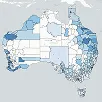

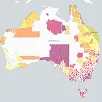


The total adult population (15 years or older) of Richlands 4077 QLD is 4,339, with a median age of 28. Of those, 39.43% are married, 11.94% are divorced or separated, 46.92% are single and 1.64% are widowed.
The average household size is 2.7 people per dwelling, and the median household monthly income is estimated to be $7,024. The median monthly mortgage repayment for households in this suburb is $1,517 which is 21.60% of their earnings.
Source: ABS Census Data (2021)
Hi Matt,
I currently hold 4 bedder townhouse and investment property in Richlands, It is still a good place to hold longer vs selling at profit as the investment has grown almost 50% since 2021
cheers
sugumar
Hi Sugumar,
Thanks for the comment / question. This question is very individual specific and answering it would require me to understand your financial circumstance, your long term goals and desires and as such is traversing into the domain of financial advice which we are not licensed to provide.
If I was to analyze the areas itself on the basis of information provided above, a couple of negatives I would like to point out are:
1. Medium confidence data;
2. High unaffordability
3. High renter to owner ratio
Thank you Matt for your reply
I certainly understand, I have been talking to the leasing agents and the REA agents to get a clearer picture and there seen to be 5 complex of town houses in the same suburbs build by Azure which are saturated with investors and those houses are selling to new owner occupiers at the moment.
HTAG has opened my eyes wide.. as investor and buyers agent.Thank you so much
I will keep monitoring the suburb for now