
Rocklea, QLD 4106

Good to know:
Rocklea, located in Queensland with the postcode 4106, is an industrial suburb approximately 9 kilometres south of Brisbane's CBD. Known for its bustling market scene, the Brisbane Markets, it becomes a hive of activity, especially on weekends with fresh produce and flea markets. The suburb has a mix of residential and commercial properties, with a rich history dating back to early European settlement. Floods have historically impacted Rocklea due to its proximity to the Brisbane River. Public transport is well-serviced, including Rocklea railway station. It's a place balancing industrial activity with pockets of community life.
Read More
Rocklea QLD 4106 houses: the Rocklea QLD 4106 property market shows typical house price $853,115, median rent $616 per week and a gross yield of 3.75%. This snapshot of Rocklea QLD 4106 property investment highlights tight sales supply (SoM 0.15%) and a low rental vacancy (0.6%) that support rental demand, while long-term affordability at ~41 years and a high renter-to-owner ratio (47%) temper owner-occupier depth. House prices in Rocklea are underpinned by an IRSAD of 972, a neutral level of new approvals and inventory, and medium data confidence — useful context for buyers agents and investors evaluating entry timing and strategy.
Property market outlook
Rocklea houses sit in a balanced-to-supportive cyclical position. Tight stock on market (0.15% SoM — classified opportune) and a vacancy rate of 0.6% (opportune) indicate constrained supply and healthy rental demand, which is typically supportive of both rental growth and price resilience. Yield at 3.75% clears a common minimum threshold (3%), but is not exceptionally high; it suits investors targeting lower-capital-growth, income-stable assets rather than high-yield plays. IRSAD 972 is in the opportune range and signals acceptable socio-economic fundamentals for capital growth potential. Counterweights: affordability at 41 years is very stretched — this limits the pool of prospective owner-occupiers and can slow owner-led price appreciation. Overall, expect steady rental performance with capital growth conditional on broader Brisbane market dynamics and affordability improvements.
Pros
- Tight sales supply (SoM 0.15%) — low for-sale stock supports price stability and limits downside from oversupply.
- Low vacancy (0.6%) — strong rental tightness that reduces landlord vacancy risk and can support rent growth.
- IRSAD 972 — above neutral, indicates reasonable socio-economic fundamentals for long-term capital retention.
- Yield 3.75% — above typical 3% hurdle, offering acceptable gross income for investors earmarked for core+ assets.
- Days on market (37 days) and hold period (9.62 years) are in neutral ranges — sales turn over at a pace that facilitates transactable market activity without extreme volatility.
Cons
- Affordability 41 years — materially above the 30-year threshold; high serviceability burdens constrain owner-occupier demand and broader buyer pool.
- Renter/Owner ratio 47% — unfavourable; a high tenant share can mean higher churn, regulatory exposure and increased landlord competition in some market cycles.
- Inventory 2.41 months — technically balanced but close to the lower bound; a small increase in supply or a fall in demand could change dynamics quickly.
- Building approvals ratio 0.35% (neutral) — limited new supply is currently neutral, but it also means there’s less fresh product to attract new owner-occupiers if demand rises.
- Data confidence: Medium — fewer monthly sales reduce precision; use caution when relying on short-term signals.
Investment strategies
- Core rental hold (3–7+ years): Rocklea’s low vacancy and acceptable yield suit a buy-and-hold income strategy. Target well-located houses with minor value-add potential to attract long-term tenants and modest rent escalation.
- Renovation-for-premium: Given the higher renter share and moderate yields, consider cosmetic upgrades that materially improve rent and tenant retention (kitchens, bathrooms, energy efficiency) rather than heavy subdivision plays.
- Owner-occupier arbitrage for repositioning: For investors prepared to hold longer term and able to withstand affordability drag, acquiring houses that could appeal to future owner-occupiers (improved presentation, single-storey family appeal) may capture stronger capital growth if local incomes or affordability recover.
- Avoid yield-only small-ticket unit plays: Units are a small portion of local stock (Unit/House ratio 12% neutral). If buying a unit, stress-test yields against potential management fees and vacancy spikes.
- Monitor near-term signals: Keep a watch on DoM, vacancy and inventory trends and any local approvals uptick. Medium confidence suggests pairing HTAG suburb signals with nearby comparables before committing.
Is Rocklea QLD 4106 a good suburb to invest in?
Yes — for investors prioritising rental income stability and limited downside from oversupply, Rocklea QLD 4106 houses offer attractive characteristics: very low stock on market and sub‑1% vacancy are supportive of steady tenancy and rent retention, and IRSAD sits in an opportune band for capital preservation. However, high affordability years (41) and an unfavourable renter-to-owner mix (47%) mean capital growth may be constrained and owner-occupier demand thinner than in more affordable or higher-IRSAD suburbs. Rocklea is suitable for investors focused on reliable rental returns and medium-term hold periods, but less suited to those seeking rapid capital gains driven by owner-occupier demand. Buyers agents should compare Rocklea directly with neighbouring suburbs to assess relative growth prospects and to validate valuations given the medium confidence rating.
About HtAG Analytics Data
Base metrics reported here (per dwelling type unless noted) include Typical Price, Median Rent (weekly), Gross Rental Yield, Sales and Rentals counts, Δ Change periods (1M/1Q/1Y/3Y), Capital Growth and CG Low/High estimates (pa), Total RoI (Yield + CG), Rent Increase (pa), Volatility Index, Confidence score, Stock on Market (SoM and SoM%), Inventory / Months of Supply, Building Approvals & BA Ratio, Hold Period, Days on Market, Discounting, Vacancy Rate and Vacancies, Buy & Rent Search Index, Auction Clearance Rates, IRSAD, Renter/Owner ratio, Unit/House ratio, Affordability (Years to Own), Estimated Dwellings and Population. There are additional advanced metrics on HTAG dashboards — the list above is the core set used in suburb-level comparative analysis.
HtAG’s methodological approach is designed to capture both current market conditions and historical trend signals to enable relative analysis at or near the point of purchase. In a suburb context like Rocklea QLD 4106 this means metrics are calibrated to identify local supply tightness, rental pressure and affordability constraints rather than only publishing broad macro indicators. Other providers often rely on public data feeds to describe state-wide or media-centric trends; HTAG’s metrics are curated and adjusted to support transactional decision-making and fine-grained market comparisons.
Finally, note that the snapshot above describes current value metrics for Rocklea houses but does not replace trend analysis — metric direction and weightings matter. Some indicators (for example vacancy, SoM and affordability) will have greater immediate influence than others depending on strategy and timeframe. Different investors, budgets and borrowing profiles will select different suburbs; HTAG’s tools are built to shortlist and rank markets against bespoke criteria rather than apply one-size-fits-all conclusions. For serious investors and buyers agents, perform a relative analysis of multiple nearby locations to align Rocklea’s profile with your specific return, risk and hold-period requirements.
Updated: 1 May 2026
Read Less
Quick Area Stats

Dwellings

Population

EDI

Bushfire Risk Index

Flood Risk Index
Education & Infrastructure
Sign Up to Access

School Rank

Infra. Spend
Market Trends
Essential metrics effectively streamline the process of identifying markets that match your financial situation and investment objectives. Typical Price, Indicative Yield and Total ROI provide a swift means to shortlist areas that resonate with what you’re seeking and can afford. These metrics also serve as valuable general trend indicators, allowing you to visualise transaction volumes and dynamics of change.
1M
1Q
1Y
3Y
5Y
7Y
10Y
1M
1Q
1Y
3Y
5Y
7Y
10Y

1M
1Q
1Y
3Y
5Y
7Y
10Y
The Growth Rate Cycle (GRC) is a metric used to analyse the year-on-year change in property values, providing insights into the growth cycle of a particular area. It uses the “typical price” metric to gauge property values more accurately than median prices, and includes both actual and projected data for the current year.

Fundamental metrics play a vital role in providing a comprehensive analysis of the socio-economic environment within a specific suburb or region. Additionally, the Return on Investment (ROI) and Volatility Index are crucial metrics that aid in evaluating the prospective profitability and the level of risk or stability in the market.
Socio-economics
Sign Up to Access

IRSAD

Renter to Owner

Units to Houses
Projections
Sign Up to Access

Projected Annual ROI

Volatility Index
Quick Area Stats
Sign Up to Access

Annual Sales Volume

Annual Rentals Volume



Stock on Market

Building Approvals

Inventory

Hold Period




Supply metrics are crucial in gauging both the existing volumes of real estate listed for sale and the properties anticipated to enter the market soon. A diminished supply could signal opportunities for price appreciation, particularly when there’s corresponding buyer demand to buoy the market. The Stock on Market and Inventory level metrics (current values) are presented as a 3-month rolling average of monthly data shown in the charts. This means the last 3 months of data are averaged. The BA Ratio represents the proportion of building approvals over the latest 12 months relative to the total dwellings in the area.

Days on Market

Search Index

Vacancy Rate

Clearance Rate




Demand metrics underscore the level of interest that potential property buyers or tenants have in a specific suburb or locality. When demand outstrips the available supply, or if the supply fails to meet the intensity of buyer/renter interest, there’s a potential for prices to climb, underscoring the pivotal relationship between demand dynamics and property value trends. The Days on Market and Clearance Rate metrics (current values) are presented as a 3-month rolling average of monthly data shown in the charts. This means the last 3 months of data are averaged.
We invite you to contribute to the conversation by sharing your thoughts or raising questions about this market in the comment section below.
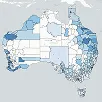

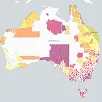


The total adult population (15 years or older) of Rocklea 4106 QLD is 1,413, with a median age of 34. Of those, 30.36% are married, 14.86% are divorced or separated, 49.68% are single and 5.10% are widowed.
The average household size is 2.3 people per dwelling, and the median household monthly income is estimated to be $8,268. The median monthly mortgage repayment for households in this suburb is $1,635 which is 19.78% of their earnings.
Source: ABS Census Data (2021)