
Noosa North Shore, QLD 4565

Good to know:
Noosa North Shore, located in Queensland with the postcode 4565, is a tranquil coastal suburb known for its pristine natural beauty and relaxed atmosphere. Situated across the Noosa River from Noosaville and Tewantin, it is accessible by a short ferry ride. The area boasts expansive sandy beaches, including the famous Teewah Beach, and is a gateway to the Great Sandy National Park. It's popular for outdoor activities like camping, fishing, and four-wheel driving. The suburb provides a peaceful escape with limited commercial development, making it a favourite among nature lovers and those seeking a serene getaway.
Read More
Noosa North Shore QLD 4565 shows a high-value, low-rental market profile: Typical price $1,749,271, median rent $0 and yield 0.0% — a property market where conventional rental returns are effectively absent and affordability is extreme. Noosa North Shore QLD 4565 property investment looks like a lifestyle/wealth-storage market (high IRSAD 1035, low renter share 15.0%, low units/houses mix 5.0%) rather than a yield play; house prices in Noosa North Shore are high but the market exhibits elevated inventory (12.0 months) and a high building approvals ratio (3.59%), which raises medium-term supply risk. Confidence in the data is Low, so on-the-ground verification is essential.
Property market outlook
Noosa North Shore QLD 4565 combines high price points (Typical price $1,749,271) with near-zero recorded rental activity (Median rent $0; Yield 0.0%), indicating either very limited long-term rental stock, predominance of owner-occupied and holiday homes, or insufficient rental transaction data. Socio-economic indicators are supportive for capital preservation: IRSAD 1035 is opportune, renter/owner ratio 15.0% and UH ratio 5.0% both sit in “opportune” ranges, implying tightly held houses and owner concentration. However, supply-side signals are concerning: Inventory at 12.0 months is well above the balanced range and Building Approvals Ratio 3.59% signals a meaningful pipeline of new dwellings — both translate into unfavourable supply pressure for price growth unless absorption accelerates. Stock on Market (0.61%) and Days on Market (51) are neutral, while Vacancy Rate (2.08%) is in the balanced band, suggesting current rental demand is steady but not strong. Low Confidence of the dataset reduces the reliability of these snapshots; monitor actual sales volumes and rental listings before committing capital.
Pros
- High socio-economic score: IRSAD 1035 supports price resilience for prestige housing.
- Owner-heavy market: Renter/Owner 15.0% and UH ratio 5.0% indicate tightly held houses and low unit competition.
- Low DOM (relative to distressed markets): 51 days is neutral rather than slow selling.
- Vacancy is balanced: 2.08% suggests there is not an immediate oversupply of rentals.
- Price calibre: Typical price ~$1.75m suits investors seeking capital preservation or lifestyle assets rather than yield.
Cons
- No rental yield: Median rent $0 and Yield 0.0% (below the 3% recommended threshold) mean the suburb is unsuitable for cashflow-dependent investors.
- Extreme affordability pressure: Affordability index 96 years (>>30 years threshold) demonstrates ownership is largely out of reach for typical buyers, limiting broad demand.
- Elevated available supply: Inventory 12.0 months is unfavourable and indicates sellers may struggle to achieve quick sales without price concessions.
- Future supply risk: Building Approvals Ratio 3.59% signals additional dwellings that could weight on prices.
- Low data confidence: sparse sales/rental data makes valuation and yield estimates unreliable without local due diligence.
Investment strategies
- Capital-preservation / lifestyle buy: Best-suited for high-net-worth buyers seeking a large, low-turnover asset where lifestyle and long-term capital appreciation are the primary objectives rather than rental income.
- Owner-occupier + occasional short-stay: If permitted, short-stay (holiday let) economics may be stronger than long-term rents — validate STR occupancy, nightly rates, local regulations and any body-corp/permit restrictions. HTAG rental metrics do not capture short-stay performance.
- Development-opportunistic: The elevated Building Approvals Ratio suggests development activity; consider acquisition strategies that target redevelopment or subdivision potential, but perform planning, servicing and timing due diligence — future supply could erode margins if absorption is weak.
- Off-market / negotiated purchases: Given low transaction volumes and a tightly held owner base, off-market channels can uncover opportunities without exacerbating market competition.
- Avoid for yield-focused investors: Do not chase this suburb if you require >3% gross yield from the asset — current metrics make cashflow unlikely without alternative revenue strategies.
Is Noosa North Shore QLD 4565 a good suburb to invest in?
It depends on strategy. Noosa North Shore QLD 4565 is not well suited to investors who require rental yield or short holding periods: Yield 0.0% and an affordability index of 96 years make cashflow and mass-market capital growth prospects weak. Conversely, for wealthy owner-occupiers, portfolio diversifiers or developers able to execute a specific value-add plan and tolerate low liquidity, the suburb can function as a prestige/lifestyle holding with defensive socio-economic attributes (IRSAD 1035) and a low unit mix. Low Confidence of the data is a material caveat — verify transaction counts, recent sales, holiday-lease performance and local approvals before action. For most investors seeking balanced returns (capital growth + cashflow), comparable nearby markets with stronger rental yields and lower inventory will offer more attractive risk-adjusted profiles.
About HtAG Analytics Data
Base metrics reported (selected subset): Typical Price, Median Rent, Sales, Rentals, Δ Change (periodic change), Yield (Gross Rental Yield), Capital Growth (annualised estimate + low/high bands), Total RoI (Yield + Capital Growth), Rent Increase (projected pa), Volatility Index (MAPE-based), Confidence (data reliability), Relative Composite Score. There are more metrics available (supply/demand breakdowns, BA Ratio, Inventory/SoM, Vacancy, DoRM, Hold Period, Buy/Rent Search Index, IRSAD, RO Ratio, UH Ratio, School Rank, population and infrastructure proxies) — the above list is the core set shown in this summary.
HtAG’s methodology is designed to capture both current market conditions and relevant historical trends to enable comparative, point-of-purchase analysis. Applied to Noosa North Shore QLD 4565, our metrics emphasise suburb-level nuances (e.g. very low rental activity, high approvals and long affordability horizons) rather than only broad headline trends. This differs from some public-data providers that focus on high-level national or state narratives; HTAG metrics aim to identify localised conditions that matter to buyers and agents evaluating a specific suburb.
Note on interpretation and next steps: the snapshot above reports current value metrics for Noosa North Shore but does not replace trend analysis — metric trajectories (rising approvals, changing vacancy, sales velocity) can materially change investment prospects. Some metrics carry more weight depending on strategy (yield vs capital growth vs development), and optimal market selection varies by budget, borrowing capacity, risk appetite and exit timeframe. HTAG excels at shortlisting and ranking suburbs against those individual criteria rather than one-size-fits-all recommendations; for Noosa North Shore QLD 4565 we strongly advise detailed relative analysis against adjacent coastal and regional alternatives and verification of on-the-ground rental and sales activity given the Low Confidence rating.
Updated: 1 May 2026
Read Less
Quick Area Stats

Dwellings

Population

EDI

Bushfire Risk Index

Flood Risk Index
Education & Infrastructure
Sign Up to Access

School Rank

Infra. Spend
Market Trends
Essential metrics effectively streamline the process of identifying markets that match your financial situation and investment objectives. Typical Price, Indicative Yield and Total ROI provide a swift means to shortlist areas that resonate with what you’re seeking and can afford. These metrics also serve as valuable general trend indicators, allowing you to visualise transaction volumes and dynamics of change.
1M
1Q
1Y
3Y
5Y
7Y
10Y
1M
1Q
1Y
3Y
5Y
7Y
10Y

1M
1Q
1Y
3Y
5Y
7Y
10Y
The Growth Rate Cycle (GRC) is a metric used to analyse the year-on-year change in property values, providing insights into the growth cycle of a particular area. It uses the “typical price” metric to gauge property values more accurately than median prices, and includes both actual and projected data for the current year.

Fundamental metrics play a vital role in providing a comprehensive analysis of the socio-economic environment within a specific suburb or region. Additionally, the Return on Investment (ROI) and Volatility Index are crucial metrics that aid in evaluating the prospective profitability and the level of risk or stability in the market.
Socio-economics
Sign Up to Access

IRSAD

Renter to Owner

Units to Houses
Projections
Sign Up to Access

Projected Annual ROI

Volatility Index
Quick Area Stats
Sign Up to Access

Annual Sales Volume

Annual Rentals Volume



Stock on Market

Building Approvals

Inventory

Hold Period




Supply metrics are crucial in gauging both the existing volumes of real estate listed for sale and the properties anticipated to enter the market soon. A diminished supply could signal opportunities for price appreciation, particularly when there’s corresponding buyer demand to buoy the market. The Stock on Market and Inventory level metrics (current values) are presented as a 3-month rolling average of monthly data shown in the charts. This means the last 3 months of data are averaged. The BA Ratio represents the proportion of building approvals over the latest 12 months relative to the total dwellings in the area.

Days on Market

Search Index

Vacancy Rate

Clearance Rate




Demand metrics underscore the level of interest that potential property buyers or tenants have in a specific suburb or locality. When demand outstrips the available supply, or if the supply fails to meet the intensity of buyer/renter interest, there’s a potential for prices to climb, underscoring the pivotal relationship between demand dynamics and property value trends. The Days on Market and Clearance Rate metrics (current values) are presented as a 3-month rolling average of monthly data shown in the charts. This means the last 3 months of data are averaged.
We invite you to contribute to the conversation by sharing your thoughts or raising questions about this market in the comment section below.
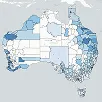

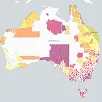


The total adult population (15 years or older) of Noosa North Shore 4565 QLD is 224, with a median age of 55. Of those, 57.14% are married, 15.62% are divorced or separated, 25.00% are single and 6.25% are widowed.
The average household size is 2.1 people per dwelling, and the median household monthly income is estimated to be $7,124. The median monthly mortgage repayment for households in this suburb is $2,200 which is 30.88% of their earnings.
Source: ABS Census Data (2021)