
North Ipswich, QLD 4305

Good to know:
North Ipswich, QLD 4305, is a suburb within the City of Ipswich, located approximately 40 kilometres southwest of Brisbane. Renowned for its heritage charm, North Ipswich is home to a blend of historical and contemporary properties. The suburb features the Riverlink Shopping Centre, offering a variety of retail and dining options. Outdoor enthusiasts can enjoy the nearby parks and recreational facilities, including the popular Bob Gamble Park. Good transport links make commuting straightforward. The suburb is also in proximity to educational institutions, catering to families and individuals alike.
Read More
North Ipswich QLD 4305 houses: the suburb’s property market shows clear demand-side strength and tight supply against a backdrop of stretched affordability. Typical price for houses is $816,895, median rent is $540pw and gross yield sits at 3.44% — above a 3% practical floor — indicating reasonable cashflow for a metro-adjacent Queensland market. Key indicators: low stock on market (0.32%) and inventory (1.71 months) are supportive of house prices in North Ipswich; very low vacancy (0.68%) underpins rental security; however an affordability estimate of 42 years and an IRSAD of 923 (slightly below the recommended 927 threshold) are notable constraints for owner-occupier demand and longer-term price expansion.
Property market outlook
North Ipswich house prices are trading in a market characterised by constrained supply and strong rental demand. Low SoM% (0.32%), low inventory (1.71 months) and a BA ratio of 0.04% point to little immediate uplift in established stock or new supply — conditions that usually favour price resilience or upside if broader demand returns. Days on market at 18 days and a vacancy rate of 0.68% signal tight rental markets, supporting rent growth potential and reducing downside rental risk for investors. Offsetting this, the suburb’s IRSAD (923) is marginally below the neutral threshold and affordability at ~42 years is materially elevated, limiting the pool of local owner-occupiers and potentially tempering capital growth speed relative to higher socio-economic pockets.
Pros
- Tight supply dynamics: SoM% (0.32%) and inventory (1.71 months) are in the opportune range, which supports price stability and reduces time-to-sale risk for vendors.
- Strong rental fundamentals: vacancy 0.68% and DoM (rental) profile support rent security and potential rent growth.
- Reasonable yield: 3.44% gross yield exceeds a common 3% cashflow benchmark for Australian investors.
- Low unit share: UH ratio 3.0% suggests the stock is overwhelmingly houses — favourable if you prefer house-based, lower-density markets.
- Low development pressure: BA ratio 0.04% suggests limited near-term new supply which can protect capital values.
- Quick selling: DOM 18 days indicates efficient liquidity when properties are correctly priced.
- Data confidence: High confidence in the underlying sample improves reliability of signals.
Cons
- Stretched affordability: Years to own ~42 years is materially above the 30-year reference, constraining owner-occupier demand and potentially capping buyer depth.
- Slightly lower socioeconomic score: IRSAD 923 sits below the neutral threshold and below many higher-growth suburbs — this can correlate with slower long-term capital appreciation.
- Moderate renter/owner mix: RO ratio 31% is neutral; if it drifts higher it could increase rental concentration risk.
- Clearance rate reported as 0.0% (treated neutral in HTAG) and Buy Search Index = 4 (state-average), which suggests buyer interest is steady but not exuberant.
- Yield is adequate but not high; this market is less likely to deliver outsized immediate cashflow compared to higher-yield regional pockets.
Investment strategies
- Core long-term buy-and-hold — houses: Given tight supply, low vacancy and acceptable yield, North Ipswich houses suit investors aiming for steady rental income and capital growth over a multi-year horizon. Accept that price appreciation may be moderate and dependent on broader SE QLD housing cycles.
- Value-add and repositioning: With modest typical prices, consider selective renovations (kitchen, bathrooms, energy efficiency) to enhance rental return and revalue a property in a market where rent growth is supported by low vacancy.
- Use buyers-agent / off-market sourcing: Low SoM and quick DOM mean good stock is often snapped up; specialist sourcing can access non-listed opportunities or motivated vendors.
- Conservative gearing and hold periods: Given affordability headwinds, plan for longer hold periods (7–10+ years) to ride cycles and avoid forced selling during rate shocks; ensure serviceability buffers.
- Small-lot or subdivide only with caution: Low BA ratio suggests limited approvals, but also that council-led densification is not currently a driver; any development plays should be validated against local planning and infrastructure constraints.
- Comparative shortlist: Use North Ipswich as part of a relative shortlist across Ipswich and outer Brisbane corridors — compare yields, vacancy and IRSAD to select properties aligned with desired risk/return and timeframes.
Is North Ipswich QLD 4305 a good suburb to invest in?
North Ipswich QLD 4305 can be a sound investment for disciplined, long-term investors focused on rental security and moderate capital growth. The market’s tight supply, low vacancy and reasonable yield make it attractive for buy-and-hold house investors seeking lower turnover and consistent rents. That said, socio-economic indicators and very high affordability years point to constraints on owner-occupier demand, which can temper upward price momentum versus higher-SES suburbs. If your strategy prioritises stable cashflow, low vacancy risk and the ability to wait out cycles, it’s a reasonable choice; if you require rapid capital appreciation or short-term flips, this market is less aligned.
About HtAG Analytics Data
Base metrics commonly used in HTAG suburb reporting (sample, not exhaustive): Typical Price; Median Rent; Sales and Rentals (monthly counts); Delta Change (1M/1Q/1Y/3Y); Yield (gross); Capital Growth (CG) with low/high bands; Total RoI; Rent Increase (forecast); Volatility Index (MAPE-based); Confidence (data accuracy); Relative Composite Score™.
Selected metric ranges you’ll see in HTAG summaries (representative):
- IRSAD: Unfavourable <920; Neutral 920–950; Opportune >950.
- RO Ratio (renters to owners): Unfavourable >45%; Neutral 15–45%; Opportune <15%.
- UH Ratio (units proportion): Unfavourable >50%; Neutral 10–50%; Opportune <10%.
- Years to Own (affordability): >30 years indicates stretched affordability risk.
- SoM%: Low supply <0.4%; Balanced 0.4–1.3%; High supply >1.3%.
- Inventory (months): Low supply <2.1; Balanced 2.1–4.5; High supply >4.5.
- Days on Market: High demand 0–35 days; Balanced 35–90; Low demand >90.
- Vacancy Rate: High demand <1%; Balanced 1–3.5%; Low demand >3.5%.
(There are more metrics and nuanced ranges available on HTAG dashboards.)
Methodology note — HTAG in suburb context
HtAG metrics are built to capture both current market conditions in a suburb and historical trends so users can perform relative market analysis as close as possible to the point of purchase. Where other providers often surface public macro datasets to illustrate broad state or national trends, HTAG focuses on fine-grained, suburb-level signals and measurement nuances — the same metric names may be used across vendors, but HTAG’s curation, cleaning and localised measurement are designed to support transactional and shortlist decisions at suburb level.
Context and limitations
The snapshot above highlights current value metrics for North Ipswich houses but does not substitute for trend analysis — metric trajectories (rising or falling vacancy, improving IRSAD proxy signals, shifting inventory) can materially change an investment case. Some metrics matter more than others depending on strategy (e.g., vacancy and yield for cashflow investors; IRSAD and years-to-own for growth-focused buyers). Market selection varies by budget, leverage capacity, risk appetite and intended hold/exit timing; HTAG excels at producing targeted shortlists by matching investor criteria rather than offering one-size-fits-all rankings. For serious acquisition decisions, use HTAG comparative analysis across a set of suburbs that map to your financial and timing constraints.
Updated: 1 Jun 2026
Read Less
Quick Area Stats

Dwellings

Population

EDI

Bushfire Risk Index

Flood Risk Index
Education & Infrastructure
Sign Up to Access

School Rank

Infra. Spend
Market Trends
Essential metrics effectively streamline the process of identifying markets that match your financial situation and investment objectives. Typical Price, Indicative Yield and Total ROI provide a swift means to shortlist areas that resonate with what you’re seeking and can afford. These metrics also serve as valuable general trend indicators, allowing you to visualise transaction volumes and dynamics of change.
1M
1Q
1Y
3Y
5Y
7Y
10Y
1M
1Q
1Y
3Y
5Y
7Y
10Y

1M
1Q
1Y
3Y
5Y
7Y
10Y
The Growth Rate Cycle (GRC) is a metric used to analyse the year-on-year change in property values, providing insights into the growth cycle of a particular area. It uses the “typical price” metric to gauge property values more accurately than median prices, and includes both actual and projected data for the current year.

Fundamental metrics play a vital role in providing a comprehensive analysis of the socio-economic environment within a specific suburb or region. Additionally, the Return on Investment (ROI) and Volatility Index are crucial metrics that aid in evaluating the prospective profitability and the level of risk or stability in the market.
Socio-economics
Sign Up to Access

IRSAD

Renter to Owner

Units to Houses
Projections
Sign Up to Access

Projected Annual ROI

Volatility Index
Quick Area Stats
Sign Up to Access

Annual Sales Volume

Annual Rentals Volume



Stock on Market

Building Approvals

Inventory

Hold Period




Supply metrics are crucial in gauging both the existing volumes of real estate listed for sale and the properties anticipated to enter the market soon. A diminished supply could signal opportunities for price appreciation, particularly when there’s corresponding buyer demand to buoy the market. The Stock on Market and Inventory level metrics (current values) are presented as a 3-month rolling average of monthly data shown in the charts. This means the last 3 months of data are averaged. The BA Ratio represents the proportion of building approvals over the latest 12 months relative to the total dwellings in the area.

Days on Market

Search Index

Vacancy Rate

Clearance Rate




Demand metrics underscore the level of interest that potential property buyers or tenants have in a specific suburb or locality. When demand outstrips the available supply, or if the supply fails to meet the intensity of buyer/renter interest, there’s a potential for prices to climb, underscoring the pivotal relationship between demand dynamics and property value trends. The Days on Market and Clearance Rate metrics (current values) are presented as a 3-month rolling average of monthly data shown in the charts. This means the last 3 months of data are averaged.
We invite you to contribute to the conversation by sharing your thoughts or raising questions about this market in the comment section below.
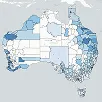

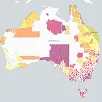


The total adult population (15 years or older) of North Ipswich 4305 QLD is 3,708, with a median age of 38. Of those, 35.38% are married, 15.99% are divorced or separated, 42.50% are single and 5.93% are widowed.
The average household size is 2.4 people per dwelling, and the median household monthly income is estimated to be $7,372. The median monthly mortgage repayment for households in this suburb is $1,300 which is 17.63% of their earnings.
Source: ABS Census Data (2021)
Building approvals number shown in here – is that the building approvals in the past 18 months? what’s the timeline ?
Hi Vijaya,
BA Ratio is the proportion of newly approved residential buildings over the past 12 months relative to total dwellings in the area.
FYI you can find definitions and explanations of all metrics in 3 different ways:
1. Roll your mouse over the data card to see hover text with the description
2. Ask our AI assistant
3. Visit our data dictionary: https://www.htag.com.au/htag-data-dictionary/