
Mount Gambier, SA 5290

Good to know:
Mount Gambier, located in South Australia with the postcode 5290, is a vibrant regional city known for its geological wonders and natural beauty. The town is famed for the Blue Lake, a vivid crater lake that changes colour seasonally. Visitors and residents alike appreciate the picturesque landscapes, including the Umpherston Sinkhole and the surrounding limestone caves. Mount Gambier offers a strong sense of community, with ample amenities like schools, shopping centres, and healthcare facilities. The city has a rich cultural scene, with annual events such as the Generations in Jazz festival contributing to its lively atmosphere.
Read More
Mount Gambier SA 5290 houses: the property market shows a typical price of $555,218, median rent of $460 pw and a gross yield of 4.31%. Mount Gambier SA 5290 property investment currently combines tight listed supply and reasonable rental return with weaker socio-economic indicators and stretched affordability — important trade-offs for investors and buyers agents evaluating house prices in Mount Gambier.
Property market outlook
Supply-side dynamics are supportive of price stability and potential uplift for houses. Stock on Market is 0.23% (low supply) and Inventory is 1.42 months (opportune), indicating established houses are tightly held and listings are scarce. Days on Market at 33 days is in the high-demand band for regional markets, so vendors face shorter marketing windows and discounts are likely minimal. Building approvals ratio at 0.41% is neutral — there is some new supply but not at a level that will materially swell stock in the near term. Hold period of 8.67 years sits in the neutral range, suggesting turnover is average rather than highly speculative or extremely long-term.
Demand and rental fundamentals are mixed. Vacancy rate of 1.14% is effectively balanced (neutral) — rentals are occupyable without acute shortages, helping maintain tenant choice while still supporting rents. Median rent of $460 pw and yield of 4.31% are attractive for regional house investors, with yield above the 3% minimum often used as a rule-of-thumb. Buy search interest at index 3 is neutral and auction clearance reported as 0% (neutral for this market type). Confidence in the data is High.
Key structural headwinds are a relatively low IRSAD (902) and affordability pressure: IRSAD is below the acceptable threshold used by HTAG and flags weaker socio-economic outcomes versus higher-scoring suburbs, which can suppress premium capital growth over long horizons. The affordability estimate of 35 years to own (above the 30-year threshold) confirms local affordability is stretched and may limit the pool of local owner-occupier buyers that traditionally underpin capital gains.
Pros
- Yield above 4% (4.31%) provides solid gross income potential for buy-and-hold investors in houses.
- Very low Stock on Market (0.23%) and Inventory (1.42 months) reduce downside from oversupply and support price resilience.
- Short Days on Market (33) indicates active buyer appetite and limited negotiation room for deep vendor discounts.
- High data confidence gives investors and buyers agents reliable base-line inputs for decision-making.
Cons
- IRSAD 902 is below HTAG’s recommended range, indicating socio-economic constraints that can limit premium capital growth and demand from higher-income buyers.
- Affordability at 35 years is high; prolonged buying timelines reduce entry-level purchaser demand and can depress owner-occupier driven growth.
- Vacancy (1.14%) is neutral — not tight enough to drive rapid rent escalation, but not so high as to signal tenant oversupply; rental growth may be modest.
- Building Approvals Ratio is neutral rather than restrictive — while not alarming, it does not provide a clear supply-driven growth tailwind.
Investment strategies
- Income-first, regional yield play: Acquire houses with yield around or above 4% to generate positive cashflow from day one. Prioritise low-maintenance stock (good structural condition) to reduce vacancy risk in a balanced rental market.
- Target tightly held sub-segments: Given low SoM and short hold periods, focus on pockets with older stock or owner-occupied streets where supply renewal is limited — these micro-markets tend to outperform the broader suburb when supply shocks occur.
- Value-add renovations that improve rental return: With moderate rental pressure, targeted improvements that lift rent (kitchen/bathroom upgrades, outdoor amenity) can improve yield and make properties more attractive to tenants without relying on strong capital growth.
- Stagger acquisitions and monitor approvals: Given neutral BA Ratio, watch ABS approvals and local pipeline for any uptick that could change supply balance. Phased buying reduces exposure to a sudden local supply surge.
- Long-hold or blended strategy: Lower IRSAD and affordability point to slower capital appreciation. Combine rental yield objectives with a longer holding period to capture gradual growth while collecting income.
- Use data-backed negotiation: Low DOM and tight listed stock reduce vendor negotiation leverage. Use HTAG metrics to justify offer pricing where micro oversupply exists (e.g., particular precincts with higher SoM).
Is Mount Gambier SA 5290 a good suburb to invest in?
Mount Gambier SA 5290 can be a good suburb to invest in for income-oriented investors who prioritise yield and low listed supply over fast capital appreciation. The house market shows logical fundamentals for buy-and-hold investors: typical price $555,218, median rent $460 pw and a gross yield of 4.31% is attractive for regional exposure. However, lower IRSAD (902) and long estimated years to own (35 years) signal weaker socio-economic strength and stretched affordability, which are headwinds for outsized capital growth. If your strategy emphasises steady rental income, conservative leverage and a multi-year hold horizon, Mount Gambier houses are worth consideration; if you require rapid capital gains or premium-area demographic tailwinds, this market is less favourable.
About HtAG Analytics Data
HtAG reports a base set of metrics per dwelling type to support suburb-level decisions. Key metrics include Typical Price, Median Rent, Sales and Rentals counts, Δ Change (short and long-term change percentages), Gross Rental Yield, Capital Growth (annualised estimate with low/high bounds), Total RoI (Yield + Capital Growth), Rent Increase (projected pa), Volatility Index (MAPE-based), Confidence (data reliability), and the Relative Composite Score™. There are additional advanced metrics available on HTAG dashboards (IRSAD, RO Ratio, UH Ratio, Years to Own, Growth Rate Cycle, Stock on Market, Inventory, Building Approvals Ratio, Hold Period, Days on Market, Discounting, Vacancy Rate, Buy & Rent Search Index, Auction Clearance Rates, population and school rank), but the list above covers the core set used for initial shortlisting.
The guiding principle behind HTAG metrics is to capture both current market conditions and historical trends so our outputs serve relative market analysis close to the point of purchase. In practice this means HTAG measures variables differently from some public data providers: while firms such as SQM supply broadly focused public datasets that inform national and media narratives, HTAG’s measurements are curated and modelled to compare suburbs against each other for transaction-level decision-making. Similar metric names do not imply identical calculation methods — HTAG applies distinct curation and modelling nuances to better reflect local market behaviour like the Mount Gambier house market.
Note that the market snapshot above reports current value metrics for Mount Gambier houses but does not show metric trends, which can materially change an investment case. Some metrics carry more weight depending on strategy and timeframe; affordability and IRSAD are more critical for growth-focused buyers, while yield and vacancy matter most for income strategies. Different investors will select different suburbs depending on budget, borrowing capacity, risk appetite and expected hold or refinance horizons. HTAG excels at shortlisting markets and precincts tailored to individual investment criteria rather than offering one-size-fits-all recommendations. For buyers agents and serious investors, performing relative analysis across comparable suburbs and precincts aligned to your objectives is the next step.
Updated: 1 May 2026
Read Less
Quick Area Stats

Dwellings

Population

EDI

Bushfire Risk Index

Flood Risk Index
Education & Infrastructure
Sign Up to Access

School Rank

Infra. Spend
Market Trends
Essential metrics effectively streamline the process of identifying markets that match your financial situation and investment objectives. Typical Price, Indicative Yield and Total ROI provide a swift means to shortlist areas that resonate with what you’re seeking and can afford. These metrics also serve as valuable general trend indicators, allowing you to visualise transaction volumes and dynamics of change.
1M
1Q
1Y
3Y
5Y
7Y
10Y
1M
1Q
1Y
3Y
5Y
7Y
10Y

1M
1Q
1Y
3Y
5Y
7Y
10Y
The Growth Rate Cycle (GRC) is a metric used to analyse the year-on-year change in property values, providing insights into the growth cycle of a particular area. It uses the “typical price” metric to gauge property values more accurately than median prices, and includes both actual and projected data for the current year.

Fundamental metrics play a vital role in providing a comprehensive analysis of the socio-economic environment within a specific suburb or region. Additionally, the Return on Investment (ROI) and Volatility Index are crucial metrics that aid in evaluating the prospective profitability and the level of risk or stability in the market.
Socio-economics
Sign Up to Access

IRSAD

Renter to Owner

Units to Houses
Projections
Sign Up to Access

Projected Annual ROI

Volatility Index
Quick Area Stats
Sign Up to Access

Annual Sales Volume

Annual Rentals Volume



Stock on Market

Building Approvals

Inventory

Hold Period




Supply metrics are crucial in gauging both the existing volumes of real estate listed for sale and the properties anticipated to enter the market soon. A diminished supply could signal opportunities for price appreciation, particularly when there’s corresponding buyer demand to buoy the market. The Stock on Market and Inventory level metrics (current values) are presented as a 3-month rolling average of monthly data shown in the charts. This means the last 3 months of data are averaged. The BA Ratio represents the proportion of building approvals over the latest 12 months relative to the total dwellings in the area.

Days on Market

Search Index

Vacancy Rate

Clearance Rate




Demand metrics underscore the level of interest that potential property buyers or tenants have in a specific suburb or locality. When demand outstrips the available supply, or if the supply fails to meet the intensity of buyer/renter interest, there’s a potential for prices to climb, underscoring the pivotal relationship between demand dynamics and property value trends. The Days on Market and Clearance Rate metrics (current values) are presented as a 3-month rolling average of monthly data shown in the charts. This means the last 3 months of data are averaged.
We invite you to contribute to the conversation by sharing your thoughts or raising questions about this market in the comment section below.
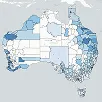

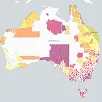


The total adult population (15 years or older) of Mount Gambier 5290 SA is 21,015, with a median age of 41. Of those, 42.42% are married, 14.63% are divorced or separated, 35.77% are single and 7.20% are widowed.
The average household size is 2.2 people per dwelling, and the median household monthly income is estimated to be $6,564. The median monthly mortgage repayment for households in this suburb is $1,083 which is 16.50% of their earnings.
Source: ABS Census Data (2021)
Mount Gambier, SA 5290 seems to be a great area to invest in if you are looking for a property with solid cash flow and capital growth potential.
Even though the gross yield seems to be on the lower side at the moment (4.73%), the disparity in growth between rents and typical values of homes suggests that there is more steam left for growth in the yield domain. This is in line with our projected annual rent increase of 3.34%.
On the other hand, the data shows that the growth in typical values will outpace the growth in rents in the coming years. With a Capital Growth RCS score of 59 and an Overall RCS score of 79, I believe that the projection of 12% annual capital gain is more likely than the lower options. This is also evident when comparing the typical value expressed in thousands to the median rent which are only narrowly separated, $404K to $368W respectively.
Tip: usually narrow difference between these two figures signifies outpacing of capital growth to yield growth.
With a much lower risk score to other areas with a higher gross rental yield, my research indicates that Mount Gambier, SA 5290 would represent a solid addition to a balanced property portfolio or one embracing a cash flow strategy while considering levels of risk.
WHY:
With a Relative Composite Score (RCS) of:
1. 85 / 100 for risk;
2. 95 / 100 for cashflow;
4. 84 / 100 score for overall.
The low-risk component, which is represented by the higher risk score number (85), makes Mount Gambier, SA 5290 an appealing area to invest in and in comparison, to other high yield areas. Given that high yield areas are usually accompanied with a high-risk component, a risk score of 85 and a cash flow score of 95 is a perfect indication of balance between cashflow and risk which is usually very difficult to source.
Other important metrics to consider:
Fundamentals
ISRAD score: 1 — the ISRAD metric highlights the socio-economic standards of the area in question. For Mount Gambier, SA 5290, the score is 1 which represents unfavourable conditions. However, considering that the area has experienced 74% growth in its typical value in the last decade—meaning that the property values have nearly doubled—having an ISRAD score of 1 appears to be an insignificant correlation to price growth.
R|O Ratio: 33% — this relatively balanced score in the renter to owner occupier ratio is suggestible restricted supply of properties for sale. Properties that are rented are usually investment properties which sometimes have a higher probability of sale. Owner occupied properties are on average held for longer which therefore restricts the supply of available properties for sale. This excludes the probability of distressed sales, which are usually a negligible statistic.
This suggests that at times of positive macroeconomic conditions and lower interest rates, demand levels would usually outpace supply levels which is suggestible of an upward pressure on pricing.
U|H Ratio: 10% — this rather opportunistic figure in the unit to house ratio supplements the previous comment that suggests Mount Gambier has a large population of owner occupiers that hold onto their homes for longer which can have a positive effect on price growth due to the imbalance between supply and demand.
The flow on effect is usually exemplified as such:
Higher proportion of houses = higher proportion of owner-occupied properties which = restricted supply of properties which = price growth (should demand and building approvals remain the same)
Supply Metrics
SoM%: 0.14% (18 listings) — this is an opportunistic number and suggests reduced levels of stock are present on the market therefore restricting the supply levels. Not only has there been a substantial reduction in listings from March (23) to April (18) which in percentage terms is nearly a 25% reduction, but the long-term trend of SoM% has been reducing since 2020. If demand remains constant, this primes the area for more price growth.
Inventory: 0.49 — akin to Som%, this figure is also opportunistic. The graph above highlights a slow decline of stock available on market. The downward trend is akin to SoM% downward trend.
Hold Periods: 9.43 years — this is a relatively balanced number which suggests continued downward pressure on the supply of houses when assessed in combination with other supply metrics. Most importantly, the constant rise in the hold period years since 2008 provide a favourable trend and one that is in line with previous statements regarding favourable R|O Ratio and U|H Ratio.
Building Approvals Ratio: 0.46% — this relatively balanced metric which however is on the verge of becoming opportunistic (refer to). This indicates that the introduction of new properties to the market is not exuberant and as such one that would dramatically affect the levels of supply so that it has an inverse effect on price. Assessing BA in conjunction with SoM% and Inventory levels suggest a market with restricted supply of properties. Restricted supply = price growth if demand is stable or increasing.
Demand Metrics
DoM: 34 — this is an opportunistic figure and one that indicates an increasing demand. Most importantly, the DoM trend has seen a dramatic reduction since 2020. This means that Mount Gambier is an area with reducing supply and increasing demand—a perfect combination for price growth. This is why the ISRAD score of 1 should not play too much of a role in deciding the investment potential of the area which is also exemplified in the Rick RCS of 85.
Vacancy Rate: 1.07%. This is a balanced figure that if nested with DoM highlights a market that has an upward pressure on demand. Renting out an investment property should not be a problem in Mount Gambier. More importantly, when forecasting for vacancy and associated costs, investors would be ok by allowing for 2 weeks of vacancy per year.
Buy Search Index: 4—relatively balanced. This suggest that things are as per usually with respect to search interest which when assessed in combination with other metrics is favourable.
Overall, in my view, this makes Mount Gambier a hidden gem. We have a low-risk environment combined with restricted supply metrics and increasing demand metrics. This suggests that the area is poised for both yield and capital growth upward pressure.
Great area to invest in 2023 for those looking to spend sub 500k typical price for property and implementing a cashflow strategy.
For a cheat sheet which highlights what are unfavourable, balanced and opportunistic statistics, refer to our Data Dictionary. Click here if you would like to compare Mount Gambier to another suburb in the LGA.