
Kingston Beach, TAS 7050

Good to know:
Kingston Beach, located in Tasmania with the postcode 7050, is a picturesque suburb nestled along the Derwent River. Known for its beautiful sandy beach, it offers a serene coastal lifestyle with stunning river and mountain views. The area features a variety of cafes, restaurants, and shops, providing residents with essential amenities and dining options. Popular for its relaxed atmosphere and friendly community, Kingston Beach is ideal for families, retirees, and anyone seeking tranquillity close to nature. Outdoor activities such as swimming, kayaking, and bushwalking are common, making it a vibrant yet peaceful coastal suburb.
Read More
Kingston Beach TAS 7050 houses have a Typical Price of $1,096,456, a rolling-year median rent of $601pw and a gross yield of 2.85% — this Kingston Beach TAS 7050 property market shows high price points with low rental returns. The data signals a high-SES coastal market: IRSAD is 1048 (opportune), stock on market at 0.26% is tight, and vacancy is low at 0.75% (supportive of rental demand), while affordability sits at an extreme 52 years (very low affordability for buyers). Confidence in these metrics is Medium.
Property market outlook
Kingston Beach house prices are being underpinned by tight for-sale stock (SoM 0.26% — low supply) and constrained new supply (BA Ratio 0.0% — effectively no immediate approvals), while vacancy at 0.75% indicates a landlord-friendly rental environment. Demand signals are mixed-to-healthy: Days on Market of 39 is within a balanced range and Buy Search Index of 4 is around state average, so transactions continue at a moderate pace rather than frenzied activity. The market profile is wealthy and lifestyle-driven (IRSAD 1048), which supports capital resilience, but the affordability metric (52 years) is a structural constraint that narrows the owner-occupier and first-home buyer pool. Low gross yield (2.85%) makes Kingston Beach houses unattractive for strict yield-based strategies but consistent supply scarcity and strong socioeconomic indicators favour long-term capital growth for well-capitalised investors.
Pros
- Tight sales supply: SoM 0.26% (opportune) reduces downside risk from increased listings.
- Low upcoming supply: Building Approvals Ratio 0.0% suggests limited new housing inflow in the near term.
- Rental market tightness: Vacancy 0.75% (opportune) implies low rental voids and support for rent increases over time.
- High socioeconomic status: IRSAD 1048 (opportune) correlates with household wealth and tends to support long-run price retention and premium pricing.
- Balanced transaction velocity: DOM 39 days is within a normal selling rhythm — market liquidity exists without excessive volatility.
Cons
- Very low rental yield: 2.85% is below the commonly-cited 3% threshold — poor cash-on-cash returns for buy-to-let investors.
- Extreme affordability pressure: 52 years to own indicates prices are well ahead of local incomes, increasing sensitivity to rates and constraining future demand from typical mortgage buyers.
- Neutral inventory: 2.7 months is balanced, so while supply is tight on a percentage basis, there’s still a reasonable pipeline of available options.
- Renter/Owner mix neutral (25%) and Units/Houses ratio neutral (19%) — limited ability to pivot to higher-yielding unit stock inside the suburb if required.
- Data confidence Medium — sample sizes are not strong, so short-term metric shifts should be monitored.
Investment strategies
- Capital-growth focused buy-and-hold (preferred): Target quality houses in core locations given scarcity of stock and high IRSAD. Expect low immediate yield; structure acquisitions for long hold periods (7–15+ years) to capture capital appreciation and compounding.
- Owner-occupier investors or lifestyle buyers with investment overlay: Kingston Beach suits buyers who value capital stability and amenity; consider purchasing with an owner-occupier exit plan to mitigate low rental yield.
- Value-add where possible: Seek properties with scope for modest renovation or subdivision feasibility (subject to approvals) to improve value capture rather than relying on rental yield.
- Selective short-stay opportunism: Given the beach-side location and low vacancy, investigate regulated short-stay demand if local rules permit — this can improve revenue but requires active management and compliance checks.
- Yield enhancement tactics if required: If yield is critical, consider acquiring units or nearby suburbs with higher yields, or structure financing to offset tighter yields (interest-rate sensitivity and servicing must be stress-tested).
- Negotiation and off-market sourcing: Low public listing volumes mean off-market deals and buyer-agent sourcing can provide competitive advantage and better pricing than auction-driven competition.
Is Kingston Beach TAS 7050 a good suburb to invest in?
Yes — for capital-growth and lifestyle-oriented investors with sufficient equity and a long time horizon. The suburb’s high IRSAD, tight sales stock and low vacancy create a supportive backdrop for price appreciation and low rental voids. No — for yield-focused or highly leveraged investors seeking strong immediate cashflow; 2.85% gross yield and extreme affordability pressure (52 years) make it structurally challenging for pure yield plays. Consider your strategy and time horizon: Kingston Beach rewards patience, low trading frequency and access to capital more than short-term yield optimisation.
About HtAG Analytics Data
HtAG’s base metrics reported per dwelling type typically include Typical Price, Median Rent, Sales, Rentals, % Change over multiple lookbacks, Gross Rental Yield, Capital Growth estimates (annualised with low/high bands), Total RoI, Rent Increase projections, Volatility Index, Confidence, Relative Composite Score™, plus supply and demand indicators such as Stock on Market (SoM / SoM%), Inventory (months), Building Approvals and BA Ratio, Hold Period, Days on Market, Discounting, Vacancy Rate, Vacancies, Days on Rental Market, Buy & Rent Search Index, Auction Clearance Rates, and contextual fields (Population, Estimated Dwellings, School Rank, non-residential approvals per capita, distance to CBD). There are additional advanced metrics and time-series analytics available beyond this base set.
The guiding principle behind HtAG metrics is to capture both current market conditions and historical trends to enable relative market analysis that is as close as possible to the point of purchase. Applied to Kingston Beach TAS 7050, our metrics combine observed current dynamics (very low SoM, low vacancy) with trend-aware measures (typical price vs historical channels) so buyers can assess how the suburb compares to alternatives. Unlike some providers who primarily surface public macro-data for broad narratives, HtAG designs metrics and curation methods specifically to inform granular, suburb-level decisions for investors and buyer agents.
It’s important to recognise the snapshot above describes current value metrics for Kingston Beach houses but does not replace trend analysis: metric trajectories (rising or falling affordability, shifting vacancy, sales velocity changes) materially affect strategy. Some metrics carry more weight than others depending on investor goals — e.g., yield is decisive for cash-flow investors, IRSAD and supply dynamics more important for capital-growth investors. Different investor profiles and borrowing capacities will point to different suburbs even within the same region; HtAG’s shortlisting tools are designed to filter and rank markets against those individual criteria rather than offer one-size-fits-all recommendations. For serious allocations, perform relative analysis across a set of comparable suburbs aligned to your budget, risk tolerance and exit timeframe.
Updated: 1 Jun 2026
Read Less
Quick Area Stats

Dwellings

Population

EDI

Bushfire Risk Index

Flood Risk Index
Education & Infrastructure
Sign Up to Access

School Rank

Infra. Spend
Market Trends
Essential metrics effectively streamline the process of identifying markets that match your financial situation and investment objectives. Typical Price, Indicative Yield and Total ROI provide a swift means to shortlist areas that resonate with what you’re seeking and can afford. These metrics also serve as valuable general trend indicators, allowing you to visualise transaction volumes and dynamics of change.
1M
1Q
1Y
3Y
5Y
7Y
10Y
1M
1Q
1Y
3Y
5Y
7Y
10Y

1M
1Q
1Y
3Y
5Y
7Y
10Y
The Growth Rate Cycle (GRC) is a metric used to analyse the year-on-year change in property values, providing insights into the growth cycle of a particular area. It uses the “typical price” metric to gauge property values more accurately than median prices, and includes both actual and projected data for the current year.

Fundamental metrics play a vital role in providing a comprehensive analysis of the socio-economic environment within a specific suburb or region. Additionally, the Return on Investment (ROI) and Volatility Index are crucial metrics that aid in evaluating the prospective profitability and the level of risk or stability in the market.
Socio-economics
Sign Up to Access

IRSAD

Renter to Owner

Units to Houses
Projections
Sign Up to Access

Projected Annual ROI

Volatility Index
Quick Area Stats
Sign Up to Access

Annual Sales Volume

Annual Rentals Volume



Stock on Market

Building Approvals

Inventory

Hold Period




Supply metrics are crucial in gauging both the existing volumes of real estate listed for sale and the properties anticipated to enter the market soon. A diminished supply could signal opportunities for price appreciation, particularly when there’s corresponding buyer demand to buoy the market. The Stock on Market and Inventory level metrics (current values) are presented as a 3-month rolling average of monthly data shown in the charts. This means the last 3 months of data are averaged. The BA Ratio represents the proportion of building approvals over the latest 12 months relative to the total dwellings in the area.

Days on Market

Search Index

Vacancy Rate

Clearance Rate




Demand metrics underscore the level of interest that potential property buyers or tenants have in a specific suburb or locality. When demand outstrips the available supply, or if the supply fails to meet the intensity of buyer/renter interest, there’s a potential for prices to climb, underscoring the pivotal relationship between demand dynamics and property value trends. The Days on Market and Clearance Rate metrics (current values) are presented as a 3-month rolling average of monthly data shown in the charts. This means the last 3 months of data are averaged.
We invite you to contribute to the conversation by sharing your thoughts or raising questions about this market in the comment section below.
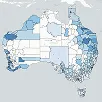

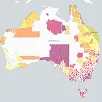


The total adult population (15 years or older) of Kingston Beach 7050 TAS is 1,995, with a median age of 47. Of those, 47.62% are married, 12.93% are divorced or separated, 32.68% are single and 6.52% are widowed.
The average household size is 2.3 people per dwelling, and the median household monthly income is estimated to be $7,960. The median monthly mortgage repayment for households in this suburb is $1,577 which is 19.81% of their earnings.
Source: ABS Census Data (2021)