
Invermay, TAS 7248

Good to know:
Invermay, TAS 7248, is a vibrant suburb located just north of Launceston's city centre. Known for its rich industrial history and close-knit community, Invermay boasts a mix of residential, commercial, and light industrial areas. The suburb is home to the iconic UTAS Stadium, where various sports and events are held, and the Queen Victoria Museum and Art Gallery, a cultural treasure trove. With good public transport links, schools, parks, and local shops, Invermay offers a convenient and dynamic lifestyle, blending urban amenities with a touch of historical charm.
Read More
Invermay TAS 7248 shows a compact, rental-oriented house market with a typical house price of $539,793, median rent of $481/week and a gross yield of 4.63%. This Invermay TAS 7248 property market snapshot highlights tight supply (SoM 0.2%, inventory 1.27 months), strong rental demand (vacancy 0.9%) and short days on market (34 days), while socio‑economic and affordability indicators are weaker (IRSAD 888 and an affordability estimate of 36 years). For investors assessing Invermay property investment, the data points to reliable rental cashflow and constrained listing volumes that support price stability, but also flags elevated renter prevalence (Renter/Owner 51%) and below‑threshold IRSAD that may temper long‑term capital growth expectations.
Property market outlook
Invermay houses: supply-side conditions are supportive. Low stock on market (0.2% SoM) and an inventory of 1.27 months indicate tightly held stock and a shortage of available houses for sale. Days on market at 34 days sits just within the high-demand band and is consistent with a market that absorbs listings quickly. Rental market dynamics are similarly tight — vacancy at 0.9% is below the 1% threshold and implies limited vacancy risk and good tenant demand; combined with a 4.63% gross yield this supports income-focused investment strategies.
Downside pressure on longer-term capital appreciation comes from socio-economic and affordability metrics. IRSAD of 888 is below the neutral threshold (920–950) and flags relative socio-economic disadvantage compared with higher-scoring suburbs; affordability at 36 years (above the 30-year reference) suggests owner-occupier participation is stretched and may reduce buyer depth if rates rise. The Renter/Owner ratio of 51% is unfavourable by HTAG thresholds and indicates a market dominated by renters, which supports rental demand but can imply higher tenant turnover and different management considerations.
Pros
- Solid gross yield (4.63%) — above common minimum guidance and attractive for income-oriented investors.
- Very tight seller market: SoM 0.2% and inventory 1.27 months suggest supply constraints that tend to support price resilience.
- Rental fundamentals favourable: vacancy 0.9% implies low rental downtime and good letting prospects.
- Market liquidity: Days on market of 34 days indicates listings are moving at a reasonable clip, helping exit options for owners.
- Data confidence is High — sample sizes and transaction coverage are adequate for reliable interpretation.
Cons
- IRSAD 888 is below the neutral/opportune range, signalling socioeconomic headwinds that can cap long-term capital growth relative to higher-SES suburbs.
- Renter/Owner ratio 51% is unfavourable — heavy renter share can raise management intensity and influence tenant-driven market dynamics.
- Affordability pressures (36 years to own) exceed the 30-year threshold, making the buyer pool more sensitive to interest-rate shifts and credit availability.
- Building approvals ratio (0.36%) is neutral — some supply uplift is possible but not enough to materially change supply tightness in the near term.
- Clearance rate reported at 0.0% is neutral and may reflect atypical auction activity rather than demand weakness; interpret with local auction prevalence in mind.
Investment strategies
- Income-first buy-and-hold: With a 4.63% yield and sub‑1% vacancy, Invermay houses are suitable for investors targeting stable rental cashflow. Prioritise well-maintained 2–3 bedroom houses that appeal to longer-term tenants to reduce turnover costs.
- Value-add renovations to improve rent and tenant quality: modest upgrades (kitchen/bathroom, energy efficiency) can increase rental appeal and protect against socio-economic drag by attracting higher-quality tenants and potentially owner-occupiers.
- Conservative gearing and stress-testing: given affordability of ~36 years and a high renter share, stress-test scenarios for rising interest rates and periods of reduced buyer demand; avoid aggressive leverage.
- Target owner-occupier appeal pockets: look for houses closest to employment nodes, retail centres or transport links (micro-location matters). Converting tenant-favourable listings into owner-occupier interest over time can help capture capital upside if SES and demand improve.
- Short supply arbitrage: low SoM and inventory give sellers negotiating edge; buyers should be prepared with pre-approvals and targeted offers. For investors seeking deals, focus on off-market opportunities or properties needing light refurbishment where margins exist.
- Portfolio role: treat Invermay houses as a mid-to-long-term income asset in a diversified portfolio. If primary objective is strong capital growth, combine with higher-IRSAD markets in the same state or region.
Is Invermay TAS 7248 a good suburb to invest in?
It depends on your objectives. For investors prioritising rental income and low vacancy risk, Invermay TAS 7248 houses offer an attractive proposition: yields above 4.5% and vacancy under 1% support cashflow reliability. The tightly constrained for-sale inventory also supports price stability. However, for investors seeking high capital growth, the suburb has mixed signals — IRSAD 888 and a high renter share suggest socio-economic constraints that can limit long-run appreciation versus higher‑SES markets. If your strategy blends income with moderate capital growth and you apply prudent leverage and active asset management, Invermay is a viable investment. If you require strong capital appreciation as a primary goal, complement Invermay selections with markets scoring higher on IRSAD and owner-occupier participation.
About HtAG Analytics Data
Base metrics reported (per dwelling type where applicable) include: Typical Price, Median Rent, Sales, Rentals, % Change over multiple periods, Gross Rental Yield, Capital Growth (annualised forecast and low/high range), Total RoI (Yield + Capital Growth), Rent Increase (annual forecast), Volatility Index, Confidence, and a Relative Composite Score™. Fundamental context metrics often used: IRSAD (socio-economic index), Renter/Owner ratio, Unit/House ratio and UHV ratio (units only), Years to Own (affordability), Growth Rate Cycle (GRC). Supply metrics include Stock on Market (SoM & SoM%), Inventory (months of supply), Building Approvals & BA Ratio, and Hold Period. Demand metrics include Days on Market, Discounting, Vacancy Rate, Vacancies, DoRM, Buy & Rent Search Index and Auction Clearance Rates. There are further advanced metrics (population, estimated dwellings, school rank, non-residential approvals per capita, annual sales volume, distance to CBD) beyond this base set.
HtAG’s methodology is designed to capture both current market signals and historical trend behaviour to enable relative, purchase‑level market comparisons. In practice that means our metrics focus on conditions relevant to the point of purchase and holding period rather than only broad public-facing indicators. While some providers publish similar metric names, HTAG’s data curation and measurement choices introduce distinct nuances intended to make comparisons between suburbs more actionable for investors and buyers agents.
Finally, the snapshot above shows current value metrics but does not replace trend analysis: metric trajectories, the relative weighting of different indicators and individual investor constraints (budget, borrowing capacity, timeframes, risk appetite) all change market selection. HTAG excels at shortlisting and comparing suburbs against bespoke criteria rather than offering one-size-fits-all rankings. For serious investors and property professionals, perform relative analysis across a shortlist of locations that match your strategy and time horizon.
Updated: 1 May 2026
Read Less
Quick Area Stats

Dwellings

Population

EDI

Bushfire Risk Index

Flood Risk Index
Education & Infrastructure
Sign Up to Access

School Rank

Infra. Spend
Market Trends
Essential metrics effectively streamline the process of identifying markets that match your financial situation and investment objectives. Typical Price, Indicative Yield and Total ROI provide a swift means to shortlist areas that resonate with what you’re seeking and can afford. These metrics also serve as valuable general trend indicators, allowing you to visualise transaction volumes and dynamics of change.
1M
1Q
1Y
3Y
5Y
7Y
10Y
1M
1Q
1Y
3Y
5Y
7Y
10Y

1M
1Q
1Y
3Y
5Y
7Y
10Y
The Growth Rate Cycle (GRC) is a metric used to analyse the year-on-year change in property values, providing insights into the growth cycle of a particular area. It uses the “typical price” metric to gauge property values more accurately than median prices, and includes both actual and projected data for the current year.

Fundamental metrics play a vital role in providing a comprehensive analysis of the socio-economic environment within a specific suburb or region. Additionally, the Return on Investment (ROI) and Volatility Index are crucial metrics that aid in evaluating the prospective profitability and the level of risk or stability in the market.
Socio-economics
Sign Up to Access

IRSAD

Renter to Owner

Units to Houses
Projections
Sign Up to Access

Projected Annual ROI

Volatility Index
Quick Area Stats
Sign Up to Access

Annual Sales Volume

Annual Rentals Volume



Stock on Market

Building Approvals

Inventory

Hold Period




Supply metrics are crucial in gauging both the existing volumes of real estate listed for sale and the properties anticipated to enter the market soon. A diminished supply could signal opportunities for price appreciation, particularly when there’s corresponding buyer demand to buoy the market. The Stock on Market and Inventory level metrics (current values) are presented as a 3-month rolling average of monthly data shown in the charts. This means the last 3 months of data are averaged. The BA Ratio represents the proportion of building approvals over the latest 12 months relative to the total dwellings in the area.

Days on Market

Search Index

Vacancy Rate

Clearance Rate




Demand metrics underscore the level of interest that potential property buyers or tenants have in a specific suburb or locality. When demand outstrips the available supply, or if the supply fails to meet the intensity of buyer/renter interest, there’s a potential for prices to climb, underscoring the pivotal relationship between demand dynamics and property value trends. The Days on Market and Clearance Rate metrics (current values) are presented as a 3-month rolling average of monthly data shown in the charts. This means the last 3 months of data are averaged.
We invite you to contribute to the conversation by sharing your thoughts or raising questions about this market in the comment section below.
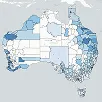

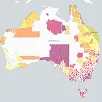


The total adult population (15 years or older) of Invermay 7248 TAS is 3,027, with a median age of 33. Of those, 26.33% are married, 15.49% are divorced or separated, 54.25% are single and 3.96% are widowed.
The average household size is 2.2 people per dwelling, and the median household monthly income is estimated to be $5,964. The median monthly mortgage repayment for households in this suburb is $1,092 which is 18.31% of their earnings.
Source: ABS Census Data (2021)