
Carlton, VIC 3053

Good to know:
Carlton, VIC 3053, is a vibrant inner-city suburb located just 2 km north of Melbourne's Central Business District. Known for its rich cultural heritage, it is the epicentre of Melbourne's Italian community, famously celebrated along Lygon Street, which is lined with authentic Italian restaurants, cafes, and gelaterias. The suburb boasts a mix of beautiful Victorian terraces and modern apartments. Key attractions include the University of Melbourne, the historic Royal Exhibition Building, and the picturesque Carlton Gardens. It's a lively area that attracts students, professionals, and families, offering a blend of academic, cultural, and recreational activities.
Read More
Carlton VIC 3053 houses property market summary: Typical house price $1,449,975, median rent $1,003/week and a gross yield of 3.6%. This snapshot of Carlton VIC 3053 property market data shows a high-value inner‑city house market with rental income that clears the common 3% yield threshold, tight for‑sale stock and sub‑1% rental vacancy — all signals relevant to both yield and capital growth-focused investors.
Property market outlook
House prices in Carlton remain anchored by inner‑city proximity, major tertiary institutions and amenity. Typical price at ~$1.45m places Carlton in the premium bracket; IRSAD 1008 (opportune) indicates above‑average socio‑economic advantage which supports long‑term pricing power. Supply-side signals are supportive of price retention: Stock on Market 0.13% (opportune/tight), Hold Period 13.65 years (favourable — tightly held stock) and Building Approvals Ratio 0.06% (opportune — limited new supply). Rental fundamentals are robust: median rent $1,003pw with vacancy 0.97% (opportune/tight) and a 3.6% gross yield that sits above common institutional minimums.
On the demand side there are mixed signals. Days on Market 43 is neutral (not urgent selling pressure), Buy Search Index 3 is around state average (neutral), while Auction Clearance Rate 42.86% is soft (unfavourable), indicating weaker auction outcomes and possible buyer caution for vendors. Affordability is a material constraint — the affordability estimate of 69 years (very high) shows houses at this price point are well beyond typical buyer capacity without substantial income or equity, which narrows the owner‑occupier pool and shapes the market toward investors and high‑income households.
Pros
- Tight for-sale stock: Stock on Market 0.13% and long hold period (13.65 years) reduce available established supply — supportive of future price resilience.
- Strong socio‑economic profile: IRSAD 1008 suggests durable demand from higher‑income households and predictable amenity‑driven capital support.
- Rental shortage: Vacancy 0.97% indicates a tight rental market, which supports occupancy levels and reduces downside rent risk.
- Yield acceptable for inner‑city: 3.6% gross yield exceeds conventional 3% benchmarks for premium suburbs, providing a modest cashflow buffer.
- High confidence in data: Confidence flagged as High enhances trust in the observed metrics for decision-making.
Cons
- High renter share: Renter/Owner ratio 72% (unfavourable) implies a transient, investor‑driven tenancy base (students, short‑term professionals) which can increase management turnover and episodic rent volatility.
- Very high UH ratio: Units/Houses ratio 87% (unfavourable) indicates the suburb’s housing stock is heavily weighted to units; for house buyers this can limit peer comparators and affect liquidity dynamics.
- Severe affordability constraint: 69 years to own signals the market is out of reach for average buyers — this compresses owner‑occupier demand and may make capital growth more reliant on relative scarcity and amenity than broad market participation.
- Soft auction performance: Clearance Rate 42.86% (unfavourable) points to subdued buyer competition in auction channels — potential for price negotiation and longer vendor campaigns.
- Neutral sales tempo: Days on Market 43 and Inventory 3.07 months are neither strongly bullish nor bearish; they suggest a market that can be sensitive to broader economic shifts.
Investment strategies
- Target high‑quality, cashflow‑positive houses: Given the typical house price and 3.6% yield, underwrite purchases assuming limited capital growth upside relative to lower‑priced suburbs and focus on property selection that minimises vacancy risk (proximity to transport, uni campuses, hospital precincts).
- Shortlist properties with insulation against tenant churn: High renter share and tenant turnover suggest prioritising multi‑bedroom layouts, robust finishes, and flexible leases (student vs professional) to reduce voids and maintain net yield.
- Consider value‑add where permitted: Renovations that increase liveability or add a room can materially improve rent and appeal to longer‑term tenants, improving cashflow without relying solely on capital growth.
- Use negotiation strength when buying: Subdued auction clearances indicate buyers can achieve better-than-list prices; structure offers with conditional inspection/finance clauses prudently.
- Stress‑test financing and exit timing: High typical prices and poor affordability mean refinancing and sale timing matter. Model scenarios for rate rises and longer holding periods; Carlton benefits from scarcity but is not immune to cyclical demand shifts.
- Explore unit market alternatives for lower entry cost: The suburb’s high unit prevalence suggests more transactional liquidity and potentially lower entry points for investors seeking similar location benefits with smaller capital outlay — but apply unit‑specific metrics (UHV, strata costs) to avoid hidden margin compression.
- Active asset management: Given tenant composition, use proactive leasing, professional property management and periodic rental repricing to capture the tight rental market while minimising management overheads.
Is Carlton VIC 3053 a good suburb to invest in?
Carlton VIC 3053 can be a sound investment for specialist investors who value inner‑city scarcity, venue‑based demand (universities, hospitals, restaurants), and can accommodate high entry prices and management intensity. Strengths — tight for‑sale stock, low vacancy and above‑average socio‑economic profile — support both income stability and downside protection. However, the suburb’s very high affordability barrier (69 years), high renter share (72%) and dominance of units (87%) mean it’s less suited to investors expecting rapid owner‑occupier‑led capital appreciation or those reliant on strong leverage with short exit horizons. Strategically, Carlton works best for longer‑term, cashflow‑aware strategies and investors who can extract operational value (targeted refurbishments, tenancy optimisation) rather than purely speculative short‑term flips.
About HtAG Analytics Data
HtAG reports a base set of suburb metrics to support comparative market work: Typical Price, Median Rent, Sales and Rentals activity, % Change over multiple horizons, Gross Rental Yield, Capital Growth forecasts (CG with low/high bounds), Total RoI, Rent Increase projections, Volatility Index (MAPE‑based), Confidence (data reliability), and the Relative Composite Score™. Fundamental neighbourhood measures include IRSAD, Renter/Owner (RO) ratio, Unit/House (UH) ratio, Unit/House Value (UHV for units), Years to Own (affordability), and Growth Rate Cycle (GRC). Supply indicators cover Stock on Market (SoM and SoM%), Inventory (months), Building Approvals and BA Ratio, and Hold Period. Demand signals include Days on Market, Discounting, Vacancy Rate, Vacancies, DoRM, Buy & Rent Search Indices and Auction Clearance Rates. There are additional advanced metrics (population, estimated dwellings, school rank, infrastructure approvals per capita, annual sales volume, distance to CBD) not exhaustively listed here.
The guiding principle behind HtAG metrics is to capture both immediate market conditions and historical trends so markets can be compared relative to the point of purchase. In a suburb context such as Carlton VIC 3053 this means our metrics are tuned to reflect local supply scarcity, rental dynamics and buyer composition — not just headline public datasets. While other providers may focus on broad public data to track macro trends and narratives, HtAG emphasises measurements and curation designed to compare suburbs at transaction‑level granularity; metric names may look similar but our curation and calculation nuances are deliberately different.
It’s important to note this summary is a current snapshot of value metrics for Carlton VIC 3053 and does not replace trend analysis — metric trajectories (direction and volatility) can materially change investment outcomes. Some metrics deserve greater weighting depending on strategy (for example, vacancy and yield are paramount for cashflow investors; affordability and IRSAD matter more for long‑run capital growth). Different investors with different budgets, borrowing capacity, risk tolerances and timeframes will select different suburbs. HtAG excels at shortlisting markets against individual criteria rather than offering one‑size‑fits‑all recommendations; for serious investors and buyers agents we recommend relative analysis across a tailored set of comparable suburbs aligned to your investment objectives.
Updated: 1 May 2026
Read Less
Quick Area Stats

Dwellings

Population

EDI

Bushfire Risk Index

Flood Risk Index
Education & Infrastructure
Sign Up to Access

School Rank

Infra. Spend
Market Trends
Essential metrics effectively streamline the process of identifying markets that match your financial situation and investment objectives. Typical Price, Indicative Yield and Total ROI provide a swift means to shortlist areas that resonate with what you’re seeking and can afford. These metrics also serve as valuable general trend indicators, allowing you to visualise transaction volumes and dynamics of change.
1M
1Q
1Y
3Y
5Y
7Y
10Y
1M
1Q
1Y
3Y
5Y
7Y
10Y

1M
1Q
1Y
3Y
5Y
7Y
10Y
The Growth Rate Cycle (GRC) is a metric used to analyse the year-on-year change in property values, providing insights into the growth cycle of a particular area. It uses the “typical price” metric to gauge property values more accurately than median prices, and includes both actual and projected data for the current year.

Fundamental metrics play a vital role in providing a comprehensive analysis of the socio-economic environment within a specific suburb or region. Additionally, the Return on Investment (ROI) and Volatility Index are crucial metrics that aid in evaluating the prospective profitability and the level of risk or stability in the market.
Socio-economics
Sign Up to Access

IRSAD

Renter to Owner

Units to Houses
Projections
Sign Up to Access

Projected Annual ROI

Volatility Index
Quick Area Stats
Sign Up to Access

Annual Sales Volume

Annual Rentals Volume



Stock on Market

Building Approvals

Inventory

Hold Period




Supply metrics are crucial in gauging both the existing volumes of real estate listed for sale and the properties anticipated to enter the market soon. A diminished supply could signal opportunities for price appreciation, particularly when there’s corresponding buyer demand to buoy the market. The Stock on Market and Inventory level metrics (current values) are presented as a 3-month rolling average of monthly data shown in the charts. This means the last 3 months of data are averaged. The BA Ratio represents the proportion of building approvals over the latest 12 months relative to the total dwellings in the area.

Days on Market

Search Index

Vacancy Rate

Clearance Rate




Demand metrics underscore the level of interest that potential property buyers or tenants have in a specific suburb or locality. When demand outstrips the available supply, or if the supply fails to meet the intensity of buyer/renter interest, there’s a potential for prices to climb, underscoring the pivotal relationship between demand dynamics and property value trends. The Days on Market and Clearance Rate metrics (current values) are presented as a 3-month rolling average of monthly data shown in the charts. This means the last 3 months of data are averaged.
We invite you to contribute to the conversation by sharing your thoughts or raising questions about this market in the comment section below.
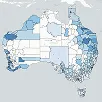

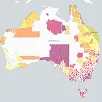


The total adult population (15 years or older) of Carlton 3053 VIC is 15,192, with a median age of 27. Of those, 16.69% are married, 6.96% are divorced or separated, 73.97% are single and 2.37% are widowed.
The average household size is 1.8 people per dwelling, and the median household monthly income is estimated to be $8,264. The median monthly mortgage repayment for households in this suburb is $1,898 which is 22.97% of their earnings.
Source: ABS Census Data (2021)