
Surf Beach, VIC 3922

Good to know:
Surf Beach is a picturesque coastal suburb located on Phillip Island in Victoria, bearing the postcode 3922. Renowned for its stunning beaches and surf-friendly waves, it attracts enthusiasts looking for a perfect blend of relaxation and adventure. The tranquil atmosphere and scenic views make it a popular spot for both residents and tourists. Nearby attractions include the iconic Phillip Island Grand Prix Circuit and the famous Penguin Parade. The community is small but welcoming, encompassing a mix of holiday homes and permanent residences, offering a serene escape from the hustle and bustle of city life.
Read More
Surf Beach VIC 3922 shows a typical house price of $806,668, a median weekly rent of $501 and a gross yield of 3.23% — this Surf Beach VIC 3922 property market snapshot indicates moderate rental return and an above-threshold yield. Surf Beach VIC 3922 property investment is characterised by high socio-economic relative advantage (IRSAD 1027), extremely low unit supply (UH ratio 1.0%) and tight ownership (average hold period 10.73 years), but affordability is stretched (46 years) and market movement is slow (DOM 135 days). For investors focused on house prices in Surf Beach, the picture is mixed: supply dynamics and demographic strength support capital growth, while affordability and marketing times temper liquidity and near-term demand.
Property market outlook
- Capital growth potential: Moderately positive. IRSAD 1027 (opportune) and a low UH ratio indicate an affluent, house-dominant suburb where long-run prices tend to outperform comparable lower-IRSAD locations. Low building approvals (BA ratio 0.0%) and a hold period >10 years reduce new and established supply — supportive for future price growth.
- Rental conditions: Stable. Median rent of $501pw and a 3.23% gross yield are acceptable for coastal/regional houses — yield is above the 3% guideline but not high. Vacancy at 1.61% sits in the balanced range, which supports steady rental income without acute vacancy risk.
- Liquidity and transaction pace: Caution. Days on market at 135 days is well above the balanced threshold and signals slower selling conditions. Stock on Market 0.46% and inventory 4.32 months are in the neutral band, so while supply isn’t excessive there is not a fast-moving market either. Clearance rate reported as 0% is neutral (likely reflecting few auctions).
- Affordability constraint: Material. Estimated 46 years to own is significantly above the 30-year threshold and is a strong headwind for organic buyer demand, particularly owner-occupiers and first-home buyers. That limits buyer pool elasticity and can cap near-term price acceleration.
Pros
- Strong socioeconomic profile (IRSAD 1027) supports price resilience and long-term capital growth compared with lower-scoring suburbs.
- Very low units-to-houses ratio (1.0%) and zero recent building approvals limit direct competition from higher-density supply — beneficial for detached house scarcity.
- Hold period of 10.73 years indicates tightly held stock; established sellers are uncommon, which reduces turnover and emergent supply.
- Yield (3.23%) exceeds a common minimum threshold of 3%, providing a baseline for buy-and-hold investors seeking rental income.
Cons
- Affordability is a significant negative: 46 years to own signals a price-to-income imbalance that constrains the domestic buyer pool and increases reliance on higher-income purchasers or investors.
- Slow market liquidity: 135 days on market suggests properties take considerably longer to sell than balanced markets; this raises exit risk and increases holding costs for short-term investors.
- Demand signals are muted: Buy Search Index at 5 is only average, and clearance rate reported at 0% (neutral) with long DOM point to subdued active buyer competition.
- Data confidence is Medium — transaction volume may be low, so metrics should be interpreted with care and cross-checked with neighbouring suburbs and recent sales.
Investment strategies
- Target long-term capital growth: Given affluent demographics, low new supply and long hold periods, Surf Beach is best suited to investors with a multi-year horizon (5+ years) who can tolerate slow transaction periods.
- Focus on houses (not units): The market is heavily house-dominant. Avoid unit-focused plays unless UHV and micro-location data justify a specific unit purchase.
- Cash-flow cushioning and conservative gearing: Moderate yield and potential extended sale periods recommend conservative loan-to-value and a cash buffer to cover longer holding costs if the property sits unsold for months.
- Renovation or value-add for liquidity: Where possible, reduce DOM and broaden buyer appeal via cosmetic or amenity upgrades (kitchens, wet areas, outdoor living). Improved presentation can shorten time to sale in a slow market.
- Monitor affordability and demand triggers: Act if affordability years compress (to under ~35 years), DOM falls materially, or vacancy tightens below 1% — those are signs of accelerating demand and improved liquidity.
- Comparative shortlist: Use Surf Beach as part of a relative analysis with neighbouring coastal towns and regional centres. HTAG’s metrics are designed to rank suburbs against peers to find the best entry points given your strategy and budget.
Is Surf Beach VIC 3922 a good suburb to invest in?
Yes — conditionally. Surf Beach VIC 3922 is appropriate for investors seeking long-term capital growth in a high socio-economic, house-dominant coastal market, provided they accept slower sales cycles and relative affordability constraints. The suburb’s strengths (high IRSAD, low new-supply signals, long hold periods) support price resilience, but stretched affordability (46 years) and long days on market (135) mean the suburb is less suitable for short-term flips, highly leveraged speculative plays, or investors who need quick liquidity. Best-suited profiles: buy-and-hold capital-growth investors, conservative landlords seeking stable rental income, and professionals using Surf Beach as part of a diversified coastal/residential portfolio.
About HtAG Analytics Data
Base metrics reported in HTAG suburb dashboards include: Typical Price, Median Rent, Sales and Rentals counts, Δ Change (periodic price/rent change), Gross Rental Yield, Capital Growth estimates (with low/high bounds), Total RoI (Yield + CG), Rent Increase projection, Volatility Index (MAPE-based), Confidence (data accuracy), and a Relative Composite Score™. Additional fundamental, supply and demand measures commonly provided are IRSAD, Renter/Owner Ratio, Unit/House Ratio, Unit-to-House Value ratio, Years to Own (affordability), Growth Rate Cycle (GRC), Stock on Market and SoM%, Inventory (months), Building Approvals & BA Ratio, Hold Period, Days on Market, Discounting, Vacancy Rate, Vacancies, DoRM, Buy & Rent Search Index and Auction Clearance Rates. Other contextual indicators include population, estimated dwellings, school rank, non-residential approvals per capita and annual sales volume. There are more specialised metrics available beyond this base set.
HTAG’s methodology aims to capture both current market conditions and historical trends to enable relative market analysis tailored to the point of purchase. In practice for Surf Beach VIC 3922, that means our metrics combine recent transactional behaviour with trend signals to assess local scarcity, demand pressure and pricing channel — not just headline public datasets. By comparison, some providers primarily surface public figures for broad trend reporting; HTAG focuses on producing suburb-level signals that are directly comparable across prospective purchase locations.
Finally, the snapshot above reports current value metrics for Surf Beach VIC 3922 but does not replace a trend-aware analysis. Metric trajectories (for example falling DOM, rising vacancy or shifts in affordability) can materially change the investment case, and different metrics carry different weight depending on investor goals. Market selection always varies by budget, borrowing capacity, risk appetite and holding timeframe — HTAG excels at shortlisting and ranking suburbs against individual criteria rather than offering one-size-fits-all recommendations. For serious investors and buyer-agents, run a relative analysis of candidate suburbs that align with your specific objectives before executing a purchase.
Updated: 1 Jun 2026
Read Less
Quick Area Stats

Dwellings

Population

EDI

Bushfire Risk Index

Flood Risk Index
Education & Infrastructure
Sign Up to Access

School Rank

Infra. Spend
Market Trends
Essential metrics effectively streamline the process of identifying markets that match your financial situation and investment objectives. Typical Price, Indicative Yield and Total ROI provide a swift means to shortlist areas that resonate with what you’re seeking and can afford. These metrics also serve as valuable general trend indicators, allowing you to visualise transaction volumes and dynamics of change.
1M
1Q
1Y
3Y
5Y
7Y
10Y
1M
1Q
1Y
3Y
5Y
7Y
10Y

1M
1Q
1Y
3Y
5Y
7Y
10Y
The Growth Rate Cycle (GRC) is a metric used to analyse the year-on-year change in property values, providing insights into the growth cycle of a particular area. It uses the “typical price” metric to gauge property values more accurately than median prices, and includes both actual and projected data for the current year.

Fundamental metrics play a vital role in providing a comprehensive analysis of the socio-economic environment within a specific suburb or region. Additionally, the Return on Investment (ROI) and Volatility Index are crucial metrics that aid in evaluating the prospective profitability and the level of risk or stability in the market.
Socio-economics
Sign Up to Access

IRSAD

Renter to Owner

Units to Houses
Projections
Sign Up to Access

Projected Annual ROI

Volatility Index
Quick Area Stats
Sign Up to Access

Annual Sales Volume

Annual Rentals Volume



Stock on Market

Building Approvals

Inventory

Hold Period




Supply metrics are crucial in gauging both the existing volumes of real estate listed for sale and the properties anticipated to enter the market soon. A diminished supply could signal opportunities for price appreciation, particularly when there’s corresponding buyer demand to buoy the market. The Stock on Market and Inventory level metrics (current values) are presented as a 3-month rolling average of monthly data shown in the charts. This means the last 3 months of data are averaged. The BA Ratio represents the proportion of building approvals over the latest 12 months relative to the total dwellings in the area.

Days on Market

Search Index

Vacancy Rate

Clearance Rate




Demand metrics underscore the level of interest that potential property buyers or tenants have in a specific suburb or locality. When demand outstrips the available supply, or if the supply fails to meet the intensity of buyer/renter interest, there’s a potential for prices to climb, underscoring the pivotal relationship between demand dynamics and property value trends. The Days on Market and Clearance Rate metrics (current values) are presented as a 3-month rolling average of monthly data shown in the charts. This means the last 3 months of data are averaged.
We invite you to contribute to the conversation by sharing your thoughts or raising questions about this market in the comment section below.
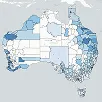

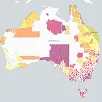


The total adult population (15 years or older) of Surf Beach 3922 VIC is 554, with a median age of 46. Of those, 47.83% are married, 14.98% are divorced or separated, 33.03% are single and 4.15% are widowed.
The average household size is 2.3 people per dwelling, and the median household monthly income is estimated to be $6,608. The median monthly mortgage repayment for households in this suburb is $1,433 which is 21.69% of their earnings.
Source: ABS Census Data (2021)