
Box Hill South, VIC 3128

Good to know:
Box Hill South is a residential suburb located 14 km east of Melbourne's CBD, in Victoria. Known for its leafy streets and family-friendly atmosphere, it offers a mix of post-war and modern homes. The suburb is well-serviced by public transport, with nearby Box Hill Station providing easy access to the city. It's home to several parks, including the popular Wattle Park, and boasts a range of educational institutions such as Box Hill High School. The Box Hill Golf Club is a local highlight, while the nearby Box Hill Central provides ample shopping and dining options.
Read More
Box Hill South VIC 3128 has a house-focused property market with a Typical Price of $1,492,444, median rent $689 per week and a gross yield of 2.4% (below the commonly referenced 3% minimum). The Box Hill South VIC 3128 property market combines tight listed supply and quick selling times with very low affordability (61 years) and weak auction clearance performance — a profile that suits capital-growth buyers with strong serviceability rather than yield-seeking investors. Data confidence is high.
Property market outlook
Box Hill South VIC 3128 house prices sit at a premium relative to broader Melbourne suburbs (Typical Price ~$1.49M) and the IRSAD of 1062 signals an affluent catchment supportive of long-run price resilience. Supply indicators are mixed: Stock on Market at 0.4% is classified as opportune (tight established stock), while Inventory at 2.21 months is essentially balanced but at the lower end. Days on Market of 34 days indicates brisk transaction velocity for houses. Demand signals are muddled — Vacancy at 1.72% is neutral (rental market neither stretched nor loose) and Buy Search Index of 5 is average, but auction Clearance Rate of 48.96% is unfavourable and implies weaker competitive bidding via auction channels. Yield is low at 2.4%, and the affordability metric of 61 years is an extreme outlier — this much reduced affordability constrains the pool of marginal buyer types and increases reliance on higher‑income owner-occupiers or investors with significant equity. Overall outlook: structurally supported for longer-term capital growth (affluent buyer base, tight listed stock) but weak for near-term rental income and susceptible to rate-driven affordability pressure.
Pros
- Low visible supply: SoM 0.4% (opportune) reduces immediate listing pressure and can support price stability.
- Affluent socioeconomic profile: IRSAD 1062 (opportune) is consistent with stronger long-term capital growth potential and buyer resilience for higher-priced houses.
- Faster sales: Days on Market ~34 days (opportune) suggests properties marketed competitively and transactions occurring quickly.
- Neutral vacancy and balanced inventory: Vacancy 1.72% and Inventory ~2.21 months indicate a functioning rental market without oversupply.
- High data confidence: reliability of the underlying metrics is good for analysis and comparisons.
Cons
- Very low yield: 2.4% gross is below the 3% benchmark and indicates weak rental return relative to purchase price — unattractive for income-focused investors.
- Extremely poor affordability: 61 years to own indicates prices are well beyond local income capacity; this amplifies downside risk should rate or sentiment shifts occur.
- Auction demand soft: Clearance Rate ~48.96% is unfavourable and can signal cooling buyer demand at the margin, especially for higher-priced listings.
- Limited growth buffer from new supply: BA Ratio ~0.96% is neutral but not sufficiently low to guarantee constrained future supply if approvals accelerate.
- Market segmentation risk: high prices mean the market is dependent on a narrower buyer cohort (affluent owner-occupiers), reducing liquidity in downturns.
Investment strategies
- Growth-focused buy-and-hold: Target long-term capital growth by buying established single houses in family-oriented pockets or near high-quality schools and amenity. Hold periods should be long (7+ years) given low yields and affordability constraints.
- Serviceability-first acquisition: Prioritise buyers with strong income/equity or conservative gearing. Stress-test loans for rate rises and reduced rental coverage because low yields increase reliance on owner servicing.
- Off‑market and negotiated deals: With very low visible supply and quick DOM, off‑market sourcing or vendor-direct negotiation can reduce competition and improve purchasing terms versus auction.
- Renovation / value-add selectivity: Small targeted capital improvements that increase appeal to owner-occupiers (kitchen/bathroom upgrades, landscaping) can improve saleability more than chasing rental yield.
- Avoid pure yield plays: Given 2.4% gross yield, this suburb is not appropriate for investors who require positive cashflow; consider re-allocating to higher-yield suburbs for income strategies or use it only as a capital-growth sleeve in a diversified portfolio.
- Time market entry to demand cycles: Monitor local auction clearance trends and broader Melbourne affordability indicators. Enter during periods of subdued clearance rates only if pricing discounts are available and stress testing is conservative.
Is Box Hill South VIC 3128 a good suburb to invest in?
It depends on strategy. For growth-focused investors and owner-occupier buyers with strong serviceability, Box Hill South VIC 3128 can be a viable long-term play — affluent demographics, tight listed stock and quick sale times support price retention and upside over time. For investors seeking reliable rental income or high initial yields, Box Hill South is not ideal: the 2.4% gross yield and an extreme affordability metric (61 years) make it a poor choice for yield-reliant or highly leveraged investors. In short: suitable for well-capitalised, long-horizon growth seekers; unsuitable for income-first or highly leveraged buyers.
About HtAG Analytics Data
HtAG reports a base set of suburb metrics each month to support relative market selection. Key metrics commonly shown include Typical Price, Median Rent, Sales, Rentals, Δ Change (period comparisons), Gross Rental Yield, Capital Growth (per annum estimate), Total RoI (Yield + CG), Rent Increase (projected per annum), Volatility Index (forecast error), Confidence (data accuracy), and Relative Composite Score™. There are additional indicators available (supply and demand pools, building approvals, vacancy, inventory, SoM%, hold period, Buy/Rent Search Index, Auction Clearance Rate, IRSAD, RO and UH ratios, Years to Own, school rank and population measures) that extend the base set.
HtAG’s metric methodology prioritises suburb-level precision: metrics are designed to capture both current market conditions and historical trend information to enable relative analysis down to the point of purchase. That emphasis differs from some public data providers (for example, those that focus on broader trend reporting); although metric names may be similar, HTAG’s curation and measurement processes include distinct nuances to better reflect the micro-market dynamics that matter for suburb selection.
Note that the snapshot above reflects current value metrics for Box Hill South VIC 3128 houses but does not show metric trajectories — trends and the relative importance of individual metrics can materially change suitability for different strategies. Market selection varies by investor budget, borrowing capacity, risk appetite, and intended hold/refinance timelines. HTAG is built to shortlist and rank suburbs against bespoke criteria rather than provide one-size-fits-all recommendations; serious investors and buyer’s agents should perform relative analysis across candidate suburbs that align with their objectives.
Updated: 1 Jun 2026
Read Less
Quick Area Stats

Dwellings

Population

EDI

Bushfire Risk Index

Flood Risk Index
Education & Infrastructure
Sign Up to Access

School Rank

Infra. Spend
Market Trends
Essential metrics effectively streamline the process of identifying markets that match your financial situation and investment objectives. Typical Price, Indicative Yield and Total ROI provide a swift means to shortlist areas that resonate with what you’re seeking and can afford. These metrics also serve as valuable general trend indicators, allowing you to visualise transaction volumes and dynamics of change.
1M
1Q
1Y
3Y
5Y
7Y
10Y
1M
1Q
1Y
3Y
5Y
7Y
10Y

1M
1Q
1Y
3Y
5Y
7Y
10Y
The Growth Rate Cycle (GRC) is a metric used to analyse the year-on-year change in property values, providing insights into the growth cycle of a particular area. It uses the “typical price” metric to gauge property values more accurately than median prices, and includes both actual and projected data for the current year.

Fundamental metrics play a vital role in providing a comprehensive analysis of the socio-economic environment within a specific suburb or region. Additionally, the Return on Investment (ROI) and Volatility Index are crucial metrics that aid in evaluating the prospective profitability and the level of risk or stability in the market.
Socio-economics
Sign Up to Access

IRSAD

Renter to Owner

Units to Houses
Projections
Sign Up to Access

Projected Annual ROI

Volatility Index
Quick Area Stats
Sign Up to Access

Annual Sales Volume

Annual Rentals Volume



Stock on Market

Building Approvals

Inventory

Hold Period




Supply metrics are crucial in gauging both the existing volumes of real estate listed for sale and the properties anticipated to enter the market soon. A diminished supply could signal opportunities for price appreciation, particularly when there’s corresponding buyer demand to buoy the market. The Stock on Market and Inventory level metrics (current values) are presented as a 3-month rolling average of monthly data shown in the charts. This means the last 3 months of data are averaged. The BA Ratio represents the proportion of building approvals over the latest 12 months relative to the total dwellings in the area.

Days on Market

Search Index

Vacancy Rate

Clearance Rate




Demand metrics underscore the level of interest that potential property buyers or tenants have in a specific suburb or locality. When demand outstrips the available supply, or if the supply fails to meet the intensity of buyer/renter interest, there’s a potential for prices to climb, underscoring the pivotal relationship between demand dynamics and property value trends. The Days on Market and Clearance Rate metrics (current values) are presented as a 3-month rolling average of monthly data shown in the charts. This means the last 3 months of data are averaged.
We invite you to contribute to the conversation by sharing your thoughts or raising questions about this market in the comment section below.
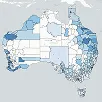

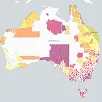


The total adult population (15 years or older) of Box Hill South 3128 VIC is 7,044, with a median age of 39. Of those, 49.28% are married, 9.24% are divorced or separated, 36.75% are single and 4.74% are widowed.
The average household size is 2.6 people per dwelling, and the median household monthly income is estimated to be $9,696. The median monthly mortgage repayment for households in this suburb is $2,400 which is 24.75% of their earnings.
Source: ABS Census Data (2021)