
Olinda, VIC 3788

Good to know:
Olinda, VIC 3788, is a charming suburb located in the Dandenong Ranges, about 36 km east of Melbourne's CBD. This picturesque village is renowned for its stunning natural beauty, with lush, forested landscapes, scenic views, and an abundance of gardens, including the famous National Rhododendron Gardens. Olinda boasts a blend of cosy cafes, boutique shops, and artisan stores, giving it a quaint, small-town feel. The area is popular with tourists and locals alike, offering numerous walking trails, picnic spots, and regular community events. Its cool climate and serene environment make it an idyllic retreat from the hustle and bustle of city life.
Read More
Olinda VIC 3788 has a typical house price of $1,155,918, a rolling-year median rent of $875 per week and a gross yield of 3.94% — the suburb’s property market shows signs of demand strength but also stretched affordability. The data indicates Olinda VIC 3788 property investment is weighted toward capital growth drivers: high IRSAD (1063), very low unit share and renter share, limited approvals and strong online buyer interest (Buy Search Index = 8). House prices in Olinda sit at a premium to incomes (46 years to own), so investors should plan for longer holds and conservative servicing assumptions.
Property market outlook
Olinda’s residential market is characterised by owner-occupier dominance, tight new-supply risk and balanced transactional activity. Socio-economic indicators are favourable (IRSAD 1063), suggesting a catchment of relatively high income/wealth — a structural positive for long-run capital growth. Supply metrics are broadly neutral to supportive: Stock on Market 0.57% and Inventory 3.93 months sit in the balanced range, while Building Approvals Ratio = 0% signals very low imminent new supply (supportive of price resilience). Demand signals are mixed but constructive — Days on Market at 36 days and a Buy Search Index of 8 show active buyer interest, while Vacancy at 2.63% indicates a functioning rental market without major oversupply. Key tension: affordability is stretched (46 years to own), which narrows the pool of marginal owner-occupier and investor buyers and increases sensitivity to rate changes. Overall, the market looks growth-oriented with modest rental returns and requires patience and downside buffers.
Pros
- Strong socio-economic profile: IRSAD 1063 (opportune) supports premium pricing and long-term capital growth potential.
- Low rental stock and owner dominance: Renter/Owner ratio 12% and Units/Houses ratio 1% mean fewer units, lower churn and an owner-occupied character that tends to protect prices.
- Limited upcoming supply: Building Approvals Ratio 0% reduces the risk of near-term oversupply pressure.
- Active buyer interest: Buy Search Index = 8 (favourable) points to above-average search activity, supporting transactional liquidity for desirable stock.
- Acceptable yield for a growth suburb: Gross yield 3.94% — above the 3% threshold and adequate for investors targeting combined growth and income.
Cons
- Very low affordability: 46 years to own is materially above the 30-year threshold — high prices relative to incomes increase market sensitivity to interest rates and may slow entry-level demand.
- Modest rental yield: While above 3%, yields near 4% are moderate; investors relying solely on cashflow may find returns tight after expenses and finance costs.
- Balanced rather than tight transactional supply: SoM% 0.57% and Inventory 3.93 months are not low enough to produce acute scarcity premium; price uplift may be gradual rather than explosive.
- Clearance Rate reported as 0% (neutral) — likely indicates few auctions, which can limit transparent pricing signals and compel reliance on private sale markets.
- Owner-dominant markets can produce low rental turnover and fewer investment-specific opportunities compared with high-renter suburbs.
Investment strategies
- Position for capital growth, not yield: Target houses (units are negligible) with attributes that appeal to owner-occupiers — lifestyle features, good streetscapes, low-maintenance landscaping and proximity to amenities or views. Expect a longer hold horizon (5–10+ years).
- Buy above the median where value can be added: Look for properties where cosmetic upgrades or modest amenity improvements materially lift appeal to a premium owner-occupier pool (kitchen/bathroom, landscaping, energy efficiency).
- Use off-market and buyer-agent sourcing: With few approvals and a constrained market, desirable stock often trades privately; a buyers agent or networked sourcing increases access and reduces bidding wars.
- Conservative finance structuring: High price-to-income ratios (46 years) mean heightened interest-rate sensitivity. Stress-test serviceability and maintain cash buffers for vacancies, maintenance and rate increases.
- Selective leasing strategy: Given the owner-occupier bias and vacancy ~2.6%, target long-term, higher-quality tenants (professionals, families) for stable occupancy. Pricing should mirror the premium market positioning rather than chasing marginal yield.
- Avoid development-heavy plays unless you control cost: Low approvals and small unit stock mean development opportunities are limited and may require large premiums to justify project viability.
- Portfolio context: Use Olinda as a growth-exposure node within a diversified portfolio. Consider pairing with higher-yielding nearby suburbs if short-term cashflow is a priority.
Is Olinda VIC 3788 a good suburb to invest in?
Olinda VIC 3788 can be a good suburb for investors whose primary objective is medium-to-long-term capital appreciation rather than immediate strong cashflow. The combination of an opportune IRSAD, constrained new supply and elevated buyer interest supports a positive capital growth profile. However, stretched affordability (46 years to own) raises cyclical sensitivity and argues for conservative gearing and a longer holding period. Investors seeking solid, predictable rental yields or short-term flips will find the economics tighter; those prepared to target quality houses, secure long-term tenants and hold for capital appreciation are better aligned to Olinda’s market structure.
About HtAG Analytics Data
HtAG reports a core set of suburb-level metrics designed for comparative market analysis: Typical Price, Median Rent, Sales and Rentals counts, % Change over multiple horizons, Gross Rental Yield, Capital Growth forecasts (CG plus CG Low/High), Total RoI, Rent Increase projections, Volatility Index, Confidence and a Relative Composite Score™. We also report supply metrics (Stock on Market, SoM%, Inventory/Months of Supply, Building Approvals and BA Ratio, Hold Period), demand metrics (Days on Market, Discounting, Vacancy Rate, Buy & Rent Search Index, Auction Clearance Rates) and advanced context (IRSAD, Renter/Owner ratio, Unit/House ratios, Years to Own, School Rank, Estimated Dwellings and Population). These are the base metrics; HTAG dashboards include additional specialised indicators.
The guiding principle behind HTAG metrics is to capture both current market conditions and historical trends to enable relative market analysis at the point of purchase. In practice that means our metrics emphasise localised supply-demand signals and trend-based forecasts tailored to suburb-level decision-making. By contrast, some public providers focus on broader headline series and media narratives; HTAG’s measurements and curation include methodological nuances aimed at shortlisting and comparing markets for specific investment criteria rather than producing generalised state-level commentary.
Finally, note that the snapshot above summarises current value metrics for Olinda and does not replace analysis of metric trends or the differing importance of each indicator for individual strategies. Some metrics carry more weight depending on an investor’s budget, borrowing capacity, risk tolerance and intended hold or refinance timeframe. HTAG excels at producing ranked shortlists based on those bespoke criteria; for serious buyers and buyer-agents we recommend relative analysis across a set of comparable suburbs aligned to your objectives rather than relying on a single-market snapshot.
Updated: 1 Jun 2026
Read Less
Quick Area Stats

Dwellings

Population

EDI

Bushfire Risk Index

Flood Risk Index
Education & Infrastructure
Sign Up to Access

School Rank

Infra. Spend
Market Trends
Essential metrics effectively streamline the process of identifying markets that match your financial situation and investment objectives. Typical Price, Indicative Yield and Total ROI provide a swift means to shortlist areas that resonate with what you’re seeking and can afford. These metrics also serve as valuable general trend indicators, allowing you to visualise transaction volumes and dynamics of change.
1M
1Q
1Y
3Y
5Y
7Y
10Y
1M
1Q
1Y
3Y
5Y
7Y
10Y

1M
1Q
1Y
3Y
5Y
7Y
10Y
The Growth Rate Cycle (GRC) is a metric used to analyse the year-on-year change in property values, providing insights into the growth cycle of a particular area. It uses the “typical price” metric to gauge property values more accurately than median prices, and includes both actual and projected data for the current year.

Fundamental metrics play a vital role in providing a comprehensive analysis of the socio-economic environment within a specific suburb or region. Additionally, the Return on Investment (ROI) and Volatility Index are crucial metrics that aid in evaluating the prospective profitability and the level of risk or stability in the market.
Socio-economics
Sign Up to Access

IRSAD

Renter to Owner

Units to Houses
Projections
Sign Up to Access

Projected Annual ROI

Volatility Index
Quick Area Stats
Sign Up to Access

Annual Sales Volume

Annual Rentals Volume



Stock on Market

Building Approvals

Inventory

Hold Period




Supply metrics are crucial in gauging both the existing volumes of real estate listed for sale and the properties anticipated to enter the market soon. A diminished supply could signal opportunities for price appreciation, particularly when there’s corresponding buyer demand to buoy the market. The Stock on Market and Inventory level metrics (current values) are presented as a 3-month rolling average of monthly data shown in the charts. This means the last 3 months of data are averaged. The BA Ratio represents the proportion of building approvals over the latest 12 months relative to the total dwellings in the area.

Days on Market

Search Index

Vacancy Rate

Clearance Rate




Demand metrics underscore the level of interest that potential property buyers or tenants have in a specific suburb or locality. When demand outstrips the available supply, or if the supply fails to meet the intensity of buyer/renter interest, there’s a potential for prices to climb, underscoring the pivotal relationship between demand dynamics and property value trends. The Days on Market and Clearance Rate metrics (current values) are presented as a 3-month rolling average of monthly data shown in the charts. This means the last 3 months of data are averaged.
We invite you to contribute to the conversation by sharing your thoughts or raising questions about this market in the comment section below.
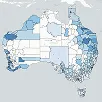

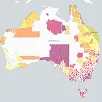


The total adult population (15 years or older) of Olinda 3788 VIC is 1,456, with a median age of 45. Of those, 51.58% are married, 13.80% are divorced or separated, 31.39% are single and 3.23% are widowed.
The average household size is 2.5 people per dwelling, and the median household monthly income is estimated to be $9,716. The median monthly mortgage repayment for households in this suburb is $2,000 which is 20.58% of their earnings.
Source: ABS Census Data (2021)