
Cranbourne East, VIC 3977

Good to know:
Cranbourne East, located in Victoria with the postcode 3977, is a rapidly growing suburb in Melbourne’s southeastern corridor. Known for its family-friendly environment, the area boasts a mix of modern housing estates and established homes. Schools such as Cranbourne East Primary School and Cranbourne East Secondary College serve the community, making it popular with young families. Recreational facilities include Casey Fields, a major sports complex, and numerous parks and playgrounds. The suburb offers a semi-rural feel with easy access to amenities in nearby Cranbourne, making it a balanced choice for those seeking suburban tranquility and convenience.
Read More
Cranbourne East VIC 3977 shows a typical house price of $873,463, median rent $575pw and a gross yield of 3.42% — the headline numbers for any Cranbourne East VIC 3977 property market evaluation. Confidence in the underlying data is high, but the suburb combines an opportune socio-economic score (IRSAD 992) and quick sales (DOM 32 days) with notable affordability stress (42 years to own) and elevated recent building approvals (BA Ratio 3.2%). These mixed signals matter for both growth and cashflow-focused investors.
Property market outlook
Cranbourne East houses: balance between demand and supply but with structural caveats. Sales move quickly (median Days on Market 32 — an opportune demand indicator) and supply on market is broadly balanced (SoM% 0.55%; inventory ~3.35 months). Vacancy sits at 1.9% (neutral) so rental demand is steady rather than tight. Socio-economic indicators are supportive (IRSAD 992), which underpins longer-term capital prospects for house prices in Cranbourne East.
Key headwinds: affordability is stretched — an estimated 42 years to own, well above the 30-year threshold — which reduces the potential buyer pool and can limit near-term price upside. The Building Approvals Ratio at 3.2% is unfavourable (high relative approvals) and signals material upcoming supply that could weigh on established house price growth if new supply is concentrated locally. Net effect: a market that is viable for growth investors prepared to accept medium-term supply risk and extended ownership horizons, but less attractive for pure short-term flippers or investors requiring strong immediate cash yields.
Pros
- Yield above common minimum: 3.42% gross yield (houses) — better than many inner‑city markets and above a 3% floor for basic cashflow viability.
- Strong socio-economic base: IRSAD 992 indicates stronger household capacity and labour-market fundamentals supportive of long-term capital growth.
- Sales velocity: DOM 32 days signals active buyer interest and reduced time-to-sale risk for sellers and traders.
- Low unit exposure: Units/Houses ratio 3.0% (opportune) — limited stock of units relative to houses reduces competition from strata product and preserves suburb character for house buyers.
- High confidence: data quality assessed as High, improving reliability of shortlisting and comparative work.
Cons
- Affordability constraint: 42 years to own is a significant outlier and restricts broad market participation; more sensitive to rate rises or income shocks.
- Elevated approvals: BA Ratio 3.2% (>2%) flags higher future supply which can dampen capital growth and increase competition for tenants if approvals convert to new dwellings nearby.
- Modest yield: while above 3%, a 3.42% gross yield is modest — not strong for investors relying on immediate positive cashflow.
- Neutral renter profile: Renter/Owner ratio 23.0% is in the neutral band, limiting rental market depth compared with high-renter suburbs where yield upside from rent growth is stronger.
- Clearance rate reported as 0% (neutral) — low auction activity reduces auction-derived price discovery and may indicate a reliance on private treaty sales.
Investment strategies
- Growth-first, house-only focus: Prioritise established houses over units given the low Units/Houses ratio and stronger capital prospects tied to family housing. Target properties in good condition to reduce holding costs while awaiting longer-term capital appreciation.
- Avoid speculative off-the-plan in high-approval pockets: With BA Ratio elevated, avoid buying into developments adjacent to large-scale approved projects unless you can verify demand absorption. New supply can compress resale premiums.
- Structured holding horizon: Expect a 5–10+ year hold for meaningful capital returns given affordability headwinds and near-term supply risk. Position finance accordingly and stress-test servicing at higher rates.
- Value-add renovation where feasible: Modest yield means investors should add value through targeted upgrades to lift rent and sale price rather than relying on rental yield alone.
- Tenant strategy: With vacancy ~1.9% and neutral renter share, focus on quality tenant selection and retention to protect yield and minimise downtime; consider longer leases for stability.
- Comparative shortlist approach: Use Cranbourne East as a candidate in a relative analysis between neighbouring suburbs showing lower approvals or better affordability; HTAG’s data confidence supports this comparative workflow.
Is Cranbourne East VIC 3977 a good suburb to invest in?
Cranbourne East VIC 3977 can be a reasonable option for growth-oriented investors prepared to accept a multi-year hold and to manage the risk of incoming supply. Strengths — above‑average socio-economic score, quick days-on-market and acceptable gross yield — support medium-to-long term capital appreciation. However, the suburb is less attractive for investors seeking high immediate cashflow or short-term capital gains due to stretched affordability (42 years) and an unfavourable building approvals signal (3.2%). In short: suitable for well-capitalised investors or buyers’ agents targeting house stock and prioritising a patient, comparative-market approach; less suitable for yield-chasing or short-hold strategies.
About HtAG Analytics Data
Base metric summary (selected — HTAG reports contain more measures):
- Typical Price: suburb-level price signal intended to represent transactable values (reported by dwelling type).
- Median Rent: rolling 12-month median rent per week (houses/units).
- Yield: gross rental yield derived from Typical Price and Median Rent.
- IRSAD (SEIFA): socio-economic index (opportune >950; neutral 920–950; unfavourable <920).
- Renter/Owner Ratio: % renters (opportune <15%; neutral 15–45%; unfavourable >45%).
- Units/Houses Ratio and UHV: stock composition thresholds to assess strata exposure.
- Affordability (Years to Own): estimated years to repay typical dwelling under standard mortgage assumptions (>30 years indicates strained affordability).
- Supply metrics: Stock on Market % (low supply <0.4%), Inventory months (<2.1 low supply; 2.1–4.5 balanced; >4.5 high supply).
- Building Approvals Ratio: recent approvals / total dwellings (low supply <0.3%; balanced 0.3–2%; high supply >2%).
- Demand metrics: Days on Market (0–35 high demand), Discounting, Vacancy Rate (<1% tight; 1–3.5% balanced; >3.5% weak).
- Advanced metrics: Hold Period, Volatility Index, Confidence, Relative Composite Score™.
HTAG’s metric philosophy (suburb context): our methodology emphasises combining current market conditions with long‑run trends to enable relative market comparisons that are actionable at the point of purchase. For Cranbourne East that means metrics such as SoM, Inventory, BA Ratio and Days on Market are measured and contextualised alongside historical trends to show whether recent activity is structural or cyclical. Unlike providers that primarily surface public data for broad trend coverage and media narratives, HTAG designs metrics specifically to compare suburbs against the realities buyers and agents face to a point‑of‑purchase level — similar metric names can conceal important differences in how they are curated and measured.
Snapshot versus trend caveat (suburb context): the figures above provide a current-value snapshot for Cranbourne East VIC 3977 but do not by themselves capture metric trajectories — for example, rising or falling building approvals, or accelerating yield compression. Some metrics (affordability, BA Ratio, IRSAD) will typically carry more weight when assembling a shortlist, and the relative importance varies by investor objective. HTAG excels at filtering suburbs based on individual criteria — budget, borrowing capacity, risk appetite and intended hold/refinance timelines — because market selection is never one‑size‑fits‑all. For serious investors and buyer’s agents, perform relative analysis across a set of comparable suburbs and examine trends, not just the snapshot.
Updated: 1 May 2026
Read Less
Quick Area Stats

Dwellings

Population

EDI

Bushfire Risk Index

Flood Risk Index
Education & Infrastructure
Sign Up to Access

School Rank

Infra. Spend
Market Trends
Essential metrics effectively streamline the process of identifying markets that match your financial situation and investment objectives. Typical Price, Indicative Yield and Total ROI provide a swift means to shortlist areas that resonate with what you’re seeking and can afford. These metrics also serve as valuable general trend indicators, allowing you to visualise transaction volumes and dynamics of change.
1M
1Q
1Y
3Y
5Y
7Y
10Y
1M
1Q
1Y
3Y
5Y
7Y
10Y

1M
1Q
1Y
3Y
5Y
7Y
10Y
The Growth Rate Cycle (GRC) is a metric used to analyse the year-on-year change in property values, providing insights into the growth cycle of a particular area. It uses the “typical price” metric to gauge property values more accurately than median prices, and includes both actual and projected data for the current year.

Fundamental metrics play a vital role in providing a comprehensive analysis of the socio-economic environment within a specific suburb or region. Additionally, the Return on Investment (ROI) and Volatility Index are crucial metrics that aid in evaluating the prospective profitability and the level of risk or stability in the market.
Socio-economics
Sign Up to Access

IRSAD

Renter to Owner

Units to Houses
Projections
Sign Up to Access

Projected Annual ROI

Volatility Index
Quick Area Stats
Sign Up to Access

Annual Sales Volume

Annual Rentals Volume



Stock on Market

Building Approvals

Inventory

Hold Period




Supply metrics are crucial in gauging both the existing volumes of real estate listed for sale and the properties anticipated to enter the market soon. A diminished supply could signal opportunities for price appreciation, particularly when there’s corresponding buyer demand to buoy the market. The Stock on Market and Inventory level metrics (current values) are presented as a 3-month rolling average of monthly data shown in the charts. This means the last 3 months of data are averaged. The BA Ratio represents the proportion of building approvals over the latest 12 months relative to the total dwellings in the area.

Days on Market

Search Index

Vacancy Rate

Clearance Rate




Demand metrics underscore the level of interest that potential property buyers or tenants have in a specific suburb or locality. When demand outstrips the available supply, or if the supply fails to meet the intensity of buyer/renter interest, there’s a potential for prices to climb, underscoring the pivotal relationship between demand dynamics and property value trends. The Days on Market and Clearance Rate metrics (current values) are presented as a 3-month rolling average of monthly data shown in the charts. This means the last 3 months of data are averaged.
We invite you to contribute to the conversation by sharing your thoughts or raising questions about this market in the comment section below.
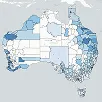

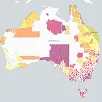


The total adult population (15 years or older) of Cranbourne East 3977 VIC is 17,954, with a median age of 31. Of those, 55.79% are married, 8.09% are divorced or separated, 31.71% are single and 4.37% are widowed.
The average household size is 3.3 people per dwelling, and the median household monthly income is estimated to be $7,900. The median monthly mortgage repayment for households in this suburb is $2,000 which is 25.32% of their earnings.
Source: ABS Census Data (2021)