
Curlewis, VIC 3222

Good to know:
Curlewis, VIC 3222, is a rapidly growing suburb located on the Bellarine Peninsula, approximately 17 kilometres east of Geelong. Known for its semi-rural charm, Curlewis offers a mix of new housing developments and traditional homesteads. The suburb provides an array of amenities, including parks, a primary school, and a shopping centre. Its proximity to the Portarlington Road makes it a convenient gateway to the scenic wineries and coastal attractions of the Bellarine Peninsula. Curlewis is popular among families and retirees seeking a balance between coastal and country living.
Read More
Curlewis VIC 3222 shows a mid‑priced house market with a typical house price of $715,739, a rolling-year median rent of $513pw and a gross yield of 3.73%. This Curlewis VIC 3222 property market balances rental income above the 3% benchmark with an affordability pressure (36 years to own) that sits above the 30‑year threshold. House prices in Curlewis are supported by an above‑average IRSAD (1009) and very low stock on market (0.33%), but there is a significant pipeline of new approvals (BA Ratio 4.07%) that could alter supply dynamics.
Overall the Curlewis property market for houses currently displays tight established supply and solid rental fundamentals, while longer‑term price performance will depend on how incoming construction and affordability dynamics play out.
Property market outlook
Curlewis VIC 3222 house market is in a mixed but manageable position. Demand signals are generally neutral: Days on Market at 40 days, a Buy Search Index of 4 and a vacancy rate of 1.47% indicate steady tenant interest without acute scarcity. Stock on Market of 0.33% signals very tight available established stock today (supportive of price resilience), while Inventory at 2.32 months is inside the balanced band. However, Building Approvals Ratio at 4.07% is well above the 2% high‑supply threshold, pointing to substantial new supply entering the market — a potential headwind for capital growth if delivered en masse. Household socio‑economic status (IRSAD 1009) is favourable for longer‑term demand from owner‑occupiers, but the affordability metric (36 years) is a noteworthy constraint for local buyer capacity. Confidence in these data is high.
Pros
- Yield above minimum: Gross rental yield 3.73% — better than the 3% floor favoured by many investors, providing reasonable cashflow potential for houses.
- Low immediate resale supply: SoM 0.33% indicates tight established stock, which tends to support price stability and reduced price discounting.
- Strong socio‑economic profile: IRSAD 1009 implies a relatively advantaged resident base, supporting resilient demand for owner‑occupied housing.
- Unit competition minimal: Units/Houses ratio 0.0% (opportune) — the suburb’s house market dominates, reducing cross‑product cannibalisation from units.
- High data confidence: High confidence score increases reliability of actionable insights.
Cons
- Affordability pressure: Estimated 36 years to own exceeds the 30‑year threshold, signalling stretched buyer capacity and potential constraints on price acceleration.
- Elevated building approvals: BA Ratio 4.07% is in the unfavourable range — a sizeable pipeline of new supply could soften capital growth and increase competition among vendors and landlords.
- Neutral demand metrics: DoM 40 days and a Buy Search Index of 4 indicate steady but not strong buyer chasing; auction clearance at 0% is recorded as neutral in regional contexts but provides little evidence of overheating demand.
- Moderate yield ceiling: While 3.73% is acceptable, the yield is not high enough to fully offset potential price softness if new supply arrives and rents stabilise.
Investment strategies
- Long‑hold, growth‑oriented houses: Given the strong socio‑economic profile and current tight established stock, select well‑located family houses with long hold horizons (5–10+ years) to ride out the new‑build cycle and benefit from local demand resilience.
- Target quality rental stock: With a median rent of $513pw and vacancy around 1.47%, focus on renovated three‑ or four‑bedroom houses that meet local family tenant needs to maximise occupancy and modest rent growth.
- Monitor approvals and settlements: For any acquisition, build an assessment of the local new‑build pipeline — cluster approvals can compress capital growth. Price in potential near‑term supply when negotiating, or target pockets less likely to see new development (established streets, larger blocks).
- Avoid speculative timing: Given affordability headwinds and a material approvals ratio, short‑term flips are higher risk. Investors seeking yield can use conservative gearing and stress tests against flat rents.
- Development or land‑bank with caution: High BA Ratio suggests developer interest; developers should model absorption rates and infrastructure costs carefully. Land‑bank strategies require clear staging horizons to avoid holding through oversupplied phases.
- Finance sensitivity: With affordability stretched, prioritise low‑serviceability risk structures (longer terms, buffer rates) and ensure refinancing scenarios are stress‑tested if rates rise.
Is Curlewis VIC 3222 a good suburb to invest in?
Curlewis VIC 3222 can be a good suburb to invest in for investors focused on acquiring family houses for medium‑ to long‑term holds. The market benefits from tight current stock, a favourable IRSAD and rental yields above common minimums — all supportive of steady occupancy and potential capital resilience. However, the elevated building approvals ratio and a 36‑year affordability measure are material caveats: if new supply arrives quickly and local buying capacity remains constrained, capital growth could be muted. Investors should prioritise location selection within Curlewis, verify the local approvals pipeline at the development stage, and favour conservative financing and longer holding periods to mitigate cyclical risk.
About HtAG Analytics Data
Base metrics reported (selected subset — HtAG dashboards contain additional fields):
- Typical Price: suburb‑level typical value better reflecting local pricing than medians.
- Median Rent: rolling‑year median rent per week (houses/units).
- Sales / Rentals: count of online transactions/listings during the calendar month.
- Yield: Gross rental yield calculated from Typical Price and Median Rent.
- Capital Growth (CG) & CG Low/High: ML model estimates of annualised capital growth and range.
- Total RoI: Gross Rental Yield + Capital Growth.
- Rent Increase: estimated annual rent growth from trend analysis.
- Volatility Index & Confidence: forecast error (MAPE‑based) and data reliability.
- Supply metrics: Stock on Market (SoM / SoM%), Inventory (months), Building Approvals and BA Ratio, Hold Period.
- Demand metrics: Days on Market, Discounting, Vacancy Rate, Buy & Rent Search Index, Auction Clearance Rate.
(Note: there are more advanced metrics and sub‑metrics in the full HTAG dataset; the list above is the base set reported with each suburb snapshot.)
HtAG methodology (suburb context)
- HTAG’s metrics are designed to capture both current market conditions and historical trends at the suburb level so comparisons are meaningful close to the point of purchase. For Curlewis VIC 3222 this means our typical price, yield and supply‑demand indicators are curated to reflect the local house market dynamics (for example distinguishing established stock tightness today from an incoming approvals pipeline). While other providers may emphasise broader public datasets and state‑level narratives, HTAG focuses on relative local market signals and trend decomposition to inform selection and timing for specific suburbs.
Limitations and actionable nuance
- The snapshot above shows current value metrics for Curlewis VIC 3222 but does not substitute for trend analysis: some metrics (e.g. Building Approvals Ratio and Affordability years) can change quickly and materially influence future returns. Metrics have different weights for different strategies — yield seekers, growth investors and developers will interpret the same Curlewis data differently. HTAG’s strength is shortlisting and ranking suburbs against investor‑specific criteria rather than offering one‑size‑fits‑all recommendations; professionals should perform relative analysis across candidate locations that match their budget, borrowing capacity, risk appetite and timeframe.
Updated: 1 Jun 2026
Read Less
Quick Area Stats

Dwellings

Population

EDI

Bushfire Risk Index

Flood Risk Index
Education & Infrastructure
Sign Up to Access

School Rank

Infra. Spend
Market Trends
Essential metrics effectively streamline the process of identifying markets that match your financial situation and investment objectives. Typical Price, Indicative Yield and Total ROI provide a swift means to shortlist areas that resonate with what you’re seeking and can afford. These metrics also serve as valuable general trend indicators, allowing you to visualise transaction volumes and dynamics of change.
1M
1Q
1Y
3Y
5Y
7Y
10Y
1M
1Q
1Y
3Y
5Y
7Y
10Y

1M
1Q
1Y
3Y
5Y
7Y
10Y
The Growth Rate Cycle (GRC) is a metric used to analyse the year-on-year change in property values, providing insights into the growth cycle of a particular area. It uses the “typical price” metric to gauge property values more accurately than median prices, and includes both actual and projected data for the current year.

Fundamental metrics play a vital role in providing a comprehensive analysis of the socio-economic environment within a specific suburb or region. Additionally, the Return on Investment (ROI) and Volatility Index are crucial metrics that aid in evaluating the prospective profitability and the level of risk or stability in the market.
Socio-economics
Sign Up to Access

IRSAD

Renter to Owner

Units to Houses
Projections
Sign Up to Access

Projected Annual ROI

Volatility Index
Quick Area Stats
Sign Up to Access

Annual Sales Volume

Annual Rentals Volume



Stock on Market

Building Approvals

Inventory

Hold Period




Supply metrics are crucial in gauging both the existing volumes of real estate listed for sale and the properties anticipated to enter the market soon. A diminished supply could signal opportunities for price appreciation, particularly when there’s corresponding buyer demand to buoy the market. The Stock on Market and Inventory level metrics (current values) are presented as a 3-month rolling average of monthly data shown in the charts. This means the last 3 months of data are averaged. The BA Ratio represents the proportion of building approvals over the latest 12 months relative to the total dwellings in the area.

Days on Market

Search Index

Vacancy Rate

Clearance Rate




Demand metrics underscore the level of interest that potential property buyers or tenants have in a specific suburb or locality. When demand outstrips the available supply, or if the supply fails to meet the intensity of buyer/renter interest, there’s a potential for prices to climb, underscoring the pivotal relationship between demand dynamics and property value trends. The Days on Market and Clearance Rate metrics (current values) are presented as a 3-month rolling average of monthly data shown in the charts. This means the last 3 months of data are averaged.
We invite you to contribute to the conversation by sharing your thoughts or raising questions about this market in the comment section below.
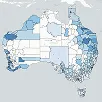

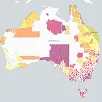


The total adult population (15 years or older) of Curlewis 3222 VIC is 3,178, with a median age of 34. Of those, 48.80% are married, 13.50% are divorced or separated, 35.15% are single and 2.52% are widowed.
The average household size is 2.7 people per dwelling, and the median household monthly income is estimated to be $8,012. The median monthly mortgage repayment for households in this suburb is $1,777 which is 22.18% of their earnings.
Source: ABS Census Data (2021)