
Glengarry, VIC 3854

Good to know:
Glengarry is a quaint rural suburb located in the Gippsland region of Victoria, approximately 160 kilometres southeast of Melbourne. With a postcode of 3854, it offers a picturesque countryside lifestyle characterised by scenic landscapes and a close-knit community atmosphere. The town is known for its rich agricultural heritage and is surrounded by lush farmlands. Glengarry provides essential amenities, including a primary school, local shops, and recreational facilities. It is also conveniently located near the larger town of Traralgon, offering additional services and amenities.
Read More
Glengarry VIC 3854 has a typical house price of $849,275, median rent of $374 per week and a gross yield of 2.29% according to the latest property market data. This Glengarry VIC 3854 property investment snapshot shows a high socioeconomic score (IRSAD 1014), tight stock on market (SoM 0.27%) and neutral rental market indicators (vacancy 1.79%, Days on Market 59). House prices in Glengarry are supported by owner-occupation dominance and limited available stock, but low gross yields and stretched affordability (33 years to own) will shape the type of investor for whom this market is appropriate.
Property market outlook
Supply-side dynamics are the clearest driver in Glengarry VIC 3854. Stock on market is very low (0.27% — opportune), which signals constrained established supply and provides structural support for prices if demand holds. Inventory at 2.86 months and Building Approvals Ratio 1.93% are both in the balanced/neutral band, so pipeline additions are not currently overwhelming the market but are large enough to prevent extreme tightening.
Demand signals are neutral-to-balanced: vacancy rate (1.79%) sits in the balanced range, Days on Market at 59 days suggests a market that trades slowly but not stagnantly, and the Buy Search Index of 5 is in line with state averages. The market profile is owner-occupied led (RO Ratio 9.0% — opportune) with very few units (UH Ratio 2.0% — opportune), which tends to favour capital stability rather than high rental turnover.
Key investor takeaway: Glengarry’s structural supply tightness and above-average socioeconomic score (IRSAD 1014) support longer-term capital growth potential, but the current gross yield (2.29%) is well below the 3% rule-of-thumb for income-focused investors, meaning this suburb is better suited to capital-growth strategies or investors who can accept low near-term cash returns.
Pros
- High socioeconomic base: IRSAD 1014 (opportune) typically correlates with stronger long-run capital growth potential and lower downside volatility.
- Very low stock on market (SoM 0.27%): tight established supply is supportive of price resilience and seller leverage.
- Owner-occupier dominated (RO Ratio 9.0%): lower investor churn and higher holding periods can stabilise local prices and neighbourhood amenity.
- Very low unit share (UH Ratio 2.0%): low competition from apartments reduces supply-side pressure on house values.
- Rental market neither weak nor overheated: vacancy 1.79% is balanced, so rental income risk is moderate.
Cons
- Low gross yield (2.29%): below the 3% minimum commonly used by yield-focused investors; negative for cashflow-dependent strategies.
- Affordability stretched (33 years to own): higher years-to-own can constrain local buyer pool and make prices sensitive to rate rises.
- Sales liquidity moderate: Days on Market 59 and Clearance Rate 0.0% (neutral – many regional markets report low auction activity) indicate transactions can take time and auctions are uncommon, which may limit exit options for some investors.
- Building Approvals Ratio near upper-neutral (1.93%): not currently high supply but close enough to merit monitoring for any acceleration in approvals.
- Data confidence medium: sample size and turnover are not as robust as high-confidence suburbs; treat short-term signals with caution.
Investment strategies
- Capital-growth core hold (5–10+ years): Glengarry is best targeted by investors prioritising capital appreciation over immediate yield. Aim for properties likely to attract owner-occupiers (3–4 bed family homes, renovated period houses, land-rich titles).
- Value-add renovation to lift rental yield: with low headline yields, investors can target under-improved homes where cosmetic or layout upgrades increase rent and total return, narrowing the cashflow gap.
- Buyer-agent / off-market focus: tight stock suggests competition at public listings; use buyer-agent networks and off-market channels to access opportunities without auctions and reduce bidding pressure.
- Selective size and price banding: given the affordability stretch, seek properties slightly below local typical price where yields may be relatively higher and buyer demand is broader.
- Hold-time & exit planning: plan for longer hold periods to capture capital growth; liquidity can be slower, so align financing and refinance windows with a multi-year horizon.
- Part-portfolio strategy for yield-seekers: if exposure to Glengarry is desired within a diversified portfolio, offset low local yields by pairing with higher-yield assets elsewhere to balance cashflow.
Is Glengarry VIC 3854 a good suburb to invest in?
Glengarry VIC 3854 is a good market for investors whose primary objective is capital growth rather than immediate rental income. The combination of high IRSAD, low stock on market and strong owner-occupier presence supports price stability and longer-term appreciation. Conversely, it is less suitable for investors who require positive cashflow from day one or short hold periods, because the gross yield (2.29%) is below commonly accepted thresholds and affordability sits above 30 years, which can limit near-term rental and buyer demand elasticity. Given medium data confidence, use Glengarry as part of a relative shortlist and pair local insights with on-ground due diligence (condition, exact location, comparables) before committing.
About HtAG Analytics Data
HtAG reports a base set of suburb-level metrics including Typical Price, Median Rent, Gross Rental Yield, Sales and Rentals counts, SoM and SoM% (Stock on Market), Inventory (months supply), Building Approvals and BA Ratio, Hold Period, Days on Market, Vacancy Rate and Vacancies, Buy & Rent Search Index, Auction Clearance Rate, Volatility Index, Confidence and composite metrics such as Relative Composite Score™. Ranges used for interpretation include: SoM% (low supply <0.4%, balanced 0.4–1.3%, high >1.3%), Inventory (<2.1 months low supply, 2.1–4.5 balanced, >4.5 high supply), Vacancy Rate (<1% high demand, 1–3.5% balanced, >3.5% low demand), IRSAD thresholds (opportune >950, neutral 920–950, unfavourable <920), RO Ratio (<15% opportune, 15–45% neutral, >45% unfavourable) and others described in our metrics dictionary. There are more metrics and nuances available on HtAG dashboards; the list above is the primary base set used for suburb comparisons.
The guiding principle behind HtAG metrics is to capture both current market conditions and historical trends to perform relative market analysis geared to the point of purchase. This produces a different form of market intelligence to sources that mainly publish public aggregate figures for macro commentary. While other providers surface useful public data, HtAG’s metrics are curated and modelled to compare suburbs in a way that aligns with transactional decisions—how markets perform around likely purchase and sale windows—so similarly named metrics can have distinct measurement nuances.
Finally, the snapshot above reports current value metrics for Glengarry VIC 3854 but does not replace trend analysis: metric trajectories and the relative weight of each indicator matter when aligning market selection with specific investor budgets, borrowing capacity, risk appetite and timeframes. HTAG excels at shortlisting and ranking markets against individual criteria rather than offering one-size-fits-all recommendations; for serious investors and buyer agents we recommend relative analysis across a set of candidate suburbs that match your strategy.
Updated: 1 Jun 2026
Read Less
Quick Area Stats

Dwellings

Population

EDI

Bushfire Risk Index

Flood Risk Index
Education & Infrastructure
Sign Up to Access

School Rank

Infra. Spend
Market Trends
Essential metrics effectively streamline the process of identifying markets that match your financial situation and investment objectives. Typical Price, Indicative Yield and Total ROI provide a swift means to shortlist areas that resonate with what you’re seeking and can afford. These metrics also serve as valuable general trend indicators, allowing you to visualise transaction volumes and dynamics of change.
1M
1Q
1Y
3Y
5Y
7Y
10Y
1M
1Q
1Y
3Y
5Y
7Y
10Y

1M
1Q
1Y
3Y
5Y
7Y
10Y
The Growth Rate Cycle (GRC) is a metric used to analyse the year-on-year change in property values, providing insights into the growth cycle of a particular area. It uses the “typical price” metric to gauge property values more accurately than median prices, and includes both actual and projected data for the current year.

Fundamental metrics play a vital role in providing a comprehensive analysis of the socio-economic environment within a specific suburb or region. Additionally, the Return on Investment (ROI) and Volatility Index are crucial metrics that aid in evaluating the prospective profitability and the level of risk or stability in the market.
Socio-economics
Sign Up to Access

IRSAD

Renter to Owner

Units to Houses
Projections
Sign Up to Access

Projected Annual ROI

Volatility Index
Quick Area Stats
Sign Up to Access

Annual Sales Volume

Annual Rentals Volume



Stock on Market

Building Approvals

Inventory

Hold Period




Supply metrics are crucial in gauging both the existing volumes of real estate listed for sale and the properties anticipated to enter the market soon. A diminished supply could signal opportunities for price appreciation, particularly when there’s corresponding buyer demand to buoy the market. The Stock on Market and Inventory level metrics (current values) are presented as a 3-month rolling average of monthly data shown in the charts. This means the last 3 months of data are averaged. The BA Ratio represents the proportion of building approvals over the latest 12 months relative to the total dwellings in the area.

Days on Market

Search Index

Vacancy Rate

Clearance Rate




Demand metrics underscore the level of interest that potential property buyers or tenants have in a specific suburb or locality. When demand outstrips the available supply, or if the supply fails to meet the intensity of buyer/renter interest, there’s a potential for prices to climb, underscoring the pivotal relationship between demand dynamics and property value trends. The Days on Market and Clearance Rate metrics (current values) are presented as a 3-month rolling average of monthly data shown in the charts. This means the last 3 months of data are averaged.
We invite you to contribute to the conversation by sharing your thoughts or raising questions about this market in the comment section below.
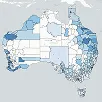

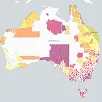


The total adult population (15 years or older) of Glengarry 3854 VIC is 890, with a median age of 40. Of those, 52.70% are married, 12.02% are divorced or separated, 31.57% are single and 2.92% are widowed.
The average household size is 2.8 people per dwelling, and the median household monthly income is estimated to be $9,312. The median monthly mortgage repayment for households in this suburb is $1,517 which is 16.29% of their earnings.
Source: ABS Census Data (2021)