
Newborough, VIC 3825

Good to know:
Newborough is a charming suburb located in the Gippsland region of Victoria, with the postcode 3825. Situated near the town of Moe, it is known for its friendly community atmosphere and serene lifestyle. The area boasts several parks, such as the popular Newborough East Playground, and recreational facilities including a golf course and sports complexes. Newborough Primary School and local shops cater to residents' needs, while the proximity to Moe offers additional amenities and public transport options. The suburb offers a blend of residential comfort and access to natural beauty, making it a pleasant place to live.
Read More
Newborough VIC 3825 property market: Typical house price $513,545, median rent $412pw and a gross yield of 4.17%. Confidence in the inputs is high. These figures place Newborough houses in a cashflow-friendly yield bracket for investors, but the suburb shows below-average socio‑economic status (IRSAD 908) and stretched affordability (35 years), which are important qualifiers when assessing long‑term capital growth prospects and owner‑occupier demand.
Property market outlook
Supply and demand are currently balanced-to-supportive for price stability. Low stock on market (SoM 0.25% — classified opportune/tight supply) limits for-sale stock and supports house prices in Newborough in the near term. Inventory at 2.73 months sits in the balanced range, and building approvals are modest (BA ratio 0.45% — neutral), so fresh supply pressure appears limited. Days on market at 39 days and a vacancy rate of 1.43% are both neutral, indicating functional market turnover and a rental market that is neither overheated nor under acute stress. The units-to-houses ratio of 8% (opportune) indicates a low prevalence of units relative to houses, which reduces competition from higher-density product in the established market and can support more consistent house price performance. However, the IRSAD score of 908 (below the recommended benchmark cited) and a 35-year affordability estimate flag potential headwinds for sustained premium capital growth: lower socio-economic areas can show slower long-term capital uplift and tighter owner‑occupier demand. Overall, Newborough VIC 3825 is showing a rental-yield advantage and supply discipline, but investors should be realistic about capital growth drivers.
Pros
- Yield above conventional threshold: 4.17% gross yield provides reasonable rental return for houses — attractive for investors prioritising cashflow.
- Tight for-sale stock: SoM 0.25% suggests limited available listings, supportive of price resilience and faster sale turnaround for desirable stock.
- Low unit penetration: Units/Houses ratio 8% implies the market is house-dominated, reducing competition from apartments and supporting traditional family housing values.
- Stable rental market: Vacancy 1.43% (balanced) and median rent $412pw indicate steady rental demand and manageable re-leasing risk.
- High confidence in data: the Confidence metric is High, improving reliability of the snapshot for transaction and underwriting decisions.
Cons
- IRSAD 908 below recommended benchmark: this lower socio‑economic score can temper long-term capital growth expectations and correlate with weaker wage growth and local demand fundamentals.
- Affordability stretched at 35 years: above the 30-year threshold, this level of affordability reduces the buyer pool of owner-occupiers and can increase sensitivity to interest-rate movements.
- Moderate hold period and approvals: hold period 9.29 years and BA ratio neutral suggest the market is not exceptionally tightly held but also not strongly constrained by tenure patterns — limiting speculative supply-side benefits.
- Clearance rate reported 0%: typical for regional markets and reported as neutral, but it reduces auction-derived price signals and transparency for some investors.
Investment strategies
- Cashflow-first buy-and-hold: Use the above-average yield to target positive or neutral gearing scenarios. Focus on smaller houses that command steady rents ($412pw median) and lower maintenance churn.
- Value-add renovations with caution: modest capital improvements (kitchen/bath updates, targeted landscaping) can lift rent and appeal to owner-occupiers without relying on strong macro capital growth; ensure uplift is supported by local comparables.
- Selective long‑hold strategy: given IRSAD and affordability constraints, treat Newborough as a longer-horizon play for capital growth (5–10+ years) where supply tightness and regional infrastructure improvements could compound value.
- Income diversification across nearby LGAs: pair acquisitions in Newborough with suburbs that have higher socio‑economic profiles to balance portfolio growth potential versus yield.
- Underwrite for interest-rate sensitivity: with affordability at 35 years, model downside scenarios for serviceability and vacancy risk; prioritise properties with multiple tenant demand drivers (proximity to employment hubs, schools, transport).
Is Newborough VIC 3825 a good suburb to invest in?
Newborough VIC 3825 is a credible option for investors prioritising rental income and stable occupancy over rapid capital gains. House prices in Newborough are affordable relative to capital-city markets, and the 4.17% gross yield is supportive of cashflow-based strategies. However, the suburb’s IRSAD of 908 and a 35‑year affordability estimate mean long-term capital appreciation is less certain than for higher‑SES areas. If your strategy is yield and long-term, patient capital appreciation with limited supply upside, Newborough can fit your portfolio. If you require faster capital growth or strong owner-occupier demand to underpin resale premiums, shortlist adjacent suburbs with stronger socio‑economic metrics and compare HTAG relative scores before committing.
About HtAG Analytics Data
Base metrics referenced above include: Typical Price, Median Rent, Yield (Gross Rental Yield), IRSAD, Renter/Owner Ratio, Units/Houses Ratio, Affordability (Years to Own), Stock on Market (SoM and SoM%), Inventory (Months of Supply), Building Approvals Ratio, Hold Period, Days on Market (DOM), Vacancy Rate, Buy & Rent Search Index, Auction Clearance Rate and Confidence. There are additional advanced metrics available on HTAG dashboards (capital growth forecasts, volatility index, Total RoI, school rank, population and infrastructure approvals) but the list above represents the core set used for suburb-level comparisons.
HTAG metrics are designed to capture both current conditions in a suburb like Newborough VIC 3825 and its historical patterns to enable relative market analysis close to the point of purchase. Unlike providers who primarily compile public datasets for macro narratives, HTAG’s approach weights localised signals and curated measurements so that metrics reflect the subtle differences that matter between neighbouring suburbs. Consequently, although some metrics share names with public sources, HTAG’s curation and calculation nuances produce distinct, purchase‑relevant indicators.
Finally, the snapshot above is a current-value view and does not replace trend analysis: metric trajectories (rent growth, changing vacancy, or evolving IRSAD trends) materially affect investment outcomes. Some metrics carry more weight than others depending on an investor’s budget, borrowing capacity, risk appetite and exit/refinance timeframe. HTAG excels at shortlisting markets for specific investor criteria rather than offering one‑size‑fits‑all guidance — for serious investors and buyer’s agents, perform relative analysis across a set of comparable suburbs aligned to your strategy.
Updated: 1 May 2026
Read Less
Quick Area Stats

Dwellings

Population

EDI

Bushfire Risk Index

Flood Risk Index
Education & Infrastructure
Sign Up to Access

School Rank

Infra. Spend
Market Trends
Essential metrics effectively streamline the process of identifying markets that match your financial situation and investment objectives. Typical Price, Indicative Yield and Total ROI provide a swift means to shortlist areas that resonate with what you’re seeking and can afford. These metrics also serve as valuable general trend indicators, allowing you to visualise transaction volumes and dynamics of change.
1M
1Q
1Y
3Y
5Y
7Y
10Y
1M
1Q
1Y
3Y
5Y
7Y
10Y

1M
1Q
1Y
3Y
5Y
7Y
10Y
The Growth Rate Cycle (GRC) is a metric used to analyse the year-on-year change in property values, providing insights into the growth cycle of a particular area. It uses the “typical price” metric to gauge property values more accurately than median prices, and includes both actual and projected data for the current year.

Fundamental metrics play a vital role in providing a comprehensive analysis of the socio-economic environment within a specific suburb or region. Additionally, the Return on Investment (ROI) and Volatility Index are crucial metrics that aid in evaluating the prospective profitability and the level of risk or stability in the market.
Socio-economics
Sign Up to Access

IRSAD

Renter to Owner

Units to Houses
Projections
Sign Up to Access

Projected Annual ROI

Volatility Index
Quick Area Stats
Sign Up to Access

Annual Sales Volume

Annual Rentals Volume



Stock on Market

Building Approvals

Inventory

Hold Period




Supply metrics are crucial in gauging both the existing volumes of real estate listed for sale and the properties anticipated to enter the market soon. A diminished supply could signal opportunities for price appreciation, particularly when there’s corresponding buyer demand to buoy the market. The Stock on Market and Inventory level metrics (current values) are presented as a 3-month rolling average of monthly data shown in the charts. This means the last 3 months of data are averaged. The BA Ratio represents the proportion of building approvals over the latest 12 months relative to the total dwellings in the area.

Days on Market

Search Index

Vacancy Rate

Clearance Rate




Demand metrics underscore the level of interest that potential property buyers or tenants have in a specific suburb or locality. When demand outstrips the available supply, or if the supply fails to meet the intensity of buyer/renter interest, there’s a potential for prices to climb, underscoring the pivotal relationship between demand dynamics and property value trends. The Days on Market and Clearance Rate metrics (current values) are presented as a 3-month rolling average of monthly data shown in the charts. This means the last 3 months of data are averaged.
We invite you to contribute to the conversation by sharing your thoughts or raising questions about this market in the comment section below.
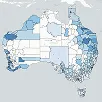

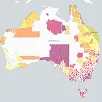


The total adult population (15 years or older) of Newborough 3825 VIC is 5,746, with a median age of 43. Of those, 39.68% are married, 14.74% are divorced or separated, 36.32% are single and 9.15% are widowed.
The average household size is 2.2 people per dwelling, and the median household monthly income is estimated to be $6,180. The median monthly mortgage repayment for households in this suburb is $1,118 which is 18.09% of their earnings.
Source: ABS Census Data (2021)