
Beresford, WA 6530

Good to know:
Beresford is a coastal suburb in Geraldton, Western Australia, situated approximately 424 kilometers north of Perth. Renowned for its stunning beaches and foreshore redevelopment, Beresford offers a blend of relaxed coastal living with modern amenities. The suburb features a mix of residential housing, parks, and recreational areas, catering to both families and retirees. With its close proximity to the Geraldton CBD, residents enjoy access to shopping centres, schools, and healthcare facilities, making it a well-rounded community. The shared pathways and scenic views along the coastline are particularly popular among locals and visitors alike.
Read More
Beresford WA 6530 houses show a typical price of $664,636, median rent of $517 pw and a gross yield of 4.04% — the figures that define the current property market snapshot for houses in Beresford. Beresford WA 6530 property investment is supported by tight active stock (SoM 0.27%) and an opportune IRSAD (962), but affordability is stretched (34 years to own) and days on market are long (107 days). House prices in Beresford are therefore buoyed by limited supply and rental income remains attractive relative to many coastal regional markets, while capital growth prospects will depend on longer-term demand recovery and transaction activity.
Property market outlook
Beresford’s supply-side picture is the clearest near‑term driver. Stock on market at 0.27% signals very tight advertised supply and is supportive of price stability and upside if buyer demand returns; inventory at 3.45 months sits in the balanced range, so immediate oversupply is unlikely. Building approvals are modest (BA Ratio 0.43%), indicating limited near-term fresh supply. Hold periods (9.08 years) are typical for regional markets — not tightly held but not highly churned.
Demand signals are mixed. Vacancy at 1.05% is around balanced to slightly tight for rental markets, underpinning rent retention and modest upside. However days on market of 107 is unfavourable and suggests some stock faces extended selling periods — this increases negotiation leverage for buyers and suggests liquidity is patchy. Buy search interest (index 3) and a clearance rate reported at 0% (common in many regional markets) point to average online search activity and few auctions; sales are driven more through private treaty than auction dynamics.
Key investment drivers:
- Yield 4.04% is above a typical 3% threshold for attractiveness to yield-focused buyers — solid for income-oriented strategies.
- IRSAD 962 is opportune for regional values, implying households with relatively stronger socioeconomic measures than lower‑scoring suburbs.
- Affordability of 34 years is a material constraint — high mortgage burden slows first‑home buyer participation and can temper sustained capital growth unless earnings or mortgage conditions improve.
Pros
- Low Stock on Market (0.27%): tight advertised supply supports price resilience and reduces competition for well-presented listings.
- Gross yield 4.04%: attractive income profile for houses in a regional coastal context; suitable for buy‑and‑hold cashflow strategies.
- IRSAD 962 (opportune): socioeconomic profile favourable relative to lower-scoring areas, which can support longer-term price stability and tenant quality.
- Vacancy ~1.05%: rental market broadly balanced to tight, assisting rental re-letting and rent retention.
Cons
- Long Days on Market (107 days): slower sales cycle increases transaction risk and suggests price discovery can be protracted; vendors may need to discount.
- High Years to Own (34 years): affordability pressure is pronounced; constrained owner‑occupier entry can limit buyer pool and slow capital growth.
- Medium Confidence of data: moderate sample size and transaction activity reduce certainty of short-term metric shifts.
- Clearance Rate 0% and average Buy Search Index: low auction activity and only average online buyer interest may limit rapid demand-driven capital gains.
Investment strategies
- Income-first buy-and-hold: Target well-maintained three-bedroom houses or modest family homes that deliver the reported ~4% gross yield. Given rental stability (vacancy ~1%), focus on properties requiring minimal capex and with consistent tenant appeal.
- Value-add where cashflow allows: Because DOM is long and seller negotiation is possible, look for under-priced or cosmetically tired houses where modest renovation will improve rent and resale appeal without overstretching budget in a less-liquid market.
- Selective leverage and longer horizon: High years-to-own suggests sensitivities to rate rises and wage growth; favour conservative gearing and a 5–10 year horizon to accommodate liquidity cycles and potential capital growth recovery.
- Private treaty negotiation approach: With few auctions and extended DOM, structured private negotiations and vendor‑motivated buying can produce better entry prices than auction-dependent strategies.
- Tenant-focused risk mitigation: Maintain tighter rental screening and proactive property management to preserve income given medium data confidence and the regional market’s variability.
Is Beresford WA 6530 a good suburb to invest in?
Beresford WA 6530 can be a good suburb for investors prioritising rental income and yield stability in a regional coastal setting. The 4.04% gross yield combined with very low stock on market and an opportune IRSAD supports an income-oriented, medium-term buy-and-hold strategy. It is less attractive for short-term capital speculation because of stretched affordability (34 years) and long days on market (107 days), which indicate liquidity and buyer‑pool constraints. For buyers and buyers’ agents: be selective, favour properties with clear rental demand and low maintenance requirements, adopt conservative leverage, and allow for longer holding periods to capture capital upside.
About HtAG Analytics Data
Base metrics reported (subset): Typical Price, Median Rent, Sales, Rentals, Δ Change (period comparisons), Yield (Gross Rental Yield), Capital Growth (annualised CG plus Low/High bands), Total RoI, Rent Increase (annualised), Volatility Index, Confidence, Relative Composite Score. There are additional metrics on HTAG dashboards (stock metrics, building approvals, supply/demand ratios, socio‑economic indices and more) that are not fully listed above.
HtAG metrics are designed to capture both current local market conditions and historical trends to perform relative market analysis at a suburb and dwelling‑type level — intended to be more aligned with point‑of‑purchase decisions than broad public datasets. For example, some public providers focus on aggregated state or national narratives; HTAG calibrates metrics (even when names overlap) with nuanced curation and measurement tailored to compare suburbs like Beresford directly against peers and to highlight local supply/demand idiosyncrasies.
The snapshot above summarises current value metrics for Beresford WA 6530 houses but does not replace trend analysis: metric trajectories (rising or falling vacancy, changing days on market, shifting affordability) materially influence investment outcomes and must be weighted by investor strategy. Some metrics are more influential than others depending on objectives (income vs growth, time horizon, leverage). Different investors will shortlist very different suburbs based on budget, borrowing capacity and risk appetite; HTAG excels at shortlisting markets against bespoke criteria rather than offering one‑size‑fits‑all guidance. For Beresford, combine this snapshot with trend and comparable‑market analysis before committing to a purchase.
Updated: 1 Jun 2026
Read Less
Quick Area Stats

Dwellings

Population

EDI

Bushfire Risk Index

Flood Risk Index
Education & Infrastructure
Sign Up to Access

School Rank

Infra. Spend
Market Trends
Essential metrics effectively streamline the process of identifying markets that match your financial situation and investment objectives. Typical Price, Indicative Yield and Total ROI provide a swift means to shortlist areas that resonate with what you’re seeking and can afford. These metrics also serve as valuable general trend indicators, allowing you to visualise transaction volumes and dynamics of change.
1M
1Q
1Y
3Y
5Y
7Y
10Y
1M
1Q
1Y
3Y
5Y
7Y
10Y

1M
1Q
1Y
3Y
5Y
7Y
10Y
The Growth Rate Cycle (GRC) is a metric used to analyse the year-on-year change in property values, providing insights into the growth cycle of a particular area. It uses the “typical price” metric to gauge property values more accurately than median prices, and includes both actual and projected data for the current year.

Fundamental metrics play a vital role in providing a comprehensive analysis of the socio-economic environment within a specific suburb or region. Additionally, the Return on Investment (ROI) and Volatility Index are crucial metrics that aid in evaluating the prospective profitability and the level of risk or stability in the market.
Socio-economics
Sign Up to Access

IRSAD

Renter to Owner

Units to Houses
Projections
Sign Up to Access

Projected Annual ROI

Volatility Index
Quick Area Stats
Sign Up to Access

Annual Sales Volume

Annual Rentals Volume



Stock on Market

Building Approvals

Inventory

Hold Period




Supply metrics are crucial in gauging both the existing volumes of real estate listed for sale and the properties anticipated to enter the market soon. A diminished supply could signal opportunities for price appreciation, particularly when there’s corresponding buyer demand to buoy the market. The Stock on Market and Inventory level metrics (current values) are presented as a 3-month rolling average of monthly data shown in the charts. This means the last 3 months of data are averaged. The BA Ratio represents the proportion of building approvals over the latest 12 months relative to the total dwellings in the area.

Days on Market

Search Index

Vacancy Rate

Clearance Rate




Demand metrics underscore the level of interest that potential property buyers or tenants have in a specific suburb or locality. When demand outstrips the available supply, or if the supply fails to meet the intensity of buyer/renter interest, there’s a potential for prices to climb, underscoring the pivotal relationship between demand dynamics and property value trends. The Days on Market and Clearance Rate metrics (current values) are presented as a 3-month rolling average of monthly data shown in the charts. This means the last 3 months of data are averaged.
We invite you to contribute to the conversation by sharing your thoughts or raising questions about this market in the comment section below.
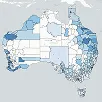

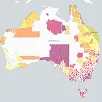


The total adult population (15 years or older) of Beresford 6530 WA is 1,239, with a median age of 45. Of those, 42.94% are married, 16.71% are divorced or separated, 35.35% are single and 5.41% are widowed.
The average household size is 2.0 people per dwelling, and the median household monthly income is estimated to be $7,664. The median monthly mortgage repayment for households in this suburb is $1,517 which is 19.79% of their earnings.
Source: ABS Census Data (2021)