
Yass, NSW 2582

Good to know:
Yass is a historic town in New South Wales, located in the postcode area of 2582. Situated approximately 280 kilometres southwest of Sydney and around 60 kilometres from Canberra, it serves as a key service centre for the surrounding rural area. Yass retains much of its colonial charm with heritage buildings, boutique shops, and cosy cafes. The Yass River flows through the town, adding to its scenic appeal. Notably, Yass offers easy access to the cool climate wine region, making it popular for weekend getaways and wine tours. Its vibrant community hosts various events, including the Yass Show and the Turning Wave Festival.
Read More
Yass NSW 2582 houses: the local property market shows a typical house price of $800,636, median rent of $578/week and a gross yield of 3.75%. Yass NSW 2582 property investment for houses sits between modest yield and favourable supply/demand balance — house prices in Yass are supported by tight for-sale stock and very low rental vacancy, but affordability is stretched with an estimated 36 years to own, which matters for owner-occupier entry and long-term buyer demand.
Property market outlook
Tight established supply is the dominant structural feature for Yass houses. Stock on Market at 0.26% is in the low-supply (opportune) range and vacancy is extremely low at 0.48% (opportune), both supportive of rental stability and a baseline for price resilience. Inventory sits at 3.7 months (neutral/balanced), meaning transactions can flow without the acute pressure that produces sharp short-term price moves, but the long-term supply backdrop is still restrictive. Building approvals ratio of 0.95% is neutral, indicating some development activity but not enough to substantially increase dwelling stock in the near term.
Demand indicators are mixed: Days on Market of 87 days and a Buy Search Index of 4 are both neutral, suggesting steady buyer interest rather than overheated demand. Clearance Rate recorded as 0% (neutral in HTAG terms when auctions are limited) should not be read as zero appetite — local market mechanisms likely rely more on private treaty sales. The Relative confidence in these metrics is high.
Price-growth and return context: the gross yield of 3.75% clears a conventional 3% yield threshold, so rental income partially offsets carrying costs but is not high. Given tight supply and very low vacancy, rental upside is credible over time, but long affordability (36 years to own) is the primary constraint on acceleration in house prices because it limits the pool of local buyers and increases sensitivity to rate rises.
Pros
- Low stock on market (0.26%): tightly held market that supports capital resilience and downside protection.
- Very low vacancy (0.48%): strong rental market tightness, reduces vacancy risk and supports rent growth prospects.
- IRSAD 1005 (opportune): socioeconomic profile above the critical threshold, supportive of stable long-term demand for houses.
- Units/Houses ratio 5% (opportune): low unit stock means less unit-led oversupply risk; favourable for house buyers.
- Yield 3.75%: above the basic 3% benchmark, offering reasonable income for a regional house market.
- High data confidence: reliable metrics to underpin investment decisions.
Cons
- Affordability 36 years: materially above the 30-year threshold — slows owner-occupier formation and increases sensitivity to interest-rate changes.
- Days on Market 87 and neutral Buy Search Index: lack of strong buyer heat may limit rapid capital appreciation.
- Inventory 3.7 months and Building Approvals 0.95% (neutral): balanced supply could become a headwind if demand weakens.
- Yield is moderate, not high: income alone is unlikely to deliver standout cashflow returns without leverage or capital growth.
- Clearance Rate 0% (neutral): limited auction activity reduces some price-discovery signals for investors used to capital-city markets.
Investment strategies
- Long-hold buy-and-rent (houses): Given low vacancy and tight supply, a conservative buy-and-hold strategy focused on houses targets rental stability and modest capital growth. Aim for mid-term to long-term horizons to capture rent growth and capital appreciation as supply remains constrained.
- Value-add small-scale improvements: modest refurbishment that improves rental appeal or shifts property to a higher rental band can enhance yield where capital growth is steady but not rapid.
- Target houses over units: UH ratio and UHV context favour houses for lower competition from higher-density developments; investors seeking lower supply risk should focus on detached dwellings.
- Manage affordability risk with conservative servicing: because Years-to-Own is long, stress-test portfolios for rate rises and slower buyer demand; use lower gearing or longer-term fixed-rate structures where practical.
- Shortlist comparative suburbs: use HTAG relative analysis to compare nearby markets with different affordability and growth cycles to find better entry points or complementary holdings.
Is Yass NSW 2582 a good suburb to invest in?
Yass NSW 2582 can be a good suburb for investors seeking capital resilience and rental stability in a regional market. The strongest signals are low for-sale stock and extremely low vacancy, which together reduce downside risk to both rents and prices. However, long affordability (36 years) and neutral buyer-demand signals mean you should approach with a medium- to long-term horizon, conservative finance assumptions and a preference for house stock. For investors prioritising robust rental cashflow or rapid capital gains, Yass offers stability rather than outsized yield or rapid appreciation.
About HtAG Analytics Data
Summary of reported base metrics (selection): Typical Price, Median Rent, Yield (gross rental yield), Sales and Rentals counts, Change (% over time), Capital Growth (annual estimate and low/high bounds), Total RoI, Rent Increase (annual estimate), Volatility Index, Confidence, IRSAD, Renter/Owner ratio, Units/Houses ratio, UHV (units only), Years to Own (affordability), Growth Rate Cycle (GRC), Stock on Market (SoM) and SoM%, Months of Inventory, Building Approvals & BA Ratio, Hold Period, Days on Market, Discounting, Vacancy Rate, Vacancies, Days on Rental Market (DoRM), Buy & Rent Search Index, Auction Clearance Rates, Population, Estimated Dwellings, School Rank, Non-residential Building Approvals per Capita, Annual Sales Volume and Distance to nearest GPO. There are additional metrics and variations by dwelling type that are not exhaustively listed here.
Methodology note: HTAG metrics are designed to capture both current conditions and historical trends to enable relative market analysis at, and close to, the point of purchase. In the suburb context above, our measures aim to reflect how locational supply/demand balance, socioeconomic profile (IRSAD), turnover and rental tightness combine to shape near-term returns and risk. While other providers (for example SQM) focus heavily on public data feeds and broad trend reporting that inform media narratives, HTAG builds metrics and curation that emphasise comparative analysis for buyers and investors evaluating discrete localities; similar metric names can therefore have important differences in how they are measured and applied.
Limitations and selection nuance: the snapshot provided here summarises current value metrics for Yass NSW 2582 houses but does not show metric trends over time, which can materially influence investment timing and risk. Some metrics (for example vacancy and supply measures) tend to matter more for rental-dependent strategies, while others (IRSAD, hold period, affordability) influence capital-growth potential — their relative weight depends on your budget, borrowing capacity, risk appetite and intended hold or refinance timeframe. Market selection is not one-size-fits-all; HTAG excels at shortlisting suburbs that match specific investor criteria and timeframes rather than offering generic recommendations. For investors and buyer agents pursuing serious acquisitions, perform relative analysis across a tailored set of suburbs aligned to your strategy.
Updated: 1 Jun 2026
Read Less
Quick Area Stats

Dwellings

Population

EDI

Bushfire Risk Index

Flood Risk Index
Education & Infrastructure
Sign Up to Access

School Rank

Infra. Spend
Market Trends
Essential metrics effectively streamline the process of identifying markets that match your financial situation and investment objectives. Typical Price, Indicative Yield and Total ROI provide a swift means to shortlist areas that resonate with what you’re seeking and can afford. These metrics also serve as valuable general trend indicators, allowing you to visualise transaction volumes and dynamics of change.
1M
1Q
1Y
3Y
5Y
7Y
10Y
1M
1Q
1Y
3Y
5Y
7Y
10Y

1M
1Q
1Y
3Y
5Y
7Y
10Y
The Growth Rate Cycle (GRC) is a metric used to analyse the year-on-year change in property values, providing insights into the growth cycle of a particular area. It uses the “typical price” metric to gauge property values more accurately than median prices, and includes both actual and projected data for the current year.

Fundamental metrics play a vital role in providing a comprehensive analysis of the socio-economic environment within a specific suburb or region. Additionally, the Return on Investment (ROI) and Volatility Index are crucial metrics that aid in evaluating the prospective profitability and the level of risk or stability in the market.
Socio-economics
Sign Up to Access

IRSAD

Renter to Owner

Units to Houses
Projections
Sign Up to Access

Projected Annual ROI

Volatility Index
Quick Area Stats
Sign Up to Access

Annual Sales Volume

Annual Rentals Volume



Stock on Market

Building Approvals

Inventory

Hold Period




Supply metrics are crucial in gauging both the existing volumes of real estate listed for sale and the properties anticipated to enter the market soon. A diminished supply could signal opportunities for price appreciation, particularly when there’s corresponding buyer demand to buoy the market. The Stock on Market and Inventory level metrics (current values) are presented as a 3-month rolling average of monthly data shown in the charts. This means the last 3 months of data are averaged. The BA Ratio represents the proportion of building approvals over the latest 12 months relative to the total dwellings in the area.

Days on Market

Search Index

Vacancy Rate

Clearance Rate




Demand metrics underscore the level of interest that potential property buyers or tenants have in a specific suburb or locality. When demand outstrips the available supply, or if the supply fails to meet the intensity of buyer/renter interest, there’s a potential for prices to climb, underscoring the pivotal relationship between demand dynamics and property value trends. The Days on Market and Clearance Rate metrics (current values) are presented as a 3-month rolling average of monthly data shown in the charts. This means the last 3 months of data are averaged.
We invite you to contribute to the conversation by sharing your thoughts or raising questions about this market in the comment section below.
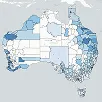

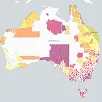


The total adult population (15 years or older) of Yass 2582 NSW is 5,451, with a median age of 42. Of those, 47.02% are married, 12.82% are divorced or separated, 32.09% are single and 8.02% are widowed.
The average household size is 2.5 people per dwelling, and the median household monthly income is estimated to be $8,740. The median monthly mortgage repayment for households in this suburb is $1,773 which is 20.29% of their earnings.
Source: ABS Census Data (2021)
Hi, Is the data for price of 3 and 4 bed correct ? – 3BR $841K & 4BR $604K.
Great discovery! These are the gods of supply and demand playing tricks on us. If something is more expensive, it is simply because it is more in demand. Now, there is definitely something irrational in the fact that a 3-bedroom is more expensive than a 4-bedroom, and it could be down to a couple of quirks:
Sample Size Effects: Sales volumes are low in Yass, so a handful of renovated/heritage 3-bedders in great spots can push the 3-bed median above more generic, but less expensive, 4-bedders.
Quality and Location: 3-bed houses may include higher-quality, renovated, or centrally located older homes with bigger blocks, while 4-bed homes might be newer but more “standard” or on the outskirts.
Buyer Preference: Downsizers, professionals or tree-changers may prefer quality 3-bed homes close to town, driving up their price.
Recent Sales Skew: One or two expensive 3-bedroom sales can distort the median when total sales are low.