
Coraki, NSW 2471

Good to know:
Coraki is a small, picturesque town located in the Northern Rivers region of New South Wales, with the postcode 2471. Situated at the confluence of the Richmond and Wilson Rivers, it is rich in history and natural beauty. The town has a close-knit community and offers essential amenities such as schools, shops, and healthcare services. Surrounded by lush landscapes, Coraki is a haven for fishing, boating, and outdoor activities. It boasts a relaxed rural lifestyle while being relatively close to the larger centres of Lismore and Ballina.
Read More
Coraki NSW 2471 shows a modest typical house price of $468,322, a rolling median rent of $499pw and a gross rental yield of 5.54% — facts that make Coraki NSW 2471 property investment immediately relevant for income-focused buyers. The Coraki property market combines above-average rental income prospects and a tight rental vacancy (0.75%) with lower socio‑economic indicators (IRSAD 899) and stretched affordability (33 years). For investors considering house prices in Coraki, the data points to a stable rental market and reasonable entry price, but constrained capital-growth upside relative to higher‑SES regions.
Property market outlook
Coraki’s supply/demand balance is broadly neutral-to-supportive. Stock on market (0.41%) and inventory (2.43 months) sit in the balanced band, while building approvals are effectively zero (BA Ratio 0.0%), which limits near-term new-supply pressure. Vacancy is low at 0.75% (opportune), supporting rental growth and rental security. Yield at 5.54% is a clear strength for houses and outperforms typical investor yield thresholds.
On the downside, IRSAD is 899 — below neutral thresholds — indicating relative socio-economic disadvantage that can cap long‑term capital appreciation compared with higher-IRSAD suburbs. Affordability at 33 years is above the 30-year threshold, signalling stretched buyer capacity which can limit demand elasticity when rates rise or credit tightens. Demand indicators such as Days on Market (68 days) and the Buy Search Index (5) are neutral, suggesting steady but not frenzied buyer interest. Data confidence is Medium, so use caution when interpreting micro‑level signals.
Pros
- Strong gross rental yield (5.54%): supportive of positive cash flow for buy‑and‑hold investors.
- Tight rental market (vacancy 0.75%): reduces vacancy risk and supports rent retention and increases.
- Low near-term supply risk: BA Ratio 0.0% and units/houses ratio 4% (opportune) mean fewer competing new apartments and a house-biased stock.
- Affordable entry price: Typical house price ~$468k makes Coraki accessible for investors seeking regional exposure.
- Balanced sales liquidity: DOM 68 days and hold period 8.12 years point to a market with reasonable turnover—easier to transact than very tightly held markets.
Cons
- Low IRSAD (899): socio-economic profile is below neutral, which can suppress long-term capital growth compared with higher‑SES markets.
- High affordability years (33): higher years-to-own can limit owner‑occupier demand and reduce buying power, particularly if financing costs rise.
- Neutral demand metrics: Clearance rate reported as 0% (treated as neutral) and Buy Search Index only average—limited evidence of strong buyer-driven capital uplift.
- Medium data confidence: fewer monthly sales reduce statistical certainty for hyper-local forecasting; cross-check with neighbouring markets.
- Limited immediate capital-growth catalysts visible in the metrics — growth likely to be gradual and reliant on regional economic improvements or infrastructure.
Investment strategies
- Income-first buy-and-hold: Coraki houses are best suited to investors prioritising rental yield and cash flow. At a 5.54% gross yield and low vacancy, target long-term tenancy models (3+ year horizon) and conservative gearing to weather rate cycles.
- Value-add/management uplift: modest typical prices mean smaller absolute capital outlay for renovations that materially improve rent and appeal to family tenants (kitchen/bath upgrades, outdoor living). Focus on owner‑occupier style features to broaden tenant pool.
- Selective acquisition for capital growth: if seeking growth, buy properties with micro-strengths — proximity to services, larger land parcels, or recently upgraded stock. Coraki’s lower IRSAD means capital growth will be more selective; compare against nearby higher-IRSAD localities for relative upside.
- Monitor supply and rental indicators: maintain active monitoring of BA Ratio, vacancy and local rental listings. Any uptick in building approvals or population flows can materially change the growth outlook.
- Relative-market shortlisting: use Coraki as part of a regional shortlist. HTAG’s relative-comparison approach helps identify where yields, affordability and socio‑economic metrics best align with your investment horizon and risk profile.
Is Coraki NSW 2471 a good suburb to invest in?
Coraki NSW 2471 is a sound choice for investors seeking reliable rental income and entry into an affordable regional market. Its strengths are above‑average gross yield and a tight rental market, which benefit cash-flow-focused strategies and investors prepared to hold for medium to long terms. However, low IRSAD and stretched affordability weaken the case for speculative, short-term capital gains — capital appreciation is likely to be modest and selective. For buyers agents and sophisticated investors, Coraki should be considered a strategic income play within a broader regional portfolio or as a lower-cost entry point, with selection focused on properties that deliver tenant appeal and the potential for targeted value‑add.
About HtAG Analytics Data
HtAG reports a core set of suburb-level metrics (listed below) that we use as a base for relative market assessment; dashboards include many additional indicators beyond these:
- Typical Price (suburb-level price representative)
- Median Rent (rolling-year, houses/units)
- Sales & Rentals (monthly online activity)
- Δ Change (period % change vs referent)
- Yield (gross rental yield)
- Capital Growth (annualised CG estimate and low/high bands)
- Total RoI (Yield + Capital Growth)
- Rent Increase (projected per annum)
- Volatility Index (MAPE-based)
- Confidence (data accuracy from sales volume)
- Relative Composite Score™
- Supply metrics: Stock on Market (SoM), SoM%, Inventory (months), Building Approvals & BA Ratio, Hold Period
- Demand metrics: Days on Market, Discounting, Vacancy Rate, Vacancies, DoRM, Buy & Rent Search Index, Auction Clearance Rates
- Other: IRSAD, RO Ratio, UH Ratio, UHV Ratio, Years to Own, Population, Estimated Dwellings, School Rank, Infrastructure proxies, Annual Sales Volume, Distance to nearest CBD GPO
HtAG’s metric methodology is built to capture both current market conditions and historical trends with the express purpose of performing close, purchase‑level comparisons. Unlike some public data providers that focus on high‑level trend commentary, HtAG metrics are curated and measured to support relative market shortlisting at or near the point of purchase. While metric names may appear similar across vendors, our curation, temporal alignment and comparative framing contain distinct nuances intended for transaction-level decision-making.
Finally, the snapshot above reports current value metrics for Coraki NSW 2471 but does not incorporate metric trajectories — and trends can be as influential as point-in-time values. Some metrics carry greater weight depending on an investor’s strategy, timeframe and borrowing capacity. Market selection therefore differs by investor: budget, loan serviceability, risk appetite and intended hold or refinance horizon all change which suburbs are suitable. HTAG is designed to shortlist markets against individual criteria rather than offer a one-size-fits-all verdict; for serious investors and buyer agents we recommend running relative analyses across a tailored set of nearby and comparable suburbs.
Updated: 1 Jun 2026
Read Less
Quick Area Stats

Dwellings

Population

EDI

Bushfire Risk Index

Flood Risk Index
Education & Infrastructure
Sign Up to Access

School Rank

Infra. Spend
Market Trends
Essential metrics effectively streamline the process of identifying markets that match your financial situation and investment objectives. Typical Price, Indicative Yield and Total ROI provide a swift means to shortlist areas that resonate with what you’re seeking and can afford. These metrics also serve as valuable general trend indicators, allowing you to visualise transaction volumes and dynamics of change.
1M
1Q
1Y
3Y
5Y
7Y
10Y
1M
1Q
1Y
3Y
5Y
7Y
10Y

1M
1Q
1Y
3Y
5Y
7Y
10Y
The Growth Rate Cycle (GRC) is a metric used to analyse the year-on-year change in property values, providing insights into the growth cycle of a particular area. It uses the “typical price” metric to gauge property values more accurately than median prices, and includes both actual and projected data for the current year.

Fundamental metrics play a vital role in providing a comprehensive analysis of the socio-economic environment within a specific suburb or region. Additionally, the Return on Investment (ROI) and Volatility Index are crucial metrics that aid in evaluating the prospective profitability and the level of risk or stability in the market.
Socio-economics
Sign Up to Access

IRSAD

Renter to Owner

Units to Houses
Projections
Sign Up to Access

Projected Annual ROI

Volatility Index
Quick Area Stats
Sign Up to Access

Annual Sales Volume

Annual Rentals Volume



Stock on Market

Building Approvals

Inventory

Hold Period




Supply metrics are crucial in gauging both the existing volumes of real estate listed for sale and the properties anticipated to enter the market soon. A diminished supply could signal opportunities for price appreciation, particularly when there’s corresponding buyer demand to buoy the market. The Stock on Market and Inventory level metrics (current values) are presented as a 3-month rolling average of monthly data shown in the charts. This means the last 3 months of data are averaged. The BA Ratio represents the proportion of building approvals over the latest 12 months relative to the total dwellings in the area.

Days on Market

Search Index

Vacancy Rate

Clearance Rate




Demand metrics underscore the level of interest that potential property buyers or tenants have in a specific suburb or locality. When demand outstrips the available supply, or if the supply fails to meet the intensity of buyer/renter interest, there’s a potential for prices to climb, underscoring the pivotal relationship between demand dynamics and property value trends. The Days on Market and Clearance Rate metrics (current values) are presented as a 3-month rolling average of monthly data shown in the charts. This means the last 3 months of data are averaged.
We invite you to contribute to the conversation by sharing your thoughts or raising questions about this market in the comment section below.
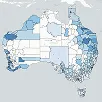

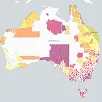


The total adult population (15 years or older) of Coraki 2471 NSW is 1,153, with a median age of 46. Of those, 36.34% are married, 17.61% are divorced or separated, 38.68% are single and 8.24% are widowed.
The average household size is 2.5 people per dwelling, and the median household monthly income is estimated to be $5,348. The median monthly mortgage repayment for households in this suburb is $1,246 which is 23.30% of their earnings.
Source: ABS Census Data (2021)