
Bulli, NSW 2516
Wollongong City Council, New South Wales
Good to Know
Bulli, NSW 2516 is a high-value house market in the Wollongong City Council area, currently positioned as a long-hold capital growth submarket. Located on the Illawarra coast south of the Sydney CBD, it is home to roughly 6,798 adults across 2,801 dwellings and currently records a vacancy rate of 1.01%.
According to HtAG Analytics, Bulli is exhibiting supply-constrained behaviour with stabilising turnover. Stock on Market sits at 0.13% and Inventory at 2.68 months — around the ~3-month balanced threshold — driving +6.8% YoY price growth and +4.6% YoY rent growth.
What the market data is signalling
House prices in Bulli have outpaced rents over the past year (+6.8% price vs +4.6% rent growth), while the indicative gross yield is a low 2.48% — below the commonly recommended 3% minimum for yield-focused buying. That combination points to a market increasingly reliant on capital growth rather than rental income for total returns.
Supply-side metrics show scarcity: the 0.13% Stock on Market is opportune and keeps upward pressure on prices, even as Inventory at 2.68 months sits in the neutral band. Track relative momentum on the Markets in the Moment (MiM™) heatmap.
Who lives in Bulli — and why it matters for investors
Bulli scores an IRSAD decile of 10, indicating a very high socio‑economic profile — generally supporting lower downside volatility and stronger long-run capital growth potential. The renter/owner split is 21% renters (neutral), so owner-occupation dominates the suburb.
Housing stock is skewed to standalone homes: the units/houses ratio is an opportune 9%, which tends to reduce turnover volatility compared with higher-unit suburbs. For more on how socio‑economic profile affects growth, see the IRSAD Crossover study.
Why suburb-level data matters for Bulli
Council averages can mask pockets like Bulli — decisions should be driven by the suburb's own metrics. Bulli’s typical house price is $1,883,831, gross yield sits at 2.48%, Stock on Market is an opportune 0.13%, Inventory is 2.68 months, and Days on Market are 45 days. The Affordability index at 67 years signals a stretched buyer market, so buyers and lenders may price in capacity constraints.
Read about the value of suburb‑level screening in our LGA vs Suburb research. For deeper, downloadable metrics see the full Bulli data guide.
What's behind the RCS™ score of 66
HtAG's RCS™ (Rating Composite Score) bundles three independent dimensions — risk minimisation, capital‑growth potential and cashflow resilience — into one composite. A score of 66 signals a market with solid growth tilt but moderate cashflow constraints; examining the sub‑scores helps align Bulli to either a growth or income strategy.
Learn more about how the RCS™ is built, or open Bulli in HtAG Copilot to interrogate sub‑scores and timelines.
Forward signals to watch
vacancy rate — currently 1.01%: a sustained balanced vacancy around 1% to 1.5% usually supports steady rent growth without acute tenant shortages; watch for any fall below 1% that would ratchet up competition for rental stock.
building approvals ratio — currently 0.99%: this neutral reading implies supply additions are present but not explosive; a rising approvals rate over 12–24 months would increase future turnover and dilute scarcity.
Sydney cycle phase: a city‑wide shift in the Sydney cycle (into expansion or contraction) would influence buyer sentiment and capital flows into the Illawarra; a stronger Sydney market typically lifts nearby coastal and commute suburbs, while a Sydney slowdown can dampen Bulli’s momentum.
Does this area meet your investment goals?
Get full accessCritical to know
RCS Breakdown
Bulli's RCS™ headline is an overall signal — but it doesn't tell you why. The three sub-scores below reveal whether that score is earned through risk minimisation, capital growth, or cashflow — and which portfolio brief it fits.
starter
Investor
Pro
Critical to know
Market Trends
Bulli's headline values — $1,935K to buy and $914PW to rent, a 2.45% gross yield. Over the past decade, prices have moved 99.13% and rents 59.48% — the Yield series shows whether that gap is widening (price outpacing rent, yield compressing) or closing.
$1,935K is today. The 10-year trajectory reveals whether that's the top of a run, the start of a new leg, or somewhere mid-cycle. Sign up to unlock the entire trend line.
$914PW today, with rent growth at (+5.65% YoY) compared to price growth (+9.22%). That spread determines yield is expanding or compressing across the next cycle. Sign up to unlock the entire trend line.
Where is Bulli in its cycle - and is the 2.45% yield holding?
Cycle phase tells you whether you're buying near the bottom (room to run) or top (compression ahead). Yield trajectory tells you whether cashflow is durable or being eroded — the single most important question for a long-hold thesis.
Cycle Phase
Cycle Position
Yield Trajectory
Rent vs Price Spread
Investor
Pro
Area Risks
Property data alone won't flag the structural risks that can erode a long-hold position. Bushfire overlays, flood-zone exposure, and economic concentration sit outside the price feed but determine whether your capital is insurable, defensible, and structurally protected. Unlock to see.
Are there hidden structural risks shaping Bulli's long-hold story?
Beyond the headline price, Bulli carries risk signals a median can't show — hazard exposure from bushfire and flood overlays, and how narrowly local employment leans on a handful of sectors (the concentration the EDI score quantifies). Together these separate insurable, defensible long-holds from those carrying tail-risk that never surfaces in the headline number.
MADI Risk
EDI Risk
Bushfire
Flood
Investor
Pro
Critical to know
Supply & Demand
Bulli's headline numbers show where the market is today. The two cards below answer where it's heading. Direction is what separates a buy from a wait.
Is housing supply tightening or building up?
Stock on Market is one number — the trend is what matters. SoM, inventory, building approvals and hold period together reveal whether the market is starving for stock (price pressure up) or quietly building a pipeline (pressure down).
Stock on Market
Inventory
Building Approvals
Hold Period
Is buyer and renter demand heating up or cooling off?
Vacancy is one signal — the real question is whether demand is still building or quietly peaking. Days on market, vacancy, search index and clearance rate are the four pulse-points — when they diverge, they signal a turning point.
Days on Market
Vacancy Rate
Search Index
Clearance Rate
Investor
Pro
Critical to know
Fundamentals
Bulli can look solid on the surface — but the three layers below separate markets that genuinely hold value from ones that only look like they do.
Is Bulli genuinely stable - or just expensive?
IRSAD hints at affluence, but socio-economic strength alone doesn't guarantee resilience. Combined with the renter-to-owner balance and unit-to-house ratio, you get the three signals that separate a tightly-held submarket from one carrying hidden volatility.
IRSAD
Renter to Owner
Units to Houses
Where do Bulli prices go over the next 12 months?
Today's headline price is just a snapshot. Projected ROI and the volatility index tell you whether to commit capital now, wait for a softer entry, or rotate into a steadie submarket.
Projected Annual ROI
Volatility Index
Can you actually buy into Bulli - and exit cleanly?
Tightly-held areas reward long-hold investors but punish anyone who needs liquidity. Annual sales and rental volume reveal whether your capital can reposition — or sits structurally locked in.
Annual Sales Volume
Annual Rental Volume
Investor
Pro
Important to know
Education & Infrastructure
Bulli looks tightly-held and stable on the surface — but the three layers below separate areas that genuinely hold value from ones that only look like they do.
Does Bulli's school catchment + infrastructure pipeline justify the price?
School ranks anchor family demand and tenant quality. The active infrastructure pipeline shifts a suburb's price ceiling over the next 5–10 years. Together they tell you whether Bulli has structural support for the next leg of capital growth.
School Rank
Hospitals & Employment
Infrastructure Spend
Transport Projects
Investor
Pro
Full HtAG Intelligence
Bulli shows potential. The platform tells you whether it's the best fit for your portfolio.
Price and yield are only the surface. HtAG reads the forces underneath — supply tightening or loosening, demand heating or cooling, and the risks that move slowly but decide long-term growth. Together they show whether Bulli has the structural support for its next leg — or whether the numbers are running ahead of the fundamentals.
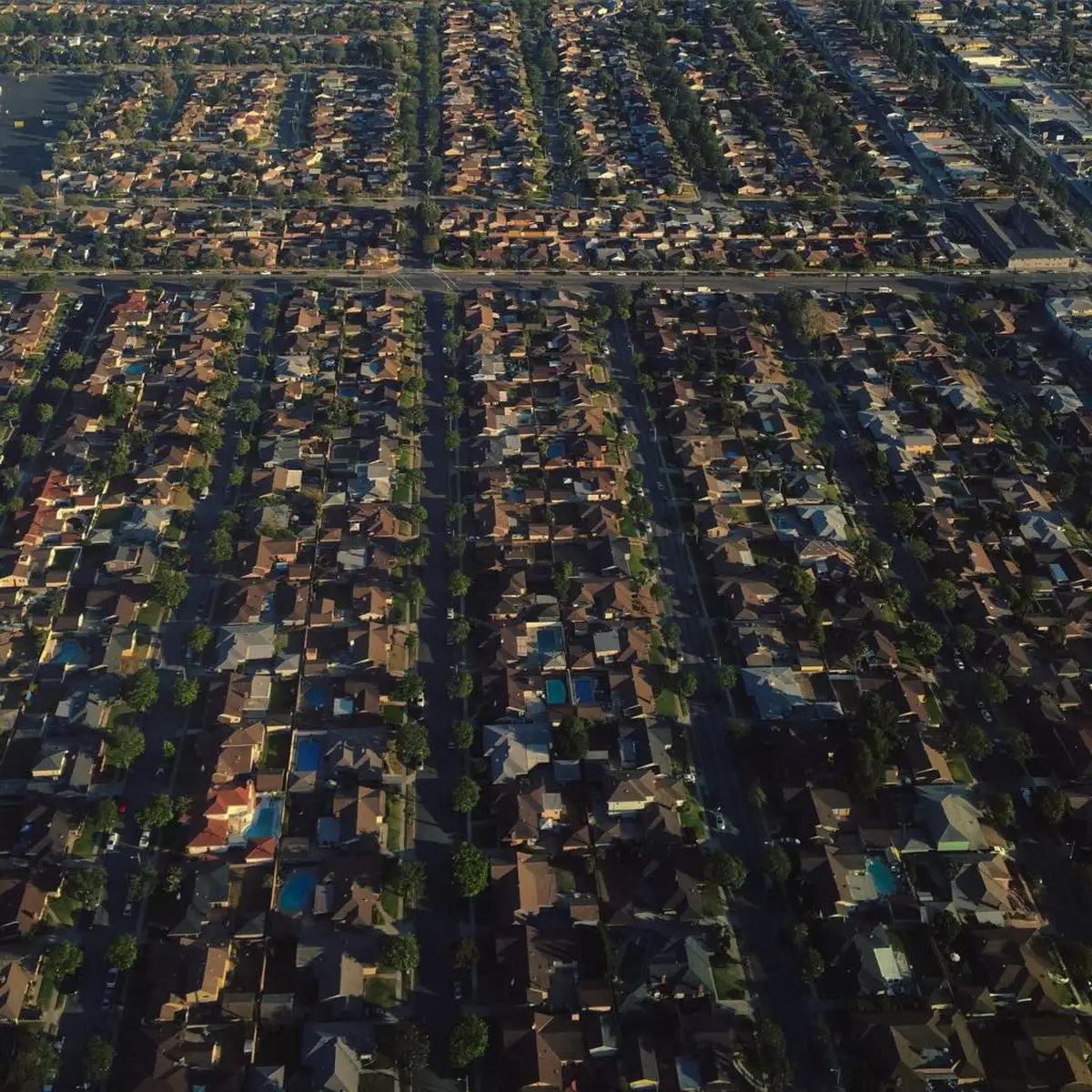
The total adult population (15 years or older) of Bulli 2516 NSW is 5,304, with a median age of 40. Of those, 52.77% are married, 10.01% are divorced or separated, 33.69% are single and 3.60% are widowed.
The average household size is 2.8 people per dwelling, and the median household monthly income is estimated to be $11,184. The median monthly mortgage repayment for households in this suburb is $2,525 which is 22.58% of their earnings.
Source: ABS Census Data (2021)