
Enmore, NSW 2042

Good to know:
Enmore is a vibrant inner-west suburb of Sydney, located just 5 kilometres south-west of the Sydney central business district, in the state of New South Wales. Known for its bohemian and eclectic atmosphere, Enmore is famous for its thriving arts and music scene, centred around the historic Enmore Theatre. The suburb features a variety of cafes, restaurants, and boutique shops, reflecting its diverse and multicultural community. The architecture is a mix of Victorian terraces and modern apartments. Enmore is also well-connected by public transport, making it a convenient location for both residents and visitors.
Read More
Enmore NSW 2042 property market: houses have a Typical Price of $2,140,775, a rolling-year Median Rent of $1,132 per week and a gross Yield of 2.75% (below the common 3% cashflow threshold). This Enmore NSW 2042 property investment snapshot shows tight supply, very low vacancy and strong socio-economic indicators, but stretched affordability and weak rental yield — a market that favours capital-growth strategies over cashflow plays.
Property market outlook
Enmore house prices sit at a premium with an IRSAD of 1102, indicating an affluent catchment that underpins long‑term capital growth potential. Supply-side signals are strongly supportive of price stability and upside: Stock on Market is 0.32% and Inventory is 1.51 months (both in the “low supply” band), Building Approvals ratio is effectively zero and Hold Period is 10.6 years (tightly held stock). Demand indicators reinforce that dynamic — Days on Market for houses is 30 days and Vacancy Rate is 0.8% (rental market tight). However, the market is cashflow-constrained: gross yield on houses is 2.75%, below the 3% rule-of-thumb for positive cashflow, and the Affordability index at 65 years is an extreme outlier signalling significant buyer strain. Clearance rates are middling (57%), and the Renter/Owner ratio at 49% flags a relatively high renter base. Overall: structural supply/demand supports price resilience and capital growth, but low yield and severe affordability mean investors must be growth‑focused and rate‑sensitive.
Pros
- Tight supply: SoM 0.32% and Inventory 1.51 months — supports upward price pressure and low negotiating leverage for buyers.
- Strong SES: IRSAD 1102 — demographic strength consistent with long-term capital appreciation.
- Tightly held stock: Hold Period 10.6 years — fewer listings and lower churn.
- Robust rental demand: Vacancy 0.8% and DoM 30 days — limited rental downtime and tenant competition.
- High confidence in data: Confidence = High — reliability for comparative analysis and shortlist work.
Cons
- Low gross yield: 2.75% — below common cashflow thresholds; negative cashflow likely unless purchased at a discount or heavily renovated.
- Affordability stretched: Years to Own = 65 — very high leverage risk and sensitivity to interest rate moves; limits buyer pool and can amplify downside in rate-driven corrections.
- High renter ratio: Renter/Owner = 49% — classified unfavourable; may imply more rental turnover and governance/tenant-related risks compared with owner-occupied suburbs.
- Clearance rate only average: 57.14% — auction market is not overheating; pricing can be selective at sale time.
- Limited supply creation: Building Approvals 0% reduces future new-stock supply but may constrain options for investors seeking new-build product.
Investment strategies
- Capital-growth core buy: Target well‑located houses with structural attributes (period character, streetscape appeal, larger blocks) that appeal to owner-occupiers — holding horizon 7–10+ years to capture compounding capital growth.
- Value-add renovation: Seek homes where cosmetic or layout upgrades can materially increase rent and resale value to partially offset low initial yield; focus on cost-effective improvements that enhance appeal to affluent local buyers.
- Dual-occupancy or secondary dwelling: Where zoning and block size permit, add an accessory dwelling to lift gross yield and spread holding costs — improves cashflow profile without moving away from growth exposure.
- Off‑market and pre‑emptive buying: Use buyers‑agent networks to access off‑market stock (tightly held market makes these listings valuable); quick decision-making and cash or pre-approved finance will win opportunities.
- Borrowing and risk management: Given extreme affordability and low yield, keep gearing conservative relative to portfolio-level risk appetite; stress-test cashflows for rate rises and consider staggered refinancing windows.
- Consider nearby yield alternatives: If cashflow is a must, compare Enmore’s capital-growth prospects with nearby suburbs offering higher yields; use Enmore for appreciation and adjacent markets for positive yield holdings.
Is Enmore NSW 2042 a good suburb to invest in?
It depends on strategy. Enmore NSW 2042 is a good suburb for investors who prioritise long-term capital growth and can tolerate low initial cash returns and interest-rate sensitivity. Strong socio‑economic fundamentals, tightly constrained supply and sub‑1% vacancy support appreciation and low rental downtime. Conversely, it is a poor choice for investors requiring immediate positive cashflow or limited risk tolerance around higher mortgage servicing — the 2.75% gross yield and 65-year affordability metric are decisive negatives for cashflow-driven strategies. Recommended investor profile: growth-focused buyers with capacity to hold for multiple market cycles, or buyers able to execute value-add or dual‑dwelling strategies to improve yield.
About HtAG Analytics Data
Base metrics shown here (reported per dwelling type where applicable) include: Typical Price, Median Rent, Sales and Rentals counts, % Change over various lookbacks, Gross Rental Yield, Capital Growth (per annum estimate with low/high bounds), Total RoI (Yield + CG), Rent Increase (projected pa), Volatility Index (MAPE-based), Confidence (data accuracy), Relative Composite Score™ and core structural indicators such as IRSAD, Renter/Owner ratio, Unit/House ratio, Years to Own (affordability), Growth Rate Cycle (GRC), Stock on Market (SoM and SoM%), Inventory (months of supply), Building Approvals & BA Ratio, Hold Period, Days on Market, Discounting, Vacancy Rate, Buy & Rent Search Index and Auction Clearance Rates. There are additional advanced metrics (population, estimated dwellings, school rank, non-residential approvals per capita, annual sales volume, distance to GPO) not fully enumerated here.
The guiding principle behind HtAG metrics is to capture both current market conditions and historical trends to enable relative market analysis at the suburb level — effectively assessing markets as close as possible to the point of purchase. While other providers (for example publicly positioned services like SQM) supply broad public datasets often used for macro narratives, HtAG’s metrics are curated and measured with nuances tailored to shortlist comparison and transactional decision-making in specific suburbs such as Enmore NSW 2042. That means similarly named metrics can differ in curation, timing and context compared with other sources.
Finally: the snapshot above communicates current-value metrics for Enmore houses but does not substitute for trend analysis and weightings across metrics — some indicators matter more for certain strategies (e.g. yield for cashflow investors, IRSAD and inventory for growth investors). Investor choice always depends on budget, borrowing capacity, risk appetite and intended hold/refinance/sell horizons. HtAG specialises in shortlisting and comparative analysis based on individual investor criteria rather than one-size-fits-all rankings. For serious buy-side decision-making, perform relative analysis across multiple suburbs and timeframes aligned with your strategy.
Updated: 1 Jun 2026
Read Less
Quick Area Stats

Dwellings

Population

EDI

Bushfire Risk Index

Flood Risk Index
Education & Infrastructure
Sign Up to Access

School Rank

Infra. Spend
Market Trends
Essential metrics effectively streamline the process of identifying markets that match your financial situation and investment objectives. Typical Price, Indicative Yield and Total ROI provide a swift means to shortlist areas that resonate with what you’re seeking and can afford. These metrics also serve as valuable general trend indicators, allowing you to visualise transaction volumes and dynamics of change.
1M
1Q
1Y
3Y
5Y
7Y
10Y
1M
1Q
1Y
3Y
5Y
7Y
10Y

1M
1Q
1Y
3Y
5Y
7Y
10Y
The Growth Rate Cycle (GRC) is a metric used to analyse the year-on-year change in property values, providing insights into the growth cycle of a particular area. It uses the “typical price” metric to gauge property values more accurately than median prices, and includes both actual and projected data for the current year.

Fundamental metrics play a vital role in providing a comprehensive analysis of the socio-economic environment within a specific suburb or region. Additionally, the Return on Investment (ROI) and Volatility Index are crucial metrics that aid in evaluating the prospective profitability and the level of risk or stability in the market.
Socio-economics
Sign Up to Access

IRSAD

Renter to Owner

Units to Houses
Projections
Sign Up to Access

Projected Annual ROI

Volatility Index
Quick Area Stats
Sign Up to Access

Annual Sales Volume

Annual Rentals Volume



Stock on Market

Building Approvals

Inventory

Hold Period




Supply metrics are crucial in gauging both the existing volumes of real estate listed for sale and the properties anticipated to enter the market soon. A diminished supply could signal opportunities for price appreciation, particularly when there’s corresponding buyer demand to buoy the market. The Stock on Market and Inventory level metrics (current values) are presented as a 3-month rolling average of monthly data shown in the charts. This means the last 3 months of data are averaged. The BA Ratio represents the proportion of building approvals over the latest 12 months relative to the total dwellings in the area.

Days on Market

Search Index

Vacancy Rate

Clearance Rate




Demand metrics underscore the level of interest that potential property buyers or tenants have in a specific suburb or locality. When demand outstrips the available supply, or if the supply fails to meet the intensity of buyer/renter interest, there’s a potential for prices to climb, underscoring the pivotal relationship between demand dynamics and property value trends. The Days on Market and Clearance Rate metrics (current values) are presented as a 3-month rolling average of monthly data shown in the charts. This means the last 3 months of data are averaged.
We invite you to contribute to the conversation by sharing your thoughts or raising questions about this market in the comment section below.
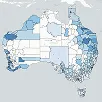

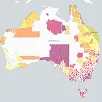


The total adult population (15 years or older) of Enmore 2042 NSW is 3,449, with a median age of 35. Of those, 25.08% are married, 8.73% are divorced or separated, 63.87% are single and 2.15% are widowed.
The average household size is 2.2 people per dwelling, and the median household monthly income is estimated to be $12,744. The median monthly mortgage repayment for households in this suburb is $2,994 which is 23.49% of their earnings.
Source: ABS Census Data (2021)