
Bayview, NT 0820

Good to know:
Bayview is an affluent, waterfront suburb in Darwin, Northern Territory, located approximately 4.5 kilometres from the Darwin CBD. Known for its luxurious homes and scenic views, Bayview offers a peaceful, family-friendly environment with an emphasis on outdoor living. The suburb features marinas, landscaped parks, and walking trails. Its close proximity to schools, shopping centres, and dining options in nearby suburbs like Parap and Fannie Bay make it highly sought after. Bayview's modern infrastructure and serene ambiance cater well to both professionals and retirees.
Read More
Bayview NT 0820 property market data for houses shows a typical price of $1,298,689, a median rent of $1,011 per week and a gross yield of 4.05%. This snapshot describes the house market: a relatively high socio‑economic profile (IRSAD 1128), neutral supply indicators (SoM 0.55%, inventory 2.55 months), brisk selling (DOM 32 days) and a mix of investor influence (Renter/Owner 47.0%) and unit presence (Units/Houses 57.0%). Data confidence is Medium — use as a directional, suburb‑level input rather than a substitute for on-the-ground due diligence.
Property market outlook
Demand vs supply: Sales speed (32 days on market) and a vacancy rate of 1.45% point to steady rental demand and active buyer interest. Stock on market (0.55%) and inventory (2.55 months) sit in the balanced range, so there’s no immediate overhang of listings. Building approvals ratio at 0.0% is supportive for established stock scarcity over the medium term — little new supply is expected to come through in the near future.
Structural strengths: IRSAD 1128 is strongly opportune — the suburb sits well above neutral socio‑economic thresholds, which supports long‑term capital resilience. Gross yield for houses at 4.05% is attractive relative to conservative benchmarks (3%), offering a reasonable income profile for investors buying houses at typical price points near $1.3m.
Risks and friction: Affordability sits at an estimated 35 years to own, above the 30‑year threshold, which limits owner‑occupier entry and tends to support higher renter share. Renter/Owner at 47% (unfavourable) and Units/Houses at 57% (unfavourable) indicate a relatively high investor / unit mix across the suburb — that can cap capital upside for some dwelling types and increases sensitivity to rental market cycles. Confidence is Medium, so interpret short‑term signals with some caution.
Pros
- Yield: House gross yield 4.05% — above typical conservative thresholds and supportive of cashflow-focused strategies.
- Socio‑economic profile: IRSAD 1128 — a strong score that supports demand from higher income brackets and long‑term capital stability.
- Low planned supply: Building approvals ratio 0.0% suggests limited imminent new dwelling supply, a tailwind for established stock prices.
- Fast market movement: Days on market 32 days (opportune) — properties still transact relatively quickly, reducing holding‑cost risk for sellers.
- Balanced inventory: Stock on market and months of supply are in balanced ranges, so no immediate price‑suppressing oversupply.
Cons
- High renter share: Renter/Owner 47% — elevated investor/rental concentration, which can increase vacancy sensitivity and reduce owner‑occupier demand premium.
- Unit prevalence: Units/Houses 57% — a high unit proportion in the suburb can mean competition from higher‑density stock and potential downward pressure on house premiums in some pockets.
- Affordability pressure: 35 years to own — above the 30‑year threshold, indicating affordability constraints that favour investors over first‑home buyers and could limit owner‑occupier driven uplift.
- Data confidence: Medium — the sample of transactions and listings supports directional insight but not fine‑grain certainty.
- Clearance Rate: reported 0.0% (neutral) — may reflect low auction activity in the market rather than weak demand; interpret carefully.
Investment strategies
- Core income play (houses): Given a 4.05% yield and limited new approvals, target well‑located houses that deliver clean rent roll and minimal capex. Aim for 1–3 year cashflow stability and hold 5+ years for compounding yield + capital growth.
- Selective value-add: Seek houses where modest renovations (kitchen/bath or outdoor living) lift rental appeal and reduce vacancy risk. Improvements that differentiate from nearby units can preserve price premium.
- Avoid generic unit buys at scale: With Units/Houses at 57%, unit supply is relatively high. If considering units, prioritise premium, well‑positioned stock with strong amenity links or owner‑occupier appeal to mitigate oversupply risk.
- Buyer‑agent approach: Negotiate around auction‑equivalent benchmarks where vendors expect quick sales. Because DOM is low, pre‑inspection and prepared offers (subject to due diligence) increase win‑rates. Target properties with clear owner‑occupier features to reduce renter concentration.
- Monitor leading indicators: Watch building approvals, vacancy trend, and changes to renter/owner mix. A rising approvals ratio or vacancy would materially change the risk profile and should prompt reassessment.
- Hedged portfolio fit: Use Bayview houses as part of a diversified portfolio where income stability and socio‑economic strength offset affordability risks and local rental concentration.
Is Bayview NT 0820 a good suburb to invest in?
Bayview NT 0820 can be a good suburb for investors prioritising rental income and socio‑economic stability. The house market shows a respectable gross yield (4.05%) and a high IRSAD (1128), with limited near‑term new supply — factors supportive of income and capital preservation. However, its elevated renter share (47%), high unit presence (57%) and weaker affordability (35 years) increase market sensitivity to rental cycles and limit owner‑occupier demand premiums. For buyers seeking reliable cashflow and prepared to be selective on asset condition and micro‑location, Bayview houses are worth consideration. For investors seeking aggressive capital appreciation or those less tolerant of tenant‑market volatility, exercise caution and require tighter selection criteria.
About HtAG Analytics Data
Base metrics reported (subset):
- Typical Price, Median Rent, Sales, Rentals, % Change (Δ), Yield (Gross Rental Yield), Capital Growth (annualised CG ± range), Total RoI (Yield + CG), Rent Increase (annualised projection), Volatility Index, Confidence, Relative Composite Score. There are additional metrics in our dashboards (e.g., SoM%, Inventory months, Building Approvals Ratio, Hold Period, IRSAD, Renter/Owner ratio, Units/Houses ratio, Vacancy Rate, Buy & Rent Search Index, Auction Clearance Rates), but the list above is the core set surfaced in standard suburb reports.
Methodology note (suburb context): HTAG metrics are designed to capture both current market conditions and historical patterns at suburb level to enable relative, point‑of‑purchase comparisons. For Bayview NT 0820 this means our values integrate recent transaction/rental listings, socio‑economic context (e.g. IRSAD 1128) and supply signals (approvals, inventory) so investors can compare this suburb’s profile to alternatives. That differs from providers who primarily publish public time series for broader trend commentary; HTAG’s curation and measurement focus on the decision‑point — the local pocket and dwelling type you might buy — which creates subtle but important differences in metric construction and interpretation.
Limitations and practical advice: The snapshot above describes current value metrics but doesn’t reflect their momentum or direction — trends can materially alter risk/return (for example, a rising approvals ratio or increasing vacancy would change Bayview’s supply/demand balance). Some metrics matter more than others depending on strategy and timeframe; therefore, identical scores produce different recommendations for yield‑oriented investors versus growth‑oriented buyers. Market selection depends on individual budgets, borrowing capacity, risk appetite and intended hold/refinance timelines — HTAG specialises in shortlisting markets against those individual criteria rather than one‑size‑fits‑all rankings. For active acquisition work, use this suburb snapshot as a starting filter and follow with comparative, multi‑suburb analysis aligned to your specific investment mandate.
Updated: 1 May 2026
Read Less
Quick Area Stats

Dwellings

Population

EDI

Bushfire Risk Index

Flood Risk Index
Education & Infrastructure
Sign Up to Access

School Rank

Infra. Spend
Market Trends
Essential metrics effectively streamline the process of identifying markets that match your financial situation and investment objectives. Typical Price, Indicative Yield and Total ROI provide a swift means to shortlist areas that resonate with what you’re seeking and can afford. These metrics also serve as valuable general trend indicators, allowing you to visualise transaction volumes and dynamics of change.
1M
1Q
1Y
3Y
5Y
7Y
10Y
1M
1Q
1Y
3Y
5Y
7Y
10Y

1M
1Q
1Y
3Y
5Y
7Y
10Y
The Growth Rate Cycle (GRC) is a metric used to analyse the year-on-year change in property values, providing insights into the growth cycle of a particular area. It uses the “typical price” metric to gauge property values more accurately than median prices, and includes both actual and projected data for the current year.

Fundamental metrics play a vital role in providing a comprehensive analysis of the socio-economic environment within a specific suburb or region. Additionally, the Return on Investment (ROI) and Volatility Index are crucial metrics that aid in evaluating the prospective profitability and the level of risk or stability in the market.
Socio-economics
Sign Up to Access

IRSAD

Renter to Owner

Units to Houses
Projections
Sign Up to Access

Projected Annual ROI

Volatility Index
Quick Area Stats
Sign Up to Access

Annual Sales Volume

Annual Rentals Volume



Stock on Market

Building Approvals

Inventory

Hold Period




Supply metrics are crucial in gauging both the existing volumes of real estate listed for sale and the properties anticipated to enter the market soon. A diminished supply could signal opportunities for price appreciation, particularly when there’s corresponding buyer demand to buoy the market. The Stock on Market and Inventory level metrics (current values) are presented as a 3-month rolling average of monthly data shown in the charts. This means the last 3 months of data are averaged. The BA Ratio represents the proportion of building approvals over the latest 12 months relative to the total dwellings in the area.

Days on Market

Search Index

Vacancy Rate

Clearance Rate




Demand metrics underscore the level of interest that potential property buyers or tenants have in a specific suburb or locality. When demand outstrips the available supply, or if the supply fails to meet the intensity of buyer/renter interest, there’s a potential for prices to climb, underscoring the pivotal relationship between demand dynamics and property value trends. The Days on Market and Clearance Rate metrics (current values) are presented as a 3-month rolling average of monthly data shown in the charts. This means the last 3 months of data are averaged.
We invite you to contribute to the conversation by sharing your thoughts or raising questions about this market in the comment section below.
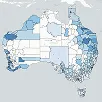

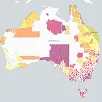


The total adult population (15 years or older) of Bayview 0820 NT is 1,413, with a median age of 34. Of those, 45.22% are married, 11.11% are divorced or separated, 42.04% are single and 1.70% are widowed.
The average household size is 2.7 people per dwelling, and the median household monthly income is estimated to be $13,976. The median monthly mortgage repayment for households in this suburb is $2,700 which is 19.32% of their earnings.
Source: ABS Census Data (2021)