
Nikenbah, QLD 4655

Good to know:
Nikenbah is a suburban locality in the Fraser Coast Region, Queensland, with the postcode 4655. Situated to the west of Hervey Bay, Nikenbah has a semi-rural charm with a mix of residential properties and open green spaces. The suburb is known for its local markets, held at the Hervey Bay Animal Refuge, offering a range of goods from fresh produce to crafts. Nikenbah provides easy access to essential amenities located in nearby urban centres while maintaining a peaceful, community-oriented atmosphere. The area is characterised by its tranquil lifestyle and proximity to the scenic beauty of the Fraser Coast.
Read More
Nikenbah QLD 4655 shows a typical house price of $1,145,651, median rent of $717 per week and a gross rental yield of 3.25% — the key numbers for any Nikenbah QLD 4655 property market or property investment review. House prices in Nikenbah are high relative to local incomes: the affordability metric sits at an extreme 60 years. The suburb combines an opportune socio-economic profile (IRSAD 1023) with clear near-term supply pressures (inventory 7.2 months; building approvals ratio 2.74%) and an elevated vacancy rate (3.99%), creating a mixed outlook for investors.
Property market outlook
- Demand vs supply: Buyer search interest is modestly elevated (Buy Search Index = 6, treated as neutral), and days-on-market for houses is 43 days (neutral). However, supply indicators point to pressure: Inventory at 7.2 months and a Building Approvals Ratio of 2.74% are both in the unfavourable range and signal increased future supply. Stock on Market (SoM) of 0.41% sits at the neutral threshold — not tight enough to drive strong seller conditions.
- Rental market: Median weekly rent of $717 gives a gross yield of 3.25% — just above a common floor for institutional caution (3%), but low for yield-focused investors. Vacancy is 3.99%, which is unfavourable and indicates elevated rental risk and potential for softer rent growth or the need for concessions.
- Socio-economic and dwelling mix: IRSAD 1023 is opportune and supports demand for quality housing; the Units/Houses ratio is 0% (opportune) meaning the suburb is almost exclusively houses, reducing competition from apartment oversupply but also limiting investment strategies to houses only.
- Market dynamics: Hold period is short at 3.75 years (unfavourable), implying frequent turnover and a higher proportion of recent buyers or speculators — a factor that tends to increase supply volatility and downside risk in corrections. Clearance rate is reported as 0% (neutral for this dataset, reflecting low auction activity rather than a measured clearance outcome).
- Data confidence: High — the dataset is robust enough for comparative analysis and shortlisting.
Pros
- Strong socio-economic indicator: IRSAD 1023 suggests an affluent buyer pool that supports long-run price resilience for well-located stock.
- Yield above basic threshold: 3.25% gross yield is above a commonly used 3% minimum, giving some rental income buffer.
- House-dominant market: Units/Houses ratio of 0% reduces competition from apartments and focuses strategies on houses, often preferred by families and long-term owner-occupiers.
- Search interest present: Buy Search Index of 6 indicates there is buyer attention, so motivated sellers can still reach a market.
Cons
- Very poor affordability: 60 years to own is extreme and restricts the local owner-occupier buyer pool, which can cap organic demand and increase reliance on out-of-area buyers.
- Elevated inventory and approvals: 7.2 months of supply and a BA ratio of 2.74% point to an incoming pipeline that will keep supply elevated and weigh on short-to-medium term price upside.
- Short hold periods: 3.75 years suggests higher turnover and potentially more speculative activity, which is destabilising for long-term growth expectations.
- Rental risk: Vacancy at 3.99% is above the balanced threshold and raises the risk of longer vacancy rounds or softer rent growth.
- Modest yield for income investors: 3.25% is borderline for investors targeting cashflow; after costs and financing this will be thin.
Investment strategies
- Buyer-agent shortlist approach: Treat Nikenbah as a comparator suburb to test value against nearby markets with better affordability or lower approvals pipelines. Use off-market channels and negotiated sales; expect to need to secure sub-market purchase prices to achieve acceptable upside.
- Capital-growth bias with selective asset selection: Given the affluent IRSAD, target houses with attributes likely to outperform new supply — larger land parcels, corner blocks, elevated or private sites, and properties with scope for legal value-add (extensions, subdivision potential where council rules permit). These attributes reduce direct competition with infill and new-build supply.
- Avoid pure yield plays: The suburb’s 3.25% yield and elevated vacancy make it unattractive for investors who require strong immediate cashflow. If buying for yield, select assets with clear rent-premium potential (e.g., multiple living areas, dual-living layouts) or consider short-term holiday/holiday-adjacent strategies only where permitted and demand exists.
- Asset management focus: Reduce vacancy risk through active leasing, competitive rent-setting and professional marketing. Invest in minor upgrades that materially increase appeal to family tenants rather than cosmetic finishes alone.
- Timing and scale: Consider staging purchases or targeting shorter negotiation windows. Larger-scale developers should stress-test the pipeline impact given BA Ratio >2%; owner-occupier focused investors might find more stable outcomes than speculative developers.
- Comparative analysis and exit planning: Run relative market analysis across several Fraser Coast and Wide Bay suburbs — HTAG’s relative scoring will identify where price upside and rental fundamentals diverge. Maintain clear exit or refinance triggers given local affordability constraints.
Is Nikenbah QLD 4655 a good suburb to invest in?
Nikenbah QLD 4655 is a mixed proposition. The suburb has structural positives — an opportune IRSAD and a house-dominant stock — which support long‑term value retention for the right assets. Conversely, extreme affordability pressure (60 years), elevated inventory and a sizeable recent approvals pipeline increase near-term supply risk and undermine rental tightness (vacancy 3.99%). For yield-oriented investors it is marginal; for growth-focused investors it may be acceptable only if acquisition prices reflect the supply/rental risks and if the purchase targets attributes that materially reduce exposure to new-build competition. Buyers agents should shortlist Nikenbah only as a comparative option and prioritise off-market opportunities, negotiated purchases and assets with land or intrinsic scarcity. In short: not a universal buy — selective and disciplined buying required.
About HtAG Analytics Data
Base metrics commonly used in HTAG suburb reports (this is a partial list): Typical Price, Median Rent, Sales, Rentals, Δ Change (period comparisons), Yield (gross rental yield), Capital Growth (annualised plus low/high bands), Total RoI (Yield + Capital Growth), Rent Increase (projected p.a.), Volatility Index (MAPE-based), Confidence (data accuracy), and Relative Composite Score™. Fundamental context variables include IRSAD, Renter/Owner (RO) Ratio, Units/Houses (UH) Ratio and Unit-to-House Value (UHV) where relevant, plus Years to Own (affordability) and Growth Rate Cycle (GRC). Supply indicators include Stock on Market (SoM and SoM%), Inventory (months), Building Approvals and BA Ratio, and Hold Period. Demand indicators include Days on Market, Discounting, Vacancy Rate, Vacancies, DoRM, Buy & Rent Search Index and Auction Clearance Rates. There are additional advanced metrics (population, estimated dwellings, school rank, non-residential approvals per capita, annual sales volume, distance to CBD) used in deeper analysis.
HTAG’s methodology is designed to capture both current market conditions and historical trend behaviour with the explicit aim of supporting relative market analysis at or near the point of purchase. That focus differentiates HTAG from some public-data centric providers: while other outlets (for example, providers used for broader trend commentary) rely on open-public feeds to inform high-level narratives, HTAG curates and models metrics to inform comparative, near-buy decision-making — the same metric labels may be used across providers, but our curation, back-testing and interpretation are tailored to close-proximity, transaction-focused analysis.
Finally, the suburb snapshot above reflects point-in-time value metrics and does not incorporate metric trends or their directional momentum — both of which materially affect investment decisions. Some metrics carry greater weight depending on investor goals (for instance yield vs capital growth), and different investors will favour different suburbs depending on budget, borrowing capacity, risk appetite and intended hold/exit windows. HTAG excels at shortlisting markets against user-defined criteria rather than offering one-size-fits-all conclusions; for serious investors and buyer agents, perform relative analysis across a targeted set of suburbs that align with your strategy before committing.
Updated: 1 Jun 2026
Read Less
Quick Area Stats

Dwellings

Population

EDI

Bushfire Risk Index

Flood Risk Index
Education & Infrastructure
Sign Up to Access

School Rank

Infra. Spend
Market Trends
Essential metrics effectively streamline the process of identifying markets that match your financial situation and investment objectives. Typical Price, Indicative Yield and Total ROI provide a swift means to shortlist areas that resonate with what you’re seeking and can afford. These metrics also serve as valuable general trend indicators, allowing you to visualise transaction volumes and dynamics of change.
1M
1Q
1Y
3Y
5Y
7Y
10Y
1M
1Q
1Y
3Y
5Y
7Y
10Y

1M
1Q
1Y
3Y
5Y
7Y
10Y
The Growth Rate Cycle (GRC) is a metric used to analyse the year-on-year change in property values, providing insights into the growth cycle of a particular area. It uses the “typical price” metric to gauge property values more accurately than median prices, and includes both actual and projected data for the current year.

Fundamental metrics play a vital role in providing a comprehensive analysis of the socio-economic environment within a specific suburb or region. Additionally, the Return on Investment (ROI) and Volatility Index are crucial metrics that aid in evaluating the prospective profitability and the level of risk or stability in the market.
Socio-economics
Sign Up to Access

IRSAD

Renter to Owner

Units to Houses
Projections
Sign Up to Access

Projected Annual ROI

Volatility Index
Quick Area Stats
Sign Up to Access

Annual Sales Volume

Annual Rentals Volume



Stock on Market

Building Approvals

Inventory

Hold Period




Supply metrics are crucial in gauging both the existing volumes of real estate listed for sale and the properties anticipated to enter the market soon. A diminished supply could signal opportunities for price appreciation, particularly when there’s corresponding buyer demand to buoy the market. The Stock on Market and Inventory level metrics (current values) are presented as a 3-month rolling average of monthly data shown in the charts. This means the last 3 months of data are averaged. The BA Ratio represents the proportion of building approvals over the latest 12 months relative to the total dwellings in the area.

Days on Market

Search Index

Vacancy Rate

Clearance Rate




Demand metrics underscore the level of interest that potential property buyers or tenants have in a specific suburb or locality. When demand outstrips the available supply, or if the supply fails to meet the intensity of buyer/renter interest, there’s a potential for prices to climb, underscoring the pivotal relationship between demand dynamics and property value trends. The Days on Market and Clearance Rate metrics (current values) are presented as a 3-month rolling average of monthly data shown in the charts. This means the last 3 months of data are averaged.
We invite you to contribute to the conversation by sharing your thoughts or raising questions about this market in the comment section below.
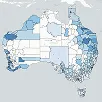

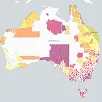


The total adult population (15 years or older) of Nikenbah 4655 QLD is 959, with a median age of 39. Of those, 63.92% are married, 9.59% are divorced or separated, 23.88% are single and 2.29% are widowed.
The average household size is 2.8 people per dwelling, and the median household monthly income is estimated to be $7,132. The median monthly mortgage repayment for households in this suburb is $1,747 which is 24.50% of their earnings.
Source: ABS Census Data (2021)