
Wondunna, QLD 4655

Good to know:
Wondunna is a quiet, family-friendly suburb situated in the city of Hervey Bay, Queensland, under postcode 4655. This suburb boasts a mix of residential properties, ranging from modern homes to larger acreage properties. Wondunna is known for its spacious parks, including the popular sports fields at Nikenbah, and the nearby Fraser Coast Anglican College provides an excellent educational option for families. The suburb's proximity to Hervey Bay's vibrant town centre and beautiful beaches makes it an attractive location for those seeking a blend of suburban tranquillity and coastal living.
Read More
Wondunna QLD 4655 houses show a typical price of $1,063,084, median rent of $670pw and a gross yield of 3.28% in the latest HTAG snapshot. This Wondunna QLD 4655 property market data flags a mixed picture: strong socioeconomic score and an almost exclusively house-based stock, but materially elevated rental vacancy and heavy recent building approvals that could weigh on rental performance and near-term price momentum.
Property market outlook
Wondunna QLD 4655 house market sits at a high typical price point with an IRSAD of 1007 (opportune), indicating relative affluence and potential for capital preservation. House prices in Wondunna are supported by a very low units-to-houses ratio (1.0% — opportune), so established houses face limited direct competition from unit stock. However, affordability is stretched (estimated 55 years to own — well above the 30-year concern threshold), which reduces local owner-occupier buying depth and raises sensitivity to interest-rate changes.
The immediate rental picture is weak: vacancy at 9.66% is extremely high and signals elevated rental vacancy risk and downside pressure on effective rents and yield. Building approvals ratio is 4.62% (unfavourable), implying a sizeable pipeline of new dwellings relative to existing stock that could add supply and exacerbate vacancy. Current on-market indicators are neutral — SoM 0.5% and inventory ~3.13 months — and days-on-market of 63 days is average, but the combination of incoming supply and weak rental demand creates a cautious near-term outlook for rental returns. Data confidence is high.
Pros
- IRSAD 1007 (opportune): demographic and socioeconomic profile supports price resilience and buyer profile with stronger ability to pay.
- Very low units-to-houses ratio (1.0%): limited unit competition; favourable structural supply for houses specifically.
- Yield 3.28%: above the commonly cited 3% minimum, so the cash return is acceptable on paper for a regional/suburban house.
- On-market supply currently balanced (SoM 0.5%, Inventory 3.13 months) and reasonable days-on-market (63 days) — no immediate oversupply in established stock.
Cons
- Vacancy rate 9.66% (unfavourable): very high rental vacancies create meaningful downside risk to rent levels, leasing speed and realised yields.
- Building Approvals Ratio 4.62% (unfavourable): high approval activity suggests material new supply coming through, which can further pressure rents and prices if absorption is weak.
- Affordability 55 years (extreme): local incomes versus prices indicate reduced buyer depth and elevated sensitivity to rate rises — this can limit price upside and increase downside in a downturn.
- Renter/Owner ratio 17% (neutral but low): a smaller renter base can mean less resilient rental demand in cycles where tenants reduce mobility.
- Clearance Rate 0.0% neutral (regional auction activity low) — sales channels may be thin, so liquidity can be less consistent than metropolitan markets.
Investment strategies
- Short-list for long-term capital play, not yield-first buys. The strong IRSAD and low unit competition favour selective long-hold positions, but elevated vacancy and incoming approvals mean investors should expect a multi-year holding horizon.
- Focus on owner-occupier appeal and scarcity features: well-located standalone houses with attributes that reduce time on market (good blocks, low maintenance, single-level living, parking) will out-perform generic stock when demand is thin.
- Buy through negotiation and off-market channels: given stretched affordability and weak rental demand, buyers’ agents should prioritise off-market or motivated-seller opportunities to secure price discount and protect downside.
- Asset management to defend rent and occupancy: consider modest value-add (presentation, minor refurbishments, landscaping, storage solutions) to improve tenant appeal and reduce vacancy days rather than major capex.
- Avoid speculative apartment purchases: units/houses ratio is extremely low — meaning unit stock is negligible and approvals are skewed to larger projects; unless you have project-specific insights, steer clear of unit play here.
- Monitor approvals and vacancy trends: exit or defer additional acquisitions if BA ratio and vacancy remain elevated; focus on micro-locations inside the suburb with consistently lower vacancy.
- Consider non-rental pathways for underperforming assets: where vacancy persists, evaluate short-term holiday letting only if local demand (seasonal tourism) justifies it and regulation/operational overheads are acceptable — otherwise rental hold costs may erode returns.
- Time horizon: plan for 5–10+ years; this suburb profile suits investors who prioritise capital stability and can tolerate intermittent rental underperformance.
Is Wondunna QLD 4655 a good suburb to invest in?
Wondunna QLD 4655 can be a selective buy for long-term investors seeking capital resilience in house stock — the suburb’s IRSAD and the structural scarcity of units support that case. However, it is not well-suited to yield-focused or short-hold strategies today because vacancy is very high (9.66%) and recent building approvals indicate rising supply pressure. For most investors the recommendation is cautious selective engagement: only proceed when price and lease terms create margin for the elevated vacancy risk, when the specific property has clear owner-occupier appeal, or when the purchase is part of a broader regional portfolio where stronger rental markets can offset Wondunna’s weakness. Buyers’ agents should prioritise off-market deals, negotiate hard, and verify micro-level vacancy history before committing.
About HtAG Analytics Data
HtAG reports a base set of suburb-level metrics for each dwelling type to enable apples-to-apples comparisons. Core metrics include Typical Price, Median Rent (rolling year), Sales and Rentals activity, Periodic Change (%), Gross Rental Yield, Capital Growth (annualised estimate with low/high bands), Total RoI (Yield + CG), Rent Increase estimate, Volatility Index, Confidence (data reliability), and a Relative Composite Score™. Supply measures include Stock on Market (SoM) and SoM%, Inventory (months supply), Building Approvals and BA Ratio, and Hold Period. Demand measures include Days on Market, Discounting, Vacancy Rate, Vacancies, Days on Rental Market (DoRM), Buy & Rent Search Index, and Auction Clearance Rates. There are additional advanced fields (population, estimated dwellings, school rank, infrastructure approvals per capita, annual sales volume, distance to nearest GPO) not exhaustively listed above.
The guiding principle behind HtAG metrics is to capture current market conditions and historical trends with a view to relative market analysis at the point of purchase — that is, to make suburb-level signals directly actionable for buyers and investors. In practice this means our metrics and curation choices differ from broad public-data providers; while other services (for example SQM) focus on national or media-forward datasets, HTAG’s metrics are constructed to compare and rank suburbs for transactional decision-making and shortlist markets aligned to investor criteria.
Finally, note that the summary above is a current-value snapshot and does not replace trend analysis. Metric trajectories (rising approvals, persistent vacancy, changing days-on-market) can change investment outcomes materially, and different metrics carry different weights depending on strategy and investor constraints. Budget, borrowing capacity, risk appetite and time-to-sell/refinance all change which suburbs are suitable for any given investor. HTAG specialises in shortlisting suburbs to match individual investor requirements rather than offering one-size-fits-all recommendations. For serious investors and buyer’s agents, run a relative analysis across comparable nearby suburbs and examine metric trends before committing capital.
Updated: 1 May 2026
Read Less
Quick Area Stats

Dwellings

Population

EDI

Bushfire Risk Index

Flood Risk Index
Education & Infrastructure
Sign Up to Access

School Rank

Infra. Spend
Market Trends
Essential metrics effectively streamline the process of identifying markets that match your financial situation and investment objectives. Typical Price, Indicative Yield and Total ROI provide a swift means to shortlist areas that resonate with what you’re seeking and can afford. These metrics also serve as valuable general trend indicators, allowing you to visualise transaction volumes and dynamics of change.
1M
1Q
1Y
3Y
5Y
7Y
10Y
1M
1Q
1Y
3Y
5Y
7Y
10Y

1M
1Q
1Y
3Y
5Y
7Y
10Y
The Growth Rate Cycle (GRC) is a metric used to analyse the year-on-year change in property values, providing insights into the growth cycle of a particular area. It uses the “typical price” metric to gauge property values more accurately than median prices, and includes both actual and projected data for the current year.

Fundamental metrics play a vital role in providing a comprehensive analysis of the socio-economic environment within a specific suburb or region. Additionally, the Return on Investment (ROI) and Volatility Index are crucial metrics that aid in evaluating the prospective profitability and the level of risk or stability in the market.
Socio-economics
Sign Up to Access

IRSAD

Renter to Owner

Units to Houses
Projections
Sign Up to Access

Projected Annual ROI

Volatility Index
Quick Area Stats
Sign Up to Access

Annual Sales Volume

Annual Rentals Volume



Stock on Market

Building Approvals

Inventory

Hold Period




Supply metrics are crucial in gauging both the existing volumes of real estate listed for sale and the properties anticipated to enter the market soon. A diminished supply could signal opportunities for price appreciation, particularly when there’s corresponding buyer demand to buoy the market. The Stock on Market and Inventory level metrics (current values) are presented as a 3-month rolling average of monthly data shown in the charts. This means the last 3 months of data are averaged. The BA Ratio represents the proportion of building approvals over the latest 12 months relative to the total dwellings in the area.

Days on Market

Search Index

Vacancy Rate

Clearance Rate




Demand metrics underscore the level of interest that potential property buyers or tenants have in a specific suburb or locality. When demand outstrips the available supply, or if the supply fails to meet the intensity of buyer/renter interest, there’s a potential for prices to climb, underscoring the pivotal relationship between demand dynamics and property value trends. The Days on Market and Clearance Rate metrics (current values) are presented as a 3-month rolling average of monthly data shown in the charts. This means the last 3 months of data are averaged.
We invite you to contribute to the conversation by sharing your thoughts or raising questions about this market in the comment section below.
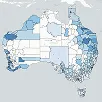

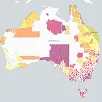


The total adult population (15 years or older) of Wondunna 4655 QLD is 2,604, with a median age of 40. Of those, 57.57% are married, 10.02% are divorced or separated, 28.76% are single and 3.57% are widowed.
The average household size is 2.9 people per dwelling, and the median household monthly income is estimated to be $7,712. The median monthly mortgage repayment for households in this suburb is $1,733 which is 22.47% of their earnings.
Source: ABS Census Data (2021)