
Dakabin, QLD 4503

Good to know:
Dakabin is a suburb in the Moreton Bay Region of Queensland, approximately 26 kilometres north of Brisbane CBD. Known for its family-friendly atmosphere and semi-rural charm, Dakabin offers a mix of residential living and open green spaces. The suburb is home to several amenities such as Dakabin State High School, Northpine Christian College, and the popular Alma Park Zoo. Transport is convenient with Dakabin Railway Station providing easy access to Brisbane and surrounding areas. Recent developments have seen growth in local infrastructure, enhancing Dakabin's appeal as a suburban haven.
Read More
Dakabin QLD 4503 property market shows a mix of tight transactional conditions and structural supply risk. For houses the typical price is $1,030,514, median rent $646 pw and gross rental yield 3.26% — yield sits just above a common 3% investor threshold but is modest for yield-seeking strategies. House prices in Dakabin are supported by low advertised stock (SoM 0.35%) and very low vacancy (0.43%), yet affordability is stretched (Years to Own 53) and developer activity is high (Building Approvals Ratio 5.23%), which can dampen medium-term price upside.
Property market outlook
Dakabin houses currently trade in a market with active buyers (Days on Market 27 days) and tight lettings (vacancy 0.43%), indicating near-term demand support for both prices and rents. Key structural negatives are the high renter/owner ratio (61.0%) — signalling a large rental cohort and proportionally fewer owner-occupiers — and an elevated pipeline of new dwellings (BA Ratio 5.23%), which constitutes a material supply risk over the medium term. Inventory at 2.17 months sits in the balanced range, so immediate transactional pressure is low-to-moderate despite the low SoM%. Overall the near-term outlook is supportive for rents and transactional activity, while capital growth prospects will depend on how incoming supply and entrenched affordability pressures play out.
Pros
- Low stock on market (SoM 0.35%) — tightly held selling stock supports price resilience.
- Very low vacancy (0.43%) — strong rental market and low tenant churn risk.
- Short Days on Market for sales (27 days) — evidence of buyer appetite and market liquidity.
- IRSAD 965 — socioeconomic profile above neutral threshold, supportive of longer-term value retention.
- Yield 3.26% — marginally above 3% benchmark, providing basic rental cashflow cover for many investors.
- Confidence: High — dataset reliability is strong for decision-making.
Cons
- Renter/Owner ratio 61.0% — unfavourable level; reliance on renters can elevate volatility in rental demand and indicates fewer owner-occupier buyers to underpin prices.
- Affordability (Years to Own) 53 — very stretched; high servicing burdens reduce broad-based owner-occupier demand and lengthen sales cycles for some buyers.
- Building Approvals Ratio 5.23% — high pipeline of new builds that may increase future supply materially, pressuring capital gains and rental growth.
- Yield is modest — 3.26% limits cashflow buffer against interest-rate rises and uplift expectations.
- Units/Houses ratio 26.0% neutral — limited unit inventory relative to houses, but not a decisive shelter against wider supply expansion.
Investment strategies
- Balanced buy-and-hold (capital + rental): Suitable for investors who prioritise capital growth over immediate yield. Tight current stock and very low vacancy support rental continuity; however, account for the high approvals pipeline by avoiding purchases in precincts with heavy new development consents.
- Conservative gearing and cashflow stress-testing: With modest yield and stretched affordability locally, use conservative LVRs and interest-rate shock modelling to protect against rate cycles and potential short-term rental income swings.
- Micro-location selection: Target streets or pockets with low nearby approvals and proven amenity (schools, transport) to reduce exposure to new-supply clusters. IRSAD (965) suggests some stronger pockets exist — prioritise those.
- Value-add and subdivision potential: Look for houses where renovation, granny-flat or dual-occupancy development is feasible (subject to council rules) to lift yield and future-proof against new supply.
- Short- to medium-term hold caution: If your horizon is under 5 years, monitor delivery of approved projects; a near-term wave of completions could cap price upside and prolong vacancy recovery.
- Active rent management: With vacancy <0.5% there is scope for modest rent rises, but track local vacancy trends and new supply delivery closely to time increases without risking longer vacancies.
Is Dakabin QLD 4503 a good suburb to invest in?
Dakabin QLD 4503 can be a reasonable target for investors seeking market liquidity and low vacancy in house stock, but it is not a straightforward buy-for-yield play. The market’s strengths are current demand and rental tightness (SoM 0.35%, DOM 27, vacancy 0.43%), plus a favourable IRSAD. The principal risks are an unfavourable renter/owner profile (61%), very poor affordability (53 years to own) and a high building approvals ratio (5.23%) that may increase supply and cap capital growth. For buy-and-hold investors with conservative debt structures and a focus on selective micro-locations, Dakabin houses offer an acceptable risk/reward profile. For aggressive growth or high-yield strategies, proceed cautiously and prioritise precinct-level supply analysis and stress-tested cashflow models.
About HtAG Analytics Data
Base metrics reported by HtAG for suburb/dwelling analysis (this is a selection, not exhaustive): Typical Price, Median Rent, Sales count, Rental listings, Δ Change (period %), Gross Rental Yield, Capital Growth (annual estimate + low/high bounds), Total RoI (yield + growth), Rent Increase (projected p.a.), Volatility Index (MAPE-based), Confidence (data accuracy from sales volume), and Relative Composite Score™. Supply and demand benchmarks used by HtAG include IRSAD (opportune >950), Renter/Owner ratio (opportune <15%; unfavourable >45%), Units/Houses ratio, Years to Own (affordability; problematic >30 years), Stock on Market % (low supply <0.4%), Inventory months (<2.1 low supply), Building Approvals Ratio (high supply >2%), Hold Period, Days on Market, Discounting, Vacancy Rate (high demand <1%; low demand >3.5%), and other precinct-level indicators.
HtAG’s metric methodology is designed to capture both current market signals and historical patterns to enable relative comparison at the suburb and point-of-purchase level. In the context of Dakabin QLD 4503 that means our indicators are calibrated to reflect local transactional liquidity, rental tightness and development pipeline rather than only broad state or national trends. While other providers may rely heavily on public aggregates for macro narratives, HtAG focuses on measures that help compare nearby suburbs and micro-markets where investors actually transact — the same metric names can therefore behave differently because of nuanced curation and measurement choices.
Note on interpretation: the summary above is a point-in-time snapshot of value and supply/demand metrics for Dakabin houses; it does not replace trend analysis. Metric trajectories (rising approvals, falling vacancy, changes in renter/owner mix) can materially alter the investment case. Some metrics carry greater weight depending on strategy — for example vacancy and SoM matter more for yield and short-term liquidity, while IRSAD and hold period influence long-term capital outcomes. Different investors (varying budgets, borrowing capacity, risk appetite and hold horizons) will select different suburbs even with the same dataset; HTAG specialises in shortlisting markets against individual criteria rather than offering one-size-fits-all recommendations.
Updated: 1 Jun 2026
Read Less
Quick Area Stats

Dwellings

Population

EDI

Bushfire Risk Index

Flood Risk Index
Education & Infrastructure
Sign Up to Access

School Rank

Infra. Spend
Market Trends
Essential metrics effectively streamline the process of identifying markets that match your financial situation and investment objectives. Typical Price, Indicative Yield and Total ROI provide a swift means to shortlist areas that resonate with what you’re seeking and can afford. These metrics also serve as valuable general trend indicators, allowing you to visualise transaction volumes and dynamics of change.
1M
1Q
1Y
3Y
5Y
7Y
10Y
1M
1Q
1Y
3Y
5Y
7Y
10Y

1M
1Q
1Y
3Y
5Y
7Y
10Y
The Growth Rate Cycle (GRC) is a metric used to analyse the year-on-year change in property values, providing insights into the growth cycle of a particular area. It uses the “typical price” metric to gauge property values more accurately than median prices, and includes both actual and projected data for the current year.

Fundamental metrics play a vital role in providing a comprehensive analysis of the socio-economic environment within a specific suburb or region. Additionally, the Return on Investment (ROI) and Volatility Index are crucial metrics that aid in evaluating the prospective profitability and the level of risk or stability in the market.
Socio-economics
Sign Up to Access

IRSAD

Renter to Owner

Units to Houses
Projections
Sign Up to Access

Projected Annual ROI

Volatility Index
Quick Area Stats
Sign Up to Access

Annual Sales Volume

Annual Rentals Volume



Stock on Market

Building Approvals

Inventory

Hold Period




Supply metrics are crucial in gauging both the existing volumes of real estate listed for sale and the properties anticipated to enter the market soon. A diminished supply could signal opportunities for price appreciation, particularly when there’s corresponding buyer demand to buoy the market. The Stock on Market and Inventory level metrics (current values) are presented as a 3-month rolling average of monthly data shown in the charts. This means the last 3 months of data are averaged. The BA Ratio represents the proportion of building approvals over the latest 12 months relative to the total dwellings in the area.

Days on Market

Search Index

Vacancy Rate

Clearance Rate




Demand metrics underscore the level of interest that potential property buyers or tenants have in a specific suburb or locality. When demand outstrips the available supply, or if the supply fails to meet the intensity of buyer/renter interest, there’s a potential for prices to climb, underscoring the pivotal relationship between demand dynamics and property value trends. The Days on Market and Clearance Rate metrics (current values) are presented as a 3-month rolling average of monthly data shown in the charts. This means the last 3 months of data are averaged.
We invite you to contribute to the conversation by sharing your thoughts or raising questions about this market in the comment section below.
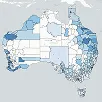

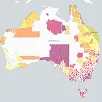


The total adult population (15 years or older) of Dakabin 4503 QLD is 4,078, with a median age of 30. Of those, 36.34% are married, 15.40% are divorced or separated, 45.78% are single and 2.23% are widowed.
The average household size is 2.6 people per dwelling, and the median household monthly income is estimated to be $7,584. The median monthly mortgage repayment for households in this suburb is $1,800 which is 23.73% of their earnings.
Source: ABS Census Data (2021)