
Minden, QLD 4311

Good to know:
Minden is a quaint rural suburb located in the Lockyer Valley Region, Queensland, with the postcode 4311. It is situated approximately 64 kilometres west of Brisbane, offering a peaceful countryside lifestyle while still being accessible to the city's amenities. The suburb features a blend of farmland, acreage properties, and small residential clusters. Known for its community spirit, Minden hosts local events at the Minden State School and Minden Retreat. Its scenic landscapes and tranquil environment make it an ideal spot for those seeking a quieter lifestyle with a strong sense of community.
Read More
Minden QLD 4311 houses show a typical price of $1,007,545, median rent reported as $0 and an indicated yield of 0.0% in the available property market data — a clear signal that advertised rental activity is effectively nil or not captured. Confidence in the data is Medium and the metrics point to a tightly held, owner-occupied suburb with strong socio-economic indicators but a strained affordability profile (49 years to own). Use Minden QLD 4311 property investment data primarily to assess capital-growth potential rather than immediate cashflow.
Property market outlook
Minden’s house market is characterised by low visible supply and long holding periods, both supportive of capital preservation and upside if demand persists. IRSAD of 975 sits in the opportune band, indicating above-average socio-economic status and buyer capacity. Stock on market at 0.33% is low (opportune) and hold period of 11.18 years signals a tightly held owner-occupier market that limits turnover. Inventory at 3.64 months is neutral — not abundant but not acute shortage — and the vacancy rate of 1.92% is within the balanced range, suggesting rental pressure is moderate where rentals exist. However, median rent is recorded as $0 and gross yield 0.0% which is an extreme data outcome: it either reflects negligible rental listings, incomplete rental reporting, or a market dominated by owner-occupiers with few investment-grade listings. Affordability at 49 years is a material headwind; high years-to-own reduce the pool of achievable buyers and can cap near-term demand if incomes don’t keep pace.
Pros
- Typical price $1,007,545 aligns with a premium suburban bracket; IRSAD 975 (opportune) supports quality buyer demographics.
- Renter/Owner ratio 11% (opportune) and Units/Houses ratio 0% (opportune) indicate a strong owner-occupier skew — fewer investor and unit competitors.
- Stock on Market 0.33% (low supply) and Hold Period 11.18 years (favourable) reduce available resale stock, which can support price resilience.
- Building Approvals Ratio 0.0% (opportune) suggests limited near-term new supply pressure.
- Days on Market 35 days is at the high-demand boundary (opportune), implying reasonable liquidity for listed stock.
Cons
- Median rent $0 and Yield 0.0%: a critical limitation for income-focused investors — either rental data is missing or rental stock is effectively absent.
- Affordability index 49 years is well above the 30-year threshold and poses a structural constraint to demand growth from typical owner-occupiers.
- Inventory 3.64 months and Vacancy 1.92% are neutral — not actively supporting aggressive rental re-pricing.
- Buy Search Index 3 and Clearance Rate 0% are neutral signals for buyer interest; broad market visibility appears modest.
- Data Confidence Medium: treat zero-rent result with caution and verify on-ground rental evidence before assuming cashflow outcomes.
Investment strategies
- Growth-first buy-and-hold: Minden is better suited to investors targeting capital growth rather than immediate yield. High IRSAD, low turnover and limited approvals make it a candidate for long holds where capital appreciation is the primary return driver.
- Owner-occupier-assisted investment: Consider purchasing properties that can be owner-occupied initially and later leased. That strategy hedges against the current lack of rental stock and lets you establish a rental record if landlords enter the market.
- Value-add where possible: target houses with ancillary accommodation potential (granny flat, dual-income conversions subject to council and title) to generate rental income and lift yield post-purchase.
- Off-market and buyer-agent sourcing: low stock and long hold periods favour off-market sourcing and negotiation skills — engage a buyers agent with local networks to access scarce listings and reduce competition.
- Finance and holding-period planning: expect potential negative cashflow initially if rental income is limited; secure lending structures and stress-test scenarios. Prepare for longer hold horizons to realise capital growth given affordability headwinds.
- Due diligence priorities: corroborate rental comparables with neighbouring suburbs, inspect sales cadence and settlement times, verify titling and development constraints, and check local demand drivers (employment nodes, infrastructure spend).
Is Minden QLD 4311 a good suburb to invest in?
Minden QLD 4311 is a good fit for investors focused on medium-to-long-term capital growth who can tolerate limited immediate rental income and a potentially slower liquidity cycle. The suburb’s advantageous socio-economic profile, very low visible supply and long holding periods support price stability and upside if demand holds. It is not suited for investors requiring positive cashflow or high gross yields today — the recorded median rent of $0 and 0.0% yield are decisive negatives for yield-seekers. For buyers agents and high-net-worth investors, Minden is worth consideration as a strategic holding or lifestyle asset with upside, provided financing and exit timelines align with a growth-centric plan and on-the-ground rental evidence is verified.
About HtAG Analytics Data
Base metrics reported (subset): Typical Price, Median Rent, Sales, Rentals, Δ Change (period comparisons), Yield (gross rental yield), Capital Growth (annualised forecast with low/high ranges), Total RoI (Yield + Capital Growth), Rent Increase (forecast), Volatility Index (MAPE-based), Confidence (data accuracy), Relative Composite Score™. There are additional metrics and localised indicators in HtAG dashboards beyond this base set.
Metric thresholds and interpretation (examples used above): IRSAD (opportune >950), Renter/Owner ratio (opportune <15%), Units/Houses ratio (opportune <10%), Stock on Market % (low supply <0.4%), Inventory months (balanced 2.1–4.5), Vacancy rate (balanced 1–3.5%), Hold Period (favourable >10.4 years). These ranges are used to convert labels such as ‘opportune’ or ‘unfavourable’ into investor-relevant signals—e.g. opportune supply implies tight supply and support for price growth; unfavourable vacancy implies elevated rental risk.
Our methodology in context: HtAG metrics are designed to capture both current market conditions and historical trends to enable relative market analysis as close as possible to the point of purchase. In practice this means our suburb-level measures prioritise granular supply/demand signals and holding dynamics that matter to buyers agents and active investors. Unlike broader public-data services that primarily aggregate national or state trends for media narratives, HtAG focuses on decision-useful suburb comparisons and purchase‑level indicators — similar metric names can have different calculation and curation nuances that materially affect interpretation.
A final note on usage: the numbers above are a snapshot and do not replace trend analysis. Metric trajectories (rising/falling yields, moving vacancy, changes in affordability) can materially alter the investment case. Some metrics carry greater weight depending on strategy — for example yield matters most to cashflow investors while hold period and supply dynamics matter more for growth investors. Market selection will always vary by investor budget, borrowing capacity, risk appetite and exit timeframe. HtAG excels at shortlisting suburbs against customised criteria rather than offering one-size-fits-all rankings; serious investors and agents should run relative comparisons across a shortlist aligned to their objectives and verify on-ground rental and sales evidence where data flags (e.g. median rent = $0).
Updated: 1 May 2026
Read Less
Quick Area Stats

Dwellings

Population

EDI

Bushfire Risk Index

Flood Risk Index
Education & Infrastructure
Sign Up to Access

School Rank

Infra. Spend
Market Trends
Essential metrics effectively streamline the process of identifying markets that match your financial situation and investment objectives. Typical Price, Indicative Yield and Total ROI provide a swift means to shortlist areas that resonate with what you’re seeking and can afford. These metrics also serve as valuable general trend indicators, allowing you to visualise transaction volumes and dynamics of change.
1M
1Q
1Y
3Y
5Y
7Y
10Y
1M
1Q
1Y
3Y
5Y
7Y
10Y

1M
1Q
1Y
3Y
5Y
7Y
10Y
The Growth Rate Cycle (GRC) is a metric used to analyse the year-on-year change in property values, providing insights into the growth cycle of a particular area. It uses the “typical price” metric to gauge property values more accurately than median prices, and includes both actual and projected data for the current year.

Fundamental metrics play a vital role in providing a comprehensive analysis of the socio-economic environment within a specific suburb or region. Additionally, the Return on Investment (ROI) and Volatility Index are crucial metrics that aid in evaluating the prospective profitability and the level of risk or stability in the market.
Socio-economics
Sign Up to Access

IRSAD

Renter to Owner

Units to Houses
Projections
Sign Up to Access

Projected Annual ROI

Volatility Index
Quick Area Stats
Sign Up to Access

Annual Sales Volume

Annual Rentals Volume



Stock on Market

Building Approvals

Inventory

Hold Period




Supply metrics are crucial in gauging both the existing volumes of real estate listed for sale and the properties anticipated to enter the market soon. A diminished supply could signal opportunities for price appreciation, particularly when there’s corresponding buyer demand to buoy the market. The Stock on Market and Inventory level metrics (current values) are presented as a 3-month rolling average of monthly data shown in the charts. This means the last 3 months of data are averaged. The BA Ratio represents the proportion of building approvals over the latest 12 months relative to the total dwellings in the area.

Days on Market

Search Index

Vacancy Rate

Clearance Rate




Demand metrics underscore the level of interest that potential property buyers or tenants have in a specific suburb or locality. When demand outstrips the available supply, or if the supply fails to meet the intensity of buyer/renter interest, there’s a potential for prices to climb, underscoring the pivotal relationship between demand dynamics and property value trends. The Days on Market and Clearance Rate metrics (current values) are presented as a 3-month rolling average of monthly data shown in the charts. This means the last 3 months of data are averaged.
We invite you to contribute to the conversation by sharing your thoughts or raising questions about this market in the comment section below.
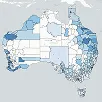

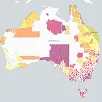


The total adult population (15 years or older) of Minden 4311 QLD is 952, with a median age of 37. Of those, 54.20% are married, 12.39% are divorced or separated, 30.36% are single and 2.73% are widowed.
The average household size is 2.9 people per dwelling, and the median household monthly income is estimated to be $7,692. The median monthly mortgage repayment for households in this suburb is $1,517 which is 19.72% of their earnings.
Source: ABS Census Data (2021)