
Walkerville, SA 5081

Good to know:
Walkerville is an affluent suburb located just 4 km northeast of Adelaide's central business district in South Australia. Renowned for its charming, leafy streets and historic homes, the suburb offers a blend of residential tranquillity and modern convenience. Walkerville Terrace serves as the main retail and dining strip, featuring boutique shops, cafes, and essential services. The area is well-served by public transport and is proximate to prestigious educational institutions like St. Andrew's School. The Walkerville Oval and Linear Park provide ample recreational opportunities, making it ideal for families and professionals.
Read More
Walkerville SA 5081 houses attract a high-end buyer profile: Typical price $2,312,387, median rent $903 pw and a gross yield of 2.03% — this is clearly a capital-growth/wealth-preservation market rather than a yield play. The Walkerville SA 5081 property market shows tight listed supply (low Stock on Market and low months of inventory) alongside very high socio‑economic status (IRSAD 1081). However affordability is extreme (estimated 80 years to own) and rental yield is below conventional investment benchmarks, so strategy should align with long holding periods and capital-oriented objectives.
Property market outlook
Walkerville’s house market is structurally skewed to owner‑occupiers and higher‑net‑worth buyers. Low Stock on Market (0.24%) and Inventory at ~2.02 months indicate constrained selling availability — a supply profile that supports price resilience and potential capital growth if demand persists. IRSAD at 1081 points to above‑average income and amenity levels, which historically underpins premium house prices and slower but steadier appreciation.
Key demand signals are mixed: Days on Market ~37 is around a balanced market and vacancy at 1.62% sits in the middle band, implying rental stability but not acute rental tightness. The Buy Search Index of 6 (classified here as neutral) suggests at‑least steady online interest relative to state averages. Data confidence is high, so metrics are reliable for shortlist decisions — but two extremes matter for strategy: very low yield (2.03%) and very poor affordability (80 years), both of which change which investor types will find Walkerville attractive.
Pros
- Strong socio‑economic positioning (IRSAD 1081) — supports high-quality tenant pool and long‑term price support.
- Low listed supply and short inventory (SoM 0.24%, Inventory 2.02 months) — supply constraints are supportive of capital values.
- High data confidence — reliable suburb-level signals for comparative screening.
- Balanced rental market metrics (Vacancy 1.62%, DoM 37 days) — rental income is stable, with limited vacancy risk.
- Hold period ~8.1 years indicates established ownership and not churn — tends to limit transactional supply.
Cons
- Very low gross yield (2.03%): below the usual 3% minimum target for many buy‑to‑hold investors; poor cashflow unless heavily equity funded.
- Extreme affordability pressure (80 years to own): local incomes vs typical price are highly stretched — raises refinancing and liquidity risk for leveraged investors.
- Typical price is high (>$2.3M): large capital outlay reduces accessibility and magnifies exposure to interest‑rate moves.
- Clearance Rate reported 0.0% (neutral here) may reflect few auctions and therefore a less transparent price discovery channel.
- Building approvals ratio 1.04% is neutral rather than clearly constrained — monitor for any uplift in new supply that could soften premium pockets.
Investment strategies
- Capital-growth / prestige hold: Walkerville houses suit well‑capitalised investors targeting long-term appreciation and preservation of wealth. Accept low immediate yield in exchange for location premium, amenity and schooling catchment premium.
- Owner‑occupier investor (hybrid): consider acquiring with an owner‑occupier exit strategy or very long hold period to ride capital growth; limited rental return means negative gearing or interest‑only finance may be required to manage cashflow shortfalls in the near term.
- Value add for rental premium: target homes with renovation or subdivision potential (where council and BA ratios allow) to increase rent and improve yield, but validate with local DA and approvals history.
- Consider alternative dwelling types nearby: if yield is a priority, screen nearby suburbs or units (unit metrics not provided here) where UHV or UH ratios and yields may be higher; Walkerville house prices push many investors to look at adjacent pockets for better cashflow.
- Lower gearing and liquidity planning: given high prices and affordability strain, plan conservative leverage, longer interest‑only periods and an exit/refinance buffer. Stress‑test scenarios for rate rises and rental downturns.
- Active monitoring: keep an eye on building approvals and Sales volume; a sudden rise in approvals or a jump in months‑of‑supply would materially change the market’s capital‑growth outlook.
Is Walkerville SA 5081 a good suburb to invest in?
Walkerville SA 5081 is a high‑quality, prestige house market best suited to investors focused on capital growth, amenity and tenant quality rather than immediate rental yield. Tight supply and elevated socio‑economic indicators support long‑run price resilience; however the very low gross yield (2.03%) and extreme affordability measure (80 years) make it unsuitable for yield‑dependent strategies and first‑time or highly‑leveraged investors. If your objective is wealth preservation, school‑catchment premium or long‑horizon capital appreciation and you can deploy significant equity or accept constrained cashflow, Walkerville is a legitimate shortlist candidate. If you require positive cashflow or moderate entry prices, prioritise nearby suburbs or unit markets with higher yields.
About HtAG Analytics Data
Base metrics reported by HtAG (listed here as examples; dashboards include more): Typical Price; Median Rent; Sales; Rentals; Δ Change (periodic % change); Gross Rental Yield; Capital Growth (annualised estimate with Low/High bounds); Total RoI (Yield + Capital Growth); Rent Increase (annual forecast); Volatility Index (MAPE‑based); Confidence (data reliability); Relative Composite Score™.
Selected metric ranges used in our models (examples from the data dictionary):
- IRSAD: Unfavourable <920, Neutral 920–950, Opportune >950.
- Stock on Market %: Low supply <0.4%, Balanced 0.4–1.3%, High supply >1.3%.
- Inventory (months): Low supply <2.1, Balanced 2.1–4.5, High supply >4.5.
- Hold Period (years): Low supply (tightly held) >10.4, Balanced 6.4–10.4, High supply <6.4.
- Vacancy Rate: High demand <1.0%, Balanced 1–3.5%, Low demand >3.5%.
- Buy Search Index: 0–2 low, 3–5 balanced, 6–10 high (state relative).
(There are additional metrics and thresholds available on HtAG dashboards; above is a base set.)
HtAG’s methodology emphasises suburb‑level, transaction‑focused analysis to reflect current market conditions and historical trends as they relate to the point of purchase. That differs from many public data aggregators that present broader trend narratives; HTAG’s metrics are curated and adjusted to enable closer, purchase‑level comparisons and shortlist decisions. Even when metric names overlap across providers, our curation, spatial mapping and model nuances produce different, more purchase‑oriented signals.
Finally, the snapshots above show current value metrics but do not capture metric trend depth or relative weighting that will influence decisions. Some metrics carry greater decision weight depending on investor strategy and timeframe. Market selection depends on budget, leverage capacity, risk appetite and intended hold/refinance horizons — HTAG’s strength is shortlisting suburbs against bespoke investor criteria rather than producing one‑size‑fits‑all rankings. For transaction‑level decisions and multi‑suburb comparisons, use HtAG’s relative analysis tools to align markets with your specific objectives.
Updated: 1 Jun 2026
Read Less
Quick Area Stats

Dwellings

Population

EDI

Bushfire Risk Index

Flood Risk Index
Education & Infrastructure
Sign Up to Access

School Rank

Infra. Spend
Market Trends
Essential metrics effectively streamline the process of identifying markets that match your financial situation and investment objectives. Typical Price, Indicative Yield and Total ROI provide a swift means to shortlist areas that resonate with what you’re seeking and can afford. These metrics also serve as valuable general trend indicators, allowing you to visualise transaction volumes and dynamics of change.
1M
1Q
1Y
3Y
5Y
7Y
10Y
1M
1Q
1Y
3Y
5Y
7Y
10Y

1M
1Q
1Y
3Y
5Y
7Y
10Y
The Growth Rate Cycle (GRC) is a metric used to analyse the year-on-year change in property values, providing insights into the growth cycle of a particular area. It uses the “typical price” metric to gauge property values more accurately than median prices, and includes both actual and projected data for the current year.

Fundamental metrics play a vital role in providing a comprehensive analysis of the socio-economic environment within a specific suburb or region. Additionally, the Return on Investment (ROI) and Volatility Index are crucial metrics that aid in evaluating the prospective profitability and the level of risk or stability in the market.
Socio-economics
Sign Up to Access

IRSAD

Renter to Owner

Units to Houses
Projections
Sign Up to Access

Projected Annual ROI

Volatility Index
Quick Area Stats
Sign Up to Access

Annual Sales Volume

Annual Rentals Volume



Stock on Market

Building Approvals

Inventory

Hold Period




Supply metrics are crucial in gauging both the existing volumes of real estate listed for sale and the properties anticipated to enter the market soon. A diminished supply could signal opportunities for price appreciation, particularly when there’s corresponding buyer demand to buoy the market. The Stock on Market and Inventory level metrics (current values) are presented as a 3-month rolling average of monthly data shown in the charts. This means the last 3 months of data are averaged. The BA Ratio represents the proportion of building approvals over the latest 12 months relative to the total dwellings in the area.

Days on Market

Search Index

Vacancy Rate

Clearance Rate




Demand metrics underscore the level of interest that potential property buyers or tenants have in a specific suburb or locality. When demand outstrips the available supply, or if the supply fails to meet the intensity of buyer/renter interest, there’s a potential for prices to climb, underscoring the pivotal relationship between demand dynamics and property value trends. The Days on Market and Clearance Rate metrics (current values) are presented as a 3-month rolling average of monthly data shown in the charts. This means the last 3 months of data are averaged.
We invite you to contribute to the conversation by sharing your thoughts or raising questions about this market in the comment section below.
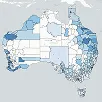

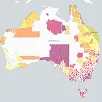


The total adult population (15 years or older) of Walkerville 5081 SA is 2,443, with a median age of 47. Of those, 47.48% are married, 11.99% are divorced or separated, 30.00% are single and 10.89% are widowed.
The average household size is 2.2 people per dwelling, and the median household monthly income is estimated to be $10,888. The median monthly mortgage repayment for households in this suburb is $2,167 which is 19.90% of their earnings.
Source: ABS Census Data (2021)