
O'Halloran Hill, SA 5158

Good to know:
O'Halloran Hill, located in South Australia with the postcode 5158, is a leafy suburb situated approximately 20 kilometres south of Adelaide's CBD. It offers a semi-rural lifestyle with convenient access to urban amenities. Known for its rolling hills and scenic views, it's part of the City of Onkaparinga and the City of Marion local government areas. The suburb is home to the O'Halloran Hill Recreation Park, which provides ample opportunities for outdoor activities like hiking and mountain biking. It features a mix of established homes and new developments, appealing to families and professionals alike.
Read More
Ohalloran Hill SA 5158 shows a tight established market for houses with a Typical Price of $882,095, Median Rent $478 pw and a current gross Yield of 2.82% — below the common 3% income benchmark. This Ohalloran Hill SA 5158 property market snapshot highlights strong scarcity signals for houses (very low stock and months of supply) alongside a high building approvals ratio and weak affordability (44 years) — a combination that points to possible short‑term price support but also medium‑term supply and demand tensions that investors must actively monitor.
Property market outlook
House prices in Ohalloran Hill are supported by very low Stock on Market (0.14% SoM) and an Inventory of just 0.61 months, indicating established stock is tightly held. The average Hold Period of 11.17 years reinforces reduced turnover and limited resale supply, which is structurally supportive of capital growth. Demand metrics are healthy for houses: Days on Market at 26 days signals relatively strong buyer interest and competitive listing outcomes.
Counterbalancing that supply tightness is a high Building Approvals Ratio of 5.89% — well above the HTAG >2% threshold for “high supply” — implying a material pipeline of new dwellings that could dampen price growth if completions increase materially. Affordability is a clear constraint: 44 years to own (based on the HTAG affordability model) is elevated and will limit the pool of marginal owner‑occupier purchasers, potentially slowing organic demand or pushing buyers to smaller product types.
Rental fundamentals are neutral. Vacancy at 1.27% sits in a balanced band, and median rent of $478 pw produces a low gross yield of 2.82% for houses — below the common 3% investor threshold — meaning income returns are weak relative to capital requirements. Socio‑economic score (IRSAD 1011) is in the opportune range, which tends to support long‑run capital stability for higher‑priced suburbs.
Pros
- Strong scarcity for established houses: SoM 0.14% and Inventory 0.61 months — supportive for capital appreciation.
- Long hold periods (11.17 years) — local owners hold homes tightly, reducing turnover.
- Quick market movement: DOM 26 days indicates active buyer demand and lower discounting risk.
- Socio‑economic profile (IRSAD 1011) is opportune — higher relative affluence supports premium pricing retention.
- Low unit share (Units/Houses 7.0%) makes house stock less substitutable by units — favourable for detached housing values.
- HTAG data Confidence: High — reliable monthly signals for decision making.
Cons
- Low gross rental yield (2.82%) — weak income return, unattractive for yield‑driven strategies.
- Very poor affordability (44 years) — narrows owner‑occupier buyer pool and increases reliance on high serviceability purchasers.
- Building Approvals Ratio 5.89% suggests meaningful additional supply risk over the next 12–36 months.
- Renter/Owner ratio 18.0% is neutral — not a strong investor rental market.
- Clearance Rate 0.0% (neutral) and Buy Search Index 3 (neutral) — limited auction activity and average search intensity reduce market transparency for some buyers.
Investment strategies
- Capital‑growth core (preferred): Target houses with a multi‑year horizon (minimum 5–10+ years). The combination of tight established supply and high socio‑economic status supports capital appreciation, provided new‑supply completions are monitored and not excessive relative to absorption.
- Selective, off‑market acquisition: Use buyer‑agent networks to source well‑positioned houses (elevated blocks, favourable aspect, low maintenance) where vendor motivation and long hold periods allow negotiation. Low visible stock means off‑market deals can avoid bidding wars and secure slight pricing advantages.
- Avoid pure yield plays: Given a ~2.8% gross yield, Ohalloran Hill is not efficient for investors needing strong cashflow. Investors seeking yield should look elsewhere or pair purchases with value‑add works that materially increase rent (if local market supports it).
- Development / medium‑term risk management: The elevated Building Approvals Ratio signals potential competition from new supply. For investors considering new‑build purchases or strata conversions, conduct micro‑level supply analysis (site‑by‑site completions, project delivery schedules) and stress‑test price/rent outcomes if pipeline projects complete.
- Leverage and servicing strategy: Because affordability is weak, target borrowers with strong serviceability and longer refinance/sell horizons. Consider longer fixed rate stints if leveraging to purchase, and plan exits around changes in approvals or local infrastructure announcements.
- Rental strategy if required: Target premium positioning (higher quality finishes, landscaping, longer leases) to maximise occupancy and rent in a modest‑yield market; tenant demand appears balanced but not exceptionally strong.
Is Ohalloran Hill SA 5158 a good suburb to invest in?
It depends on strategy. Ohalloran Hill SA 5158 is better suited to capital‑growth focused investors and owner‑occupiers with above‑average serviceability and a medium to long hold period. Tight established supply, long hold periods and a strong IRSAD score underpin a favourable long‑term price growth case. However, weak rental yield (2.82%), very poor affordability (44 years) and a high building approvals ratio create execution risk: income returns are slim and future supply could moderate capital gains. For yield‑oriented portfolios, this suburb is unlikely to perform; for growth‑oriented portfolios prepared to manage supply risk and accept low immediate cashflow, Ohalloran Hill warrants consideration but requires active monitoring of development completions and demand indicators.
About HtAG Analytics Data
Key metrics reported (base set — HTAG calculates many more):
- Typical Price: suburb‑level price metric designed to better represent transactable values.
- Median Rent: rolling‑year median rent per week (houses/units).
- Yield: gross rental yield = (Median Rent annualised / Typical Price).
- Stock on Market (SoM) & SoM%: active for‑sale stock (3‑month rolling) and share of dwelling stock.
- Inventory (Months of Supply): estimated months of stock at current take‑up.
- Building Approvals Ratio (BA Ratio): approvals past 12 months / total dwellings (supply pipeline indicator).
- Days on Market (DOM): average days to sale (demand signal).
- Vacancy Rate: quarterly rental market vacancy (joint dwelling types).
- Hold Period: average years between successive sales (supply tightness indicator).
- IRSAD, Renter/Owner Ratio, Units/Houses Ratio: structural socio‑economic and product mix indicators.
Note: HTAG dashboards include additional metrics (Capital Growth forecasts, Volatility Index, Confidence, Buy/Rent Search Index, auction clearance and more).
HTAG methodology — suburb context
HTAG metrics are engineered to capture both current market conditions and historical behaviour at a suburb and dwelling‑type level so analysis is as near as possible to the point of purchase. For example, while broad public datasets summarise macro trends for media consumption, HTAG focuses on tightly‑scoped suburb signals (inventory, hold periods, approvals, local sale flows) that matter for buyer agents and investors selecting a specific postcode such as Ohalloran Hill SA 5158. Although some metric names overlap with other providers, HTAG applies distinct curation and measurement nuances to ensure the signals reflect local transaction behaviour rather than only high‑level aggregates.
Context and next steps
The summary above is a snapshot of current value metrics for Ohalloran Hill SA 5158 and does not replace trend analysis. Metric trajectories (e.g., rising approvals, changing inventory, or shifting vacancy) can materially alter the investment case. Different metrics carry varying weight depending on investor objectives — yield versus growth, time horizon, leverage tolerance and exit plans — so market selection will differ by investor. HTAG excels at shortlisting and comparing suburbs against individual criteria rather than offering one‑size‑fits‑all recommendations. For serious acquisition or portfolio decisions, perform relative analysis across a defined shortlist and track approvals, completions and affordability changes over time.
Updated: 1 Jun 2026
Read Less
Quick Area Stats

Dwellings

Population

EDI

Bushfire Risk Index

Flood Risk Index
Education & Infrastructure
Sign Up to Access

School Rank

Infra. Spend
Market Trends
Essential metrics effectively streamline the process of identifying markets that match your financial situation and investment objectives. Typical Price, Indicative Yield and Total ROI provide a swift means to shortlist areas that resonate with what you’re seeking and can afford. These metrics also serve as valuable general trend indicators, allowing you to visualise transaction volumes and dynamics of change.
1M
1Q
1Y
3Y
5Y
7Y
10Y
1M
1Q
1Y
3Y
5Y
7Y
10Y

1M
1Q
1Y
3Y
5Y
7Y
10Y
The Growth Rate Cycle (GRC) is a metric used to analyse the year-on-year change in property values, providing insights into the growth cycle of a particular area. It uses the “typical price” metric to gauge property values more accurately than median prices, and includes both actual and projected data for the current year.

Fundamental metrics play a vital role in providing a comprehensive analysis of the socio-economic environment within a specific suburb or region. Additionally, the Return on Investment (ROI) and Volatility Index are crucial metrics that aid in evaluating the prospective profitability and the level of risk or stability in the market.
Socio-economics
Sign Up to Access

IRSAD

Renter to Owner

Units to Houses
Projections
Sign Up to Access

Projected Annual ROI

Volatility Index
Quick Area Stats
Sign Up to Access

Annual Sales Volume

Annual Rentals Volume



Stock on Market

Building Approvals

Inventory

Hold Period




Supply metrics are crucial in gauging both the existing volumes of real estate listed for sale and the properties anticipated to enter the market soon. A diminished supply could signal opportunities for price appreciation, particularly when there’s corresponding buyer demand to buoy the market. The Stock on Market and Inventory level metrics (current values) are presented as a 3-month rolling average of monthly data shown in the charts. This means the last 3 months of data are averaged. The BA Ratio represents the proportion of building approvals over the latest 12 months relative to the total dwellings in the area.

Days on Market

Search Index

Vacancy Rate

Clearance Rate




Demand metrics underscore the level of interest that potential property buyers or tenants have in a specific suburb or locality. When demand outstrips the available supply, or if the supply fails to meet the intensity of buyer/renter interest, there’s a potential for prices to climb, underscoring the pivotal relationship between demand dynamics and property value trends. The Days on Market and Clearance Rate metrics (current values) are presented as a 3-month rolling average of monthly data shown in the charts. This means the last 3 months of data are averaged.
We invite you to contribute to the conversation by sharing your thoughts or raising questions about this market in the comment section below.
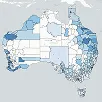

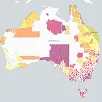


The total adult population (15 years or older) of O”Halloran Hill 5158 SA is 2,226, with a median age of 40. Of those, 48.83% are married, 12.98% are divorced or separated, 34.55% are single and 3.59% are widowed.
The average household size is 2.5 people per dwelling, and the median household monthly income is estimated to be $7,780. The median monthly mortgage repayment for households in this suburb is $1,500 which is 19.28% of their earnings.
Source: ABS Census Data (2021)