
Blakeview, SA 5114

Good to know:
Blakeview, SA 5114, is a suburb located in the northern outskirts of Adelaide, approximately 30 kilometres from the city's CBD. It is part of the City of Playford and offers a mix of residential developments, including modern housing estates and established homes. The area is family-friendly, featuring numerous parks, playgrounds, and recreational facilities. Shopping needs are well-catered for with the Blakes Crossing Shopping Centre and several other local shops. Schools in the vicinity include Blakeview Primary School and Trinity College Blakeview. Public transport links and easy access to Main North Road enhance its connectivity.
Read More
Blakeview SA 5114 has a typical house price of $764,993, a rolling-year median rent of $534 per week and a gross rental yield of 3.63% — all key figures when assessing the Blakeview SA 5114 property market. Blakeview SA 5114 property investment currently shows tight listed supply (SoM 0.29%, inventory 1.15 months) and brisk demand (DOM 23 days), while affordability sits stretched at 38 years and turnover is relatively high (hold period 6.38 years). For buyers agents and investors weighing house prices in Blakeview, the market offers a supportive supply-demand mix for capital growth but with affordability and churn that warrant cautious position sizing and sourcing strategy.
Property market outlook
The immediate supply picture is supportive: Stock on Market of 0.29% and inventory of 1.15 months indicate low available listings and a market biased toward vendors — conditions that normally support short‑term price resilience and upward pressure on offers. Days on Market at 23 days confirms active enquiry and quicker sales; discounting is not flagged as a problem. IRSAD of 953 is in the opportune range, signalling reasonable socio‑economic fundamentals that help underpin long‑term demand for houses.
Demand signals are mixed but generally neutral-to-positive. Vacancy rate at 1.22% sits in the balanced band — enough rental demand to avoid large vacancy risk but not so tight that rents are forced higher rapidly. The buy search index of 3 is neutral, indicating buyer interest is around state-average levels rather than overheated. Building approvals ratio near 0.94% suggests upcoming supply is not excessive but is not negligible either.
Key investor metrics: gross yield of 3.63% is above the common 3% floor and acceptable for owner‑occupied‑adjacent markets, but it is not a high-yield market; expect returns to rely on capital growth plus modest rental income. Affordability at 38 years is a notable constraint — long ownership horizons or conservative gearing assumptions will be important. Hold period of 6.38 years (labelled unfavourable) implies relatively higher turnover compared with tightly held suburbs, which can translate into periodic increases in available listings and some price volatility.
Pros
- Low active supply (SoM 0.29%) and short inventory (1.15 months) — supportive for sellers and price momentum.
- Fast sales velocity (DOM 23 days) — market liquidity for well-priced houses.
- IRSAD 953 — above neutral threshold and supportive of longer-term capital preservation/growth.
- Yield 3.63% — above 3% hurdle, providing a baseline rental return.
- Very low units‑to‑houses ratio (UH 2.0%) — predominantly house market, reducing competition from strata product and simplifying comparable market analysis.
- High data confidence — reliable inputs for shortlisting and negotiation strategies.
Cons
- Affordability pressure (Years to Own 38) — buyer purchasing power is weak relative to prices and could cap aggressive price appreciation.
- Hold period 6.38 years (unfavourable) — higher churn increases the frequency of listings and can introduce supply volatility.
- Vacancy 1.22% is only neutral — limited upside to drive strong rental growth in the immediate term.
- Building approvals ratio (0.94%) neutral — some new supply could soften tightness if developments cluster.
- Gross yield is modest — investors seeking cashflow should expect limited margin unless value-add strategies are applied.
Investment strategies
- Target houses, not units: UH ratio of 2% and typical pricing reflect a house-dominant market. For capital-growth-focused strategies, prioritise detached houses with defensive attributes (street appeal, land size, proximity to amenities).
- Use buyer agent / off-market sourcing: with SoM and inventory very low and DOM short, off-market or pre-listing strategies can secure properties without bidding wars and reduce acquisition premium.
- Conservative gearing and longer hold horizon: affordability at 38 years suggests interest‑rate sensitivity; structure loans and cash buffers accordingly and plan for a multi-year hold to capture capital growth over cyclical periods.
- Value-add and rent optimisation: modest yield (~3.6%) means incremental improvements (kitchen/bathroom upgrades, adding storage, landscaping) that allow rent uplifts can materially improve cashflow and total RoI.
- Monitor approvals and churn: track local building approvals and hold-period trends. A rising BA ratio or falling hold period may increase supply and change negotiation leverage.
- Rental strategy: target the mid-market tenant profile and professionally manage tenancies to maintain low vacancy and steady yields; vacancy is currently neutral so retention is important.
Is Blakeview SA 5114 a good suburb to invest in?
Blakeview SA 5114 can be a good suburb to invest in for house-focused, buy-and-hold investors and buyers agents who can operate off-market or move quickly — the low listed supply and quick sales support capital growth potential. However, stretched affordability (38 years) and relatively short hold periods increase cyclical sensitivity; investors should not expect high initial cash yields and should size exposure conservatively. In short: a conditional yes for patient, growth-focused investors and disciplined buyers agents; less attractive for high‑leverage, short-term cashflow plays.
About HtAG Analytics Data
HtAG reports a base set of metrics designed for suburb-level comparison: Typical Price, Median Rent, Sales, Rentals, % Change over multiple periods, Gross Rental Yield, Estimated Capital Growth (and low/high ranges), Total RoI, Projected Rent Increase, Volatility Index, Confidence, and a Relative Composite Score™. There are many additional metrics (supply/demand overlays, demographic ratios, approvals, vacancy measures, school rank, and local infrastructure proxies) used across our dashboards; the above list is the primary set routinely referenced for shortlisting.
The guiding principle behind HtAG metrics is capturing both current market conditions and historical trend behaviour so comparisons are meaningful at the point of purchase. For Blakeview SA 5114, that means combining tight active supply and quick turnover with socio‑economic context (IRSAD) and rental metrics to form a relative view. Unlike some providers that emphasise public aggregates for headline narratives, HtAG’s curation and measurement are tuned to analyse and compare markets at suburb and dwelling‑type granularity — similar metric names can therefore represent different calculations and nuances compared with other sources.
It’s also important to remember that the snapshot above describes current value metrics for Blakeview SA 5114 but does not show metric trends, which can materially alter an investment decision. Some metrics carry greater weight depending on strategy (for example, vacancy and rent growth for cashflow investors; supply and IRSAD for growth investors). Different investor budgets, borrowing capacity, risk appetite and timeframes will lead to different suburb selections; HtAG excels at shortlisting locations tailored to individual criteria rather than offering one‑size‑fits‑all answers. For serious investors and buyers agents, perform relative analysis across a defined set of suburbs aligned to your strategy before committing.
Updated: 1 Jun 2026
Read Less
Quick Area Stats

Dwellings

Population

EDI

Bushfire Risk Index

Flood Risk Index
Education & Infrastructure
Sign Up to Access

School Rank

Infra. Spend
Market Trends
Essential metrics effectively streamline the process of identifying markets that match your financial situation and investment objectives. Typical Price, Indicative Yield and Total ROI provide a swift means to shortlist areas that resonate with what you’re seeking and can afford. These metrics also serve as valuable general trend indicators, allowing you to visualise transaction volumes and dynamics of change.
1M
1Q
1Y
3Y
5Y
7Y
10Y
1M
1Q
1Y
3Y
5Y
7Y
10Y

1M
1Q
1Y
3Y
5Y
7Y
10Y
The Growth Rate Cycle (GRC) is a metric used to analyse the year-on-year change in property values, providing insights into the growth cycle of a particular area. It uses the “typical price” metric to gauge property values more accurately than median prices, and includes both actual and projected data for the current year.

Fundamental metrics play a vital role in providing a comprehensive analysis of the socio-economic environment within a specific suburb or region. Additionally, the Return on Investment (ROI) and Volatility Index are crucial metrics that aid in evaluating the prospective profitability and the level of risk or stability in the market.
Socio-economics
Sign Up to Access

IRSAD

Renter to Owner

Units to Houses
Projections
Sign Up to Access

Projected Annual ROI

Volatility Index
Quick Area Stats
Sign Up to Access

Annual Sales Volume

Annual Rentals Volume



Stock on Market

Building Approvals

Inventory

Hold Period




Supply metrics are crucial in gauging both the existing volumes of real estate listed for sale and the properties anticipated to enter the market soon. A diminished supply could signal opportunities for price appreciation, particularly when there’s corresponding buyer demand to buoy the market. The Stock on Market and Inventory level metrics (current values) are presented as a 3-month rolling average of monthly data shown in the charts. This means the last 3 months of data are averaged. The BA Ratio represents the proportion of building approvals over the latest 12 months relative to the total dwellings in the area.

Days on Market

Search Index

Vacancy Rate

Clearance Rate




Demand metrics underscore the level of interest that potential property buyers or tenants have in a specific suburb or locality. When demand outstrips the available supply, or if the supply fails to meet the intensity of buyer/renter interest, there’s a potential for prices to climb, underscoring the pivotal relationship between demand dynamics and property value trends. The Days on Market and Clearance Rate metrics (current values) are presented as a 3-month rolling average of monthly data shown in the charts. This means the last 3 months of data are averaged.
We invite you to contribute to the conversation by sharing your thoughts or raising questions about this market in the comment section below.
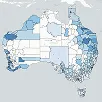

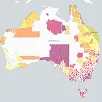


The total adult population (15 years or older) of Blakeview 5114 SA is 6,716, with a median age of 31. Of those, 43.61% are married, 13.53% are divorced or separated, 39.64% are single and 3.13% are widowed.
The average household size is 2.7 people per dwelling, and the median household monthly income is estimated to be $7,676. The median monthly mortgage repayment for households in this suburb is $1,434 which is 18.68% of their earnings.
Source: ABS Census Data (2021)