
Port Pirie West, SA 5540

Good to know:
Port Pirie West is a suburb located in the regional city of Port Pirie, South Australia, with the postcode 5540. The area is known for its industrial heritage, particularly in lead smelting. Residents enjoy a blend of suburban and semi-rural environments, with easy access to the city's amenities, including schools, parks, and shopping centres. The suburb is bordered by scenic natural landscapes, including the Pirie River, offering outdoor recreational opportunities. Port Pirie West has a strong sense of community, with a mix of older homes and newer developments catering to a diverse population.
Read More
Port Pirie West SA 5540 is a small regional house market where the current property market shows a strong income profile but constrained socio-economic indicators. Typical price for houses is $297,203, median rent is $390 per week and gross yield sits at 6.82% — signalling above-average cash flow potential. The data for Port Pirie West SA 5540 property investment highlights tight rental conditions (vacancy 0.36%) and good affordability (25 years to own), while IRSAD at 757 is well below the recommended threshold and points to slower capital growth potential compared with higher-SES suburbs. House prices in Port Pirie West are therefore more likely to attract yield-focused buyers than growth-only speculators.
Property market outlook
Port Pirie West’s house market is a cash-flow-first regional opportunity. Key supply and demand indicators are broadly neutral: stock-on-market 0.41% and inventory 3.2 months sit in balanced territory, days on market of 51 is in the middle range, and building approvals ratio 0.82% suggests modest incoming supply. Demand signals for rentals are stronger — vacancy is very low at 0.36%, indicating tight rental stock and landlord leverage for stable occupancy and rent growth momentum. Socio-economic score (IRSAD 757) is materially low, which typically suppresses long-term capital growth and increases sensitivity to local economic shocks. Overall outlook: stable rental performance and attractive yields now, constrained capital growth prospects over the long run unless local economic fundamentals improve.
Pros
- Strong gross yield: 6.82% — well above a typical 3% floor, supporting positive cash flow and servicing buffers.
- Very low vacancy (0.36%): rental demand is tight, reducing vacancy risk and supporting steady rental income and low days‑vacant.
- Good affordability (25 years): lower price point relative to local incomes improves access for investors and reduces refinancing stress.
- Very few units (Units/Houses ratio 2%): supply is dominated by houses, reducing competition from multi-unit product and favouring house investors.
- Data confidence high: reliable metrics to support decision-making.
Cons
- Low IRSAD (757): socio-economic disadvantage tends to correlate with weaker long-term capital growth and higher sensitivity to employment changes.
- Neutral sales market: balanced stock and days-on-market mean price appreciation is not being strongly driven by acute supply constraints.
- Renter/owner ratio 42% (neutral): healthy rental mix but not sufficiently tenant-dominant to guarantee outsized rental growth without other demand drivers.
- Clearance rate reported 0% (neutral because auctions are rare): limited auction activity reduces high-frequency market price signals.
- Regional market risks: local employment and commodity cycles can drive volatility in price and rental demand.
Investment strategies
- Income-first buy-and-hold: acquire established houses to lock in a 6.8%+ gross yield. Structure finance to favour cash-flow (longer terms, fixed rates where appropriate).
- Target long-term tenants: with vacancy very low, prioritise reliable long-stay tenants (local workforce, families) to minimise turnover costs and maintain occupancy.
- Modest value-add renovations: focus on cost-effective upgrades that raise rent (kitchen/bathroom refresh, energy efficiency) rather than high-end refurbishments; yields mean small capex often has rapid payback.
- Off-market and private sales focus: low stock-on-market suggests competition for visible listings — use buyer’s agents and local networks to find deals below market.
- Portfolio diversification: balance this regional, yield-oriented holding with at least one growth-oriented asset in a higher-IRSAD market to smooth long-term returns.
- Stress-test for downside: because IRSAD is low, ensure loan serviceability under higher interest-rate scenarios and consider contingency reserves for potential local economic shocks.
Is Port Pirie West SA 5540 a good suburb to invest in?
Yes — if your primary objective is cash flow and stable rental income from regional houses. The market delivers high gross yields (6.82%) and very low vacancies (0.36%), making it attractive to investors prioritising income and affordability. No — if your objective is aggressive capital growth or rapid price appreciation; low IRSAD (757) and neutral supply/demand dynamics reduce the likelihood of above-average long-term capital gains. Suitable investor profile: experienced investors or buyer’s agents seeking yield, regional exposure, and tenants tied to local employment; less suitable for growth-only speculators.
About HtAG Analytics Data
HtAG reports a base set of suburb metrics to support relative market analysis. Commonly used metrics include Typical Price, Median Rent, Sales, Rentals, Δ Change (percent change vs referent periods), Yield (gross rental yield), Capital Growth (CG) with CG Low/High bounds, Total RoI (Yield + CG), Rent Increase (projected p.a.), Volatility Index (MAPE-based), Confidence (data reliability), and a Relative Composite Score™. There are additional measures available on HTAG dashboards (supply metrics, demand indices, building approvals, demographic and infrastructure proxies) — the list above is a core subset.
The guiding principle behind HTAG metrics is to capture both current market conditions and historical trends in a way that supports relative comparisons at suburb level and close to the point of purchase. In the Port Pirie West context this means our measures are tuned to show how rental tightness, affordability and socio-economic profile combine to shape buyer outcomes — not just headline statewide statistics. While other public data providers (for example, some media-facing services) summarise broad trends from open sources, HTAG’s metrics are curated and measured to emphasise local purchase-relevant signals and to distinguish markets that behave differently at a fine geographic scale.
It’s also important to remember the snapshot above summarises current value metrics for Port Pirie West but does not capture metric trends, which can materially change prospects over time. Some metrics carry greater weight depending on an investor’s strategy (yield vs growth), and market selection will vary by budget, borrowing capacity, risk appetite and required time horizon. HTAG’s strength is shortlisting markets against bespoke criteria rather than applying one-size-fits-all rules — for serious investors and buyer’s agents we recommend running relative analysis across a set of suburbs aligned to your specific investment outcomes.
Updated: 1 Jun 2026
Read Less
Quick Area Stats

Dwellings

Population

EDI

Bushfire Risk Index

Flood Risk Index
Education & Infrastructure
Sign Up to Access

School Rank

Infra. Spend
Market Trends
Essential metrics effectively streamline the process of identifying markets that match your financial situation and investment objectives. Typical Price, Indicative Yield and Total ROI provide a swift means to shortlist areas that resonate with what you’re seeking and can afford. These metrics also serve as valuable general trend indicators, allowing you to visualise transaction volumes and dynamics of change.
1M
1Q
1Y
3Y
5Y
7Y
10Y
1M
1Q
1Y
3Y
5Y
7Y
10Y

1M
1Q
1Y
3Y
5Y
7Y
10Y
The Growth Rate Cycle (GRC) is a metric used to analyse the year-on-year change in property values, providing insights into the growth cycle of a particular area. It uses the “typical price” metric to gauge property values more accurately than median prices, and includes both actual and projected data for the current year.

Fundamental metrics play a vital role in providing a comprehensive analysis of the socio-economic environment within a specific suburb or region. Additionally, the Return on Investment (ROI) and Volatility Index are crucial metrics that aid in evaluating the prospective profitability and the level of risk or stability in the market.
Socio-economics
Sign Up to Access

IRSAD

Renter to Owner

Units to Houses
Projections
Sign Up to Access

Projected Annual ROI

Volatility Index
Quick Area Stats
Sign Up to Access

Annual Sales Volume

Annual Rentals Volume



Stock on Market

Building Approvals

Inventory

Hold Period




Supply metrics are crucial in gauging both the existing volumes of real estate listed for sale and the properties anticipated to enter the market soon. A diminished supply could signal opportunities for price appreciation, particularly when there’s corresponding buyer demand to buoy the market. The Stock on Market and Inventory level metrics (current values) are presented as a 3-month rolling average of monthly data shown in the charts. This means the last 3 months of data are averaged. The BA Ratio represents the proportion of building approvals over the latest 12 months relative to the total dwellings in the area.

Days on Market

Search Index

Vacancy Rate

Clearance Rate




Demand metrics underscore the level of interest that potential property buyers or tenants have in a specific suburb or locality. When demand outstrips the available supply, or if the supply fails to meet the intensity of buyer/renter interest, there’s a potential for prices to climb, underscoring the pivotal relationship between demand dynamics and property value trends. The Days on Market and Clearance Rate metrics (current values) are presented as a 3-month rolling average of monthly data shown in the charts. This means the last 3 months of data are averaged.
We invite you to contribute to the conversation by sharing your thoughts or raising questions about this market in the comment section below.
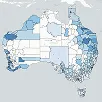

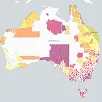


The total adult population (15 years or older) of Port Pirie West 5540 SA is 2,146, with a median age of 45. Of those, 28.15% are married, 17.89% are divorced or separated, 45.29% are single and 8.48% are widowed.
The average household size is 2.0 people per dwelling, and the median household monthly income is estimated to be $4,348. The median monthly mortgage repayment for households in this suburb is $693 which is 15.94% of their earnings.
Source: ABS Census Data (2021)