
Herdsmans Cove, TAS 7030

Good to know:
Herdsmans Cove, situated in Tasmania's postcode 7030, is a small residential suburb located roughly 22 kilometres north of Hobart's city centre. It sits on the eastern shore of the Derwent River, offering water views and a quieter lifestyle compared to the hustle and bustle of the city. The suburb is primarily residential, with a mix of public and private housing. It features a community centre and parks, making it family-friendly. While amenities within the suburb are limited, nearby Bridgewater and Claremont provide additional shopping, educational and recreational facilities. Public transport connectivity to Hobart is also available.
Read More
Herdsmans Cove TAS 7030 has a typical house price of $478,269, a rolling-year median rent of $455 per week and a gross rental yield of 4.95% — all key figures in the Herdsmans Cove property market. Herdsmans Cove TAS 7030 property investment currently shows tight listed supply (SoM 0.17%, inventory 1.9 months) and firm rental conditions (vacancy 0.74%, DoM 26 days), supporting rents and near-term cashflow. However the suburb records an IRSAD of 704 (well below the neutral threshold), a Renter/Owner ratio of 65% (unfavourable) and an affordability estimate of 41 years (high), which are important constraints on long-term house prices in Herdsmans Cove. Data confidence is Medium.
Property market outlook
Short-to-medium term: supply-side dynamics are supportive. Very low stock on market (0.17%) and sub-2-month inventory indicate scarcity of listed houses, while building approvals are effectively zero — all of which tends to reduce seller negotiating leverage and support price stability or uplift. Rental fundamentals are strong: a vacancy rate of 0.74% (below 1%) and median rent of $455pw deliver near 5% gross yield, making the suburb attractive for income-focused investors.
Medium-to-long term: structural headwinds temper the outlook for strong capital growth. IRSAD 704 signals material socio-economic disadvantage relative to national/metro norms and the Renter/Owner split (65% renters) suggests a weak owner-occupier base. Affordability at ~41 years is extreme versus the 30-year benchmark and can limit local buyer demand and upward pressure on house prices. Expect better capital-growth outcomes only if broader LGA-level employment, infrastructure or amenity upgrades change the socio-economic profile.
Pros
- Yield-positive: 4.95% gross yield is attractive for cashflow investors and above conventionally recommended minimums.
- Very tight listed supply: SoM 0.17% and 1.9 months inventory point to low transactional availability, supporting price resilience.
- Strong rental demand: vacancy 0.74% and 26 days on market indicate landlords can re-let quickly and maintain occupancy.
- Low new-supply risk: Building Approvals Ratio 0.0% implies little near-term downward pressure from additional stock.
- Dwelling mix: Units/Houses ratio 3% is opportune for house buyers (limited unit competition).
Cons
- Low socio-economic index: IRSAD 704 is materially below neutral ranges and may cap long-term capital growth and uplift.
- High renter proportion: RO Ratio 65% is unfavourable — neighbourhoods dominated by renters can experience higher turnover, property wear and weaker uplift through owner-driven improvements.
- Poor affordability: 41 years to own is well above the 30-year threshold, limiting organic owner-occupier demand and broad buyer depth.
- Data limitations: Confidence = Medium; sample size and transaction frequency may limit precision for pricing guidance.
- Clearance Rate and search interest: Clearance Rate 0.0% (neutral) and Buy Search Index 3 (neutral) show marketplace interest is not particularly elevated from broader state averages.
Investment strategies
- Yield-first buy-and-hold: Given a near-5% gross yield and sub-1% vacancy, Herdsmans Cove houses suit investors prioritising cashflow over rapid capital growth. Target well-maintained 3BR+ homes or modest-value houses that require minimal capex to rent immediately.
- Active management and tenant screening: High renter share increases turnover risk — apply rigorous tenant selection and proactive maintenance to protect yield and reduce vacancy losses.
- Value-add renovations: Select properties where modest improvements (kitchen, bathrooms, floorcoverings, energy efficiency) materially lift rent and appeal — this reduces reliance on capital growth alone.
- Staged entry and portfolio diversification: Because of IRSAD and affordability risks, consider limited exposure within a broader Tasmanian or multi-LGA portfolio rather than concentration risk.
- Buyers-agent tactics: low stock and short DOM (26 days) mean pre-approved finance, clean contracts and rapid inspection/decision processes win deals. Use independent valuation comps given medium data confidence.
- Monitor catalysts: prioritise assets near planned infrastructure, schools or commercial upgrades; such catalysts are the most likely pathways to improve socio-economic scores and capital growth prospects.
Is Herdsmans Cove TAS 7030 a good suburb to invest in?
It depends on strategy. For investors seeking reliable rental income and a sub-5% gross yield with very low vacancy risk, Herdsmans Cove houses are a reasonable fit. For investors whose priority is strong long-term capital appreciation, the suburb carries elevated risk: low IRSAD (704), a high renter ratio and very poor affordability (41 years) are constraints on sustainable price growth. Recommended approach: treat Herdsmans Cove as a tactical, income-oriented holding within a diversified portfolio, and only scale exposure after monitoring local economic indicators or confirmed infrastructure investment that would lift socio-economic metrics.
About HtAG Analytics Data
Base metrics reported per dwelling type include (but are not limited to): Typical Price, Median Rent, Sales count, Rentals listed, % Change over time, Gross Rental Yield, Capital Growth (annualised with low/high bands), Total RoI, projected Rent Increase, Volatility Index (MAPE-based), Confidence (data accuracy), Relative Composite Score™, Stock on Market (SoM & SoM%), Inventory / Months of Supply, Building Approvals & BA Ratio, Hold Period, Days on Market, Discounting, Vacancy Rate, Vacancies, DoRM, Buy & Rent Search Index, Auction Clearance Rate, IRSAD (SEIFA), Renter/Owner ratio, Unit/House mix ratios, Years to Own (Affordability) and Growth Rate Cycle. There are additional advanced metrics (population, estimated dwellings, school rank, non-residential approvals per capita, annual sales volume, distance to CBD) used for deeper analysis.
HtAG’s methodology focuses on capturing both current market conditions and historical trends to enable relative market analysis that is geared toward neighbourhood-level decision making. Unlike some public-data providers that emphasise broad trend narratives, HTAG metrics are curated and measured to align more closely with what matters at or near the point of purchase; similar metric names can therefore carry different nuances and calculations compared with other platforms.
Finally, the snapshot above reflects current value-level metrics but does not replace trend analysis — metric trajectories and the relative importance of specific indicators vary by investor goals. Market selection differs for different budgets, borrowing capacity, risk appetite and intended hold/refinance horizons. HTAG is designed to shortlist and rank locations against personalised criteria rather than offer one-size-fits-all recommendations; for serious investors and buyers’ agents, perform relative analysis across a tailored list of suburbs and monitor changes in the key socio-economic and supply-demand indicators before committing capital.
Updated: 1 Jun 2026
Read Less
Quick Area Stats

Dwellings

Population

EDI

Bushfire Risk Index

Flood Risk Index
Education & Infrastructure
Sign Up to Access

School Rank

Infra. Spend
Market Trends
Essential metrics effectively streamline the process of identifying markets that match your financial situation and investment objectives. Typical Price, Indicative Yield and Total ROI provide a swift means to shortlist areas that resonate with what you’re seeking and can afford. These metrics also serve as valuable general trend indicators, allowing you to visualise transaction volumes and dynamics of change.
1M
1Q
1Y
3Y
5Y
7Y
10Y
1M
1Q
1Y
3Y
5Y
7Y
10Y

1M
1Q
1Y
3Y
5Y
7Y
10Y
The Growth Rate Cycle (GRC) is a metric used to analyse the year-on-year change in property values, providing insights into the growth cycle of a particular area. It uses the “typical price” metric to gauge property values more accurately than median prices, and includes both actual and projected data for the current year.

Fundamental metrics play a vital role in providing a comprehensive analysis of the socio-economic environment within a specific suburb or region. Additionally, the Return on Investment (ROI) and Volatility Index are crucial metrics that aid in evaluating the prospective profitability and the level of risk or stability in the market.
Socio-economics
Sign Up to Access

IRSAD

Renter to Owner

Units to Houses
Projections
Sign Up to Access

Projected Annual ROI

Volatility Index
Quick Area Stats
Sign Up to Access

Annual Sales Volume

Annual Rentals Volume



Stock on Market

Building Approvals

Inventory

Hold Period




Supply metrics are crucial in gauging both the existing volumes of real estate listed for sale and the properties anticipated to enter the market soon. A diminished supply could signal opportunities for price appreciation, particularly when there’s corresponding buyer demand to buoy the market. The Stock on Market and Inventory level metrics (current values) are presented as a 3-month rolling average of monthly data shown in the charts. This means the last 3 months of data are averaged. The BA Ratio represents the proportion of building approvals over the latest 12 months relative to the total dwellings in the area.

Days on Market

Search Index

Vacancy Rate

Clearance Rate




Demand metrics underscore the level of interest that potential property buyers or tenants have in a specific suburb or locality. When demand outstrips the available supply, or if the supply fails to meet the intensity of buyer/renter interest, there’s a potential for prices to climb, underscoring the pivotal relationship between demand dynamics and property value trends. The Days on Market and Clearance Rate metrics (current values) are presented as a 3-month rolling average of monthly data shown in the charts. This means the last 3 months of data are averaged.
We invite you to contribute to the conversation by sharing your thoughts or raising questions about this market in the comment section below.
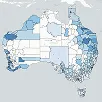

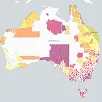


The total adult population (15 years or older) of Herdsmans Cove 7030 TAS is 859, with a median age of 29. Of those, 21.89% are married, 13.62% are divorced or separated, 60.30% are single and 3.03% are widowed.
The average household size is 2.8 people per dwelling, and the median household monthly income is estimated to be $4,432. The median monthly mortgage repayment for households in this suburb is $869 which is 19.61% of their earnings.
Source: ABS Census Data (2021)