
Grindelwald, TAS 7277

Good to know:
Grindelwald is a charming suburb located in Tasmania’s Tamar Valley, approximately 15 kilometres north of Launceston. Established in the 1980s, it is renowned for its unique Swiss-style architecture, reflecting its namesake in Switzerland. This picturesque suburb, post code 7277, features stunning hillside views, a man-made lake, and a serene village atmosphere. It boasts various recreational facilities, including mini golf, paddle boats, and a wellness centre. Grindelwald’s idyllic setting and close-knit community make it a sought-after residential area and a delightful tourist destination.
Read More
Grindelwald TAS 7277 is showing a mixed property market profile for houses: a Typical Price of $970,442, Median Rent reported as $0 and a calculated Yield of 0.0% (well below the usual 3% cashflow threshold). The data highlights very high affordability pressure (48 years) alongside an affluent socio‑economic score (IRSAD 1047) and extremely low stock on market (SoM 0.29%). These signals point to constrained supply and a wealthy resident base supportive of long‑term capital growth, but current rental metrics and transaction activity raise material near‑term cashflow and demand risks.
Property market outlook
Short to medium term: capital growth drivers are present — high IRSAD and very low listed supply (SoM 0.29%, BA Ratio 0.0%) reduce downside from oversupply and favour price support. However, transactional demand appears weak: Days on Market for houses is 107 days (unfavourable) and recorded Vacancy Rate is 5.26% (unfavourable), implying elevated rental vacancy risk and subdued buyer urgency. The zero median rent and 0.0% yield suggest rental market data is sparse or atypical (holiday/owner‑occupied stock), so Grindelwald’s house market is more attractive to long‑horizon capital growth buyers than to yield investors. Confidence of the data is Medium — treat rent figures and vacancy signals as requiring verification with local agents and rental platforms.
Pros
- Strong socio‑economic backing: IRSAD 1047 (opportune) — affluent buyer profile supports sustained price levels and buyer resilience.
- Very low Stock on Market: SoM 0.29% (opportune) — constrained listed supply tends to be supportive of price growth where demand returns.
- Building Approvals Ratio 0.0% (opportune) — little recent development converts to limited new supply pressure.
- Renter/Owner ratio 4.0% (opportune) — predominantly owner‑occupied which reduces churn and supply of investment stock.
- Hold period 7.95 years (neutral) — properties are not being traded frequently, which can preserve established stock values.
Cons
- No rental income recorded: Median Rent $0 and Yield 0.0% (well below a minimum 3% yield threshold) — unsuitable for investors needing immediate positive cashflow.
- High vacancy signal: Vacancy Rate 5.26% (unfavourable) — elevated vacancy risk increases downside for rental returns and indicates weaker tenant demand or seasonal/short‑stay dynamics.
- Weak transactional demand: Days on Market 107 (unfavourable) — sellers may need longer to transact; pockets of price sensitivity likely.
- Very poor affordability: Affordability 48 years (well above 30-year threshold) — price levels are elevated relative to local incomes, increasing sensitivity to rate rises and credit tightening.
- Units/Houses ratio 15% (neutral) — limited unit stock but enough that investors must choose dwelling type carefully.
- Data confidence Medium — especially rental metrics; verify with local market checks.
Investment strategies
- Capital‑growth focus only: Grindelwald TAS 7277 houses are most suited to investors who prioritise long‑term capital appreciation over near‑term rental yield. Expect a multi‑year horizon (5–10+ years) to capture value from supply constraints and affluent demand.
- Off‑market and selective buying: With SoM at 0.29%, pursue off‑market opportunities and relationships with local agents; competition will be low in public listings but motivated sellers may still exist given long DOM.
- Validate rental strategy before buying: The combination of Median Rent $0 and Vacancy 5.26% is contradictory — investigate whether the suburb is dominated by owner‑occupiers or short‑stay/holiday stock. If tourist demand exists, model seasonal income, management fees, and regulatory constraints before assuming short‑stay viability.
- Renovation / repositioning: If you must generate yield, target value‑add works that improve year‑round appeal to long‑stay tenants (insulation, heating, liveable spaces), but only after confirming a realistic achievable rent with local agents and platforms.
- Consider neighbouring markets for yield: If cashflow is required, compare adjacent suburbs where yields and rental demand are stronger; use Grindelwald for strategic capital exposure rather than income generation.
- Risk management: Given very high affordability and moderate transaction weakness, size acquisitions conservatively; stress‑test debt servicing at higher rates and longer vacancy periods.
- Due diligence checklist: confirm true rental stock (private ads, property managers, short‑stay listings), check council planning controls (low BA ratio suggests constrained development), and obtain recent comparable sales — Confidence is Medium so cross‑check data sources.
Is Grindelwald TAS 7277 a good suburb to invest in?
Grindelwald TAS 7277 can be a good fit for capital‑growth investors who accept little to no near‑term rental yield, have a long holding period and the capacity to weather interest‑rate cycles. The suburb’s high IRSAD and tight listed supply support an upside bias for prices over time. It is not appropriate for yield‑seeking investors or those requiring reliable rental cashflow given the recorded Median Rent of $0, 0.0% yield and a 5.26% vacancy signal — unless you can evidence a credible short‑stay income source and accept seasonality and regulatory risk. Ultimately suitability depends on strategy, time horizon, borrowing capacity and whether you can validate rental demand locally. Data Confidence is Medium; confirm rental and vacancy conditions with on‑the‑ground checks before committing.
About HtAG Analytics Data
HtAG reports a focused set of core metrics per dwelling type; the base set commonly used in suburb reports includes Typical Price, Median Rent, Sales and Rentals activity, % Change over time, Gross Rental Yield, Capital Growth and CG Low/High estimates, Total RoI, Rent Increase (projected), Volatility Index, Confidence, Relative Composite Score™, SoM and SoM%, Inventory (months), Building Approvals and BA Ratio, Hold Period, Days on Market, Discounting, Vacancy Rate, Buy & Rent Search Index, Auction Clearance Rates, and demographic/context metrics such as IRSAD, Renter/Owner ratio, Units/Houses ratio, Years to Own (Affordability), Population and Estimated Dwellings. There are additional specialised metrics on HTAG dashboards; the list above is the primary base set for suburb comparisons.
HtAG’s methodology is designed to capture both current market conditions and historical trends to create relative market comparisons that are closely aligned to the point of purchase. Unlike providers that publish broad public datasets mainly for macro narratives, HtAG tailors metric curation and measurement nuances so analysis reflects local market behaviour relevant to buyers, investors and agents operating at suburb level. Metric names may be similar across providers, but HtAG’s data curation, referent baselines and trend modelling are calibrated for near‑purchase decisionmaking.
Finally, note this summary is a snapshot of current value metrics and does not substitute for trend analysis — metric trajectories can materially change outlooks. Some metrics carry greater weight than others depending on strategy and local context; investor selection will vary by budget, borrowing ability, risk appetite and intended hold/refinance timelines. HtAG specialises in shortlisting markets against individual investor criteria rather than offering one‑size‑fits‑all recommendations. For active investment decisions, perform relative analysis across a shortlist of suburbs aligned to your objectives and verify rental and demand signals on the ground.
Updated: 1 Jun 2026
Read Less
Quick Area Stats

Dwellings

Population

EDI

Bushfire Risk Index

Flood Risk Index
Education & Infrastructure
Sign Up to Access

School Rank

Infra. Spend
Market Trends
Essential metrics effectively streamline the process of identifying markets that match your financial situation and investment objectives. Typical Price, Indicative Yield and Total ROI provide a swift means to shortlist areas that resonate with what you’re seeking and can afford. These metrics also serve as valuable general trend indicators, allowing you to visualise transaction volumes and dynamics of change.
1M
1Q
1Y
3Y
5Y
7Y
10Y
1M
1Q
1Y
3Y
5Y
7Y
10Y

1M
1Q
1Y
3Y
5Y
7Y
10Y
The Growth Rate Cycle (GRC) is a metric used to analyse the year-on-year change in property values, providing insights into the growth cycle of a particular area. It uses the “typical price” metric to gauge property values more accurately than median prices, and includes both actual and projected data for the current year.

Fundamental metrics play a vital role in providing a comprehensive analysis of the socio-economic environment within a specific suburb or region. Additionally, the Return on Investment (ROI) and Volatility Index are crucial metrics that aid in evaluating the prospective profitability and the level of risk or stability in the market.
Socio-economics
Sign Up to Access

IRSAD

Renter to Owner

Units to Houses
Projections
Sign Up to Access

Projected Annual ROI

Volatility Index
Quick Area Stats
Sign Up to Access

Annual Sales Volume

Annual Rentals Volume



Stock on Market

Building Approvals

Inventory

Hold Period




Supply metrics are crucial in gauging both the existing volumes of real estate listed for sale and the properties anticipated to enter the market soon. A diminished supply could signal opportunities for price appreciation, particularly when there’s corresponding buyer demand to buoy the market. The Stock on Market and Inventory level metrics (current values) are presented as a 3-month rolling average of monthly data shown in the charts. This means the last 3 months of data are averaged. The BA Ratio represents the proportion of building approvals over the latest 12 months relative to the total dwellings in the area.

Days on Market

Search Index

Vacancy Rate

Clearance Rate




Demand metrics underscore the level of interest that potential property buyers or tenants have in a specific suburb or locality. When demand outstrips the available supply, or if the supply fails to meet the intensity of buyer/renter interest, there’s a potential for prices to climb, underscoring the pivotal relationship between demand dynamics and property value trends. The Days on Market and Clearance Rate metrics (current values) are presented as a 3-month rolling average of monthly data shown in the charts. This means the last 3 months of data are averaged.
We invite you to contribute to the conversation by sharing your thoughts or raising questions about this market in the comment section below.
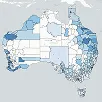

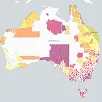


The total adult population (15 years or older) of Grindelwald 7277 TAS is 863, with a median age of 50. Of those, 64.77% are married, 6.26% are divorced or separated, 20.86% are single and 6.37% are widowed.
The average household size is 2.6 people per dwelling, and the median household monthly income is estimated to be $7,712. The median monthly mortgage repayment for households in this suburb is $1,625 which is 21.07% of their earnings.
Source: ABS Census Data (2021)