
Tullah, TAS 7321

Good to know:
Tullah is a small town situated in the West Coast region of Tasmania, with a postcode of 7321. Nestled between Mount Farrell and Mount Murchison, it lies along the banks of Lake Rosebery, providing stunning natural scenery and ample opportunities for outdoor activities such as fishing, hiking, and boating. Historically, Tullah was a mining and hydroelectric power generation town, with significant growth during the 20th century. It features a quiet, relaxed lifestyle with a small, close-knit community, making it an attractive destination for those seeking tranquility and a connection to nature.
Read More
Tullah TAS 7321 has a small, low‑priced house market with a Typical Price of $230,795, Median Rent of $262/wk and a gross Yield of 5.9% — the figures frame the Tullah TAS 7321 property market as a high-yield, low-capital-entry opportunity but with modest socioeconomic metrics and limited data confidence. Tullah TAS 7321 property investment suits buyers seeking above-average rental income from a low purchase price, but the suburb’s low IRSAD (875) and low transaction confidence mean long‑term capital growth is less certain.
Property market outlook
Supply is broadly balanced: Stock on Market (SoM) at 0.42% and Inventory at 2.22 months sit in the “balanced” band, while Building Approvals Ratio is 0.0% (opportune) signalling minimal near-term new supply. However, Hold Period is short (5.28 years — flagged as unfavourable), indicating quicker turnover and a smaller pool of long‑held stock than preferred for scarcity-led appreciation. Demand indicators are mixed to weak: Days on Market for houses is 95 days (unfavourable), suggesting slower sales and bargaining room for buyers; Vacancy Rate is 1.92% (neutral), and the Buy Search Index is 5 (state average). Overall this points to a market where rental income is achievable but sales liquidity is limited and price momentum is subdued. Data Confidence is Low — treat point-in-time signals as directional rather than definitive.
Pros
- Strong headline yield: 5.9% gross yield is well above typical investor thresholds and supports positive cashflow for owner-occupier investors or yield-focused portfolios.
- Low entry price: Typical Price of $230,795 makes the suburb accessible for investors with modest capital.
- Low near-term pipeline: Building Approvals Ratio at 0.0% reduces the risk of immediate oversupply from new construction.
- Balanced inventory: SoM% (0.42%) and Months of Supply (2.22) indicate supply is not excessive, helping rental levels remain supported.
- Affordability favourable: Years to Own at 13 years suggests the market is affordable for local buyers, which can underpin local demand for housing.
Cons
- Socioeconomic score below neutral: IRSAD 875 (below the 920/950 thresholds) is unfavourable for long-term price appreciation and can indicate constrained local income levels and services.
- Weak sales liquidity: DOM at 95 days and low Confidence in data point to slower resale markets and higher transaction risk.
- Small, thin market: Very low unit presence (Units/Houses ratio 0.0%) and low recorded sales volume reduce market depth and make valuation comparisons noisier.
- Short hold periods: Average hold of 5.28 years suggests properties change hands frequently; that can increase volatility and reduce scarcity premium.
- Low data confidence: Low Confidence means metrics are based on limited transactions; investors should verify with local agents and on‑the‑ground checks.
Investment strategies
- Yield / cashflow play: Target established houses for reliable weekly rent; the 5.9% gross yield supports positive cashflow if financing costs are controlled. Focus on low-maintenance properties to protect operating margins.
- Renovation-lite value add: With low purchase prices, modest cosmetic upgrades can raise rents and reduce vacancy periods, improving net yield. Prioritise improvements with clear payback (kitchen, bathroom, energy efficiency).
- Small‑scale portfolio entry: Use Tullah as a portfolio diversifier for investors seeking higher yields at low ticket prices rather than as a primary growth bet.
- Tenancy risk management: Given IRSAD and hold period signals, stress-test rental assumptions and allow for periods of vacancy; consider longer leases or tenant screening to reduce churn.
- Exit strategy discipline: Expect slower sales and longer DOM; plan minimum hold horizons and avoid relying on rapid capital gains. Use due diligence on comparable sales and engage local agents early.
- On‑the‑ground verification: Low data confidence requires site visits, local agent feedback on seasonal demand, and enquiry into any concentration of investor stock or short‑term rentals that could skew supply.
Is Tullah TAS 7321 a good suburb to invest in?
Tullah TAS 7321 can be a good suburb to invest in for yield-focused, budget‑constrained investors seeking entry into regional housing markets. House prices are low and the gross yield is attractive at 5.9%, supporting a cashflow-first approach. However, the suburb is not a strong candidate if your primary objective is above‑average long‑term capital growth — the IRSAD of 875, short hold periods, slow days on market and low data confidence all limit growth certainty. If you pursue Tullah, treat it as a play for rental income with conservative assumptions on appreciation and liquidity, and pair acquisition with rigorous local market checks.
About HtAG Analytics Data
Base metrics included here (reported per dwelling type where relevant) are: Typical Price, Median Rent, Sales and Rentals activity, Δ Change over time, Gross Rental Yield, Capital Growth estimates and ranges (CG low/high), Total RoI (Yield + CG), Rent Increase forecast, Volatility Index, Confidence, Relative Composite Score™, IRSAD, Renter/Owner ratio, Units/Houses ratio, UHV ratio (units only), Years to Own (Affordability), Growth Rate Cycle (GRC), Stock on Market (SoM) and SoM%, Inventory (months), Building Approvals & BA Ratio, Hold Period, Days on Market (DOM), Discounting, Vacancy Rate, Vacancies count, Days on Rental Market (DoRM), Buy & Rent Search Index, Auction Clearance Rates, Population, Estimated Dwellings, School Rank and non‑residential Building Approvals per capita. There are additional advanced metrics available on suburb dashboards; this list reflects the base set commonly used for comparative shortlisting.
The guiding principle behind HtAG metrics is to capture both current market conditions and historical trends so we can perform tightly comparative, point‑of‑purchase analysis for suburbs like Tullah TAS 7321. While other providers often emphasise public aggregated datasets for broad narratives, HTAG constructs metrics and comparisons specifically to evaluate markets at the suburb and dwelling-type level — designed to help investors and buyer’s agents choose between nearby locations rather than only describe national trends. As a result, similarly named metrics can have important methodological differences in how they’re measured and curated.
It’s also important to recognise that the snapshot above reflects current value metrics for Tullah TAS 7321 and does not show metric trends, which can materially alter an investment view. Some metrics carry more weight than others depending on investor objectives (income vs growth), financing capacity and intended hold/exit timeframe. Market selection therefore varies by investor: different budgets, borrowing profiles and risk appetites will lead to different suburbs being appropriate. HTAG specialises in shortlisting and ranking suburbs based on individual criteria rather than a one‑size‑fits‑all approach; for serious investors and buyer’s agents we recommend relative analysis across a tailored set of locations aligned to your strategy.
Updated: 1 May 2026
Read Less
Quick Area Stats

Dwellings

Population

EDI

Bushfire Risk Index

Flood Risk Index
Education & Infrastructure
Sign Up to Access

School Rank

Infra. Spend
Market Trends
Essential metrics effectively streamline the process of identifying markets that match your financial situation and investment objectives. Typical Price, Indicative Yield and Total ROI provide a swift means to shortlist areas that resonate with what you’re seeking and can afford. These metrics also serve as valuable general trend indicators, allowing you to visualise transaction volumes and dynamics of change.
1M
1Q
1Y
3Y
5Y
7Y
10Y
1M
1Q
1Y
3Y
5Y
7Y
10Y

1M
1Q
1Y
3Y
5Y
7Y
10Y
The Growth Rate Cycle (GRC) is a metric used to analyse the year-on-year change in property values, providing insights into the growth cycle of a particular area. It uses the “typical price” metric to gauge property values more accurately than median prices, and includes both actual and projected data for the current year.

Fundamental metrics play a vital role in providing a comprehensive analysis of the socio-economic environment within a specific suburb or region. Additionally, the Return on Investment (ROI) and Volatility Index are crucial metrics that aid in evaluating the prospective profitability and the level of risk or stability in the market.
Socio-economics
Sign Up to Access

IRSAD

Renter to Owner

Units to Houses
Projections
Sign Up to Access

Projected Annual ROI

Volatility Index
Quick Area Stats
Sign Up to Access

Annual Sales Volume

Annual Rentals Volume



Stock on Market

Building Approvals

Inventory

Hold Period




Supply metrics are crucial in gauging both the existing volumes of real estate listed for sale and the properties anticipated to enter the market soon. A diminished supply could signal opportunities for price appreciation, particularly when there’s corresponding buyer demand to buoy the market. The Stock on Market and Inventory level metrics (current values) are presented as a 3-month rolling average of monthly data shown in the charts. This means the last 3 months of data are averaged. The BA Ratio represents the proportion of building approvals over the latest 12 months relative to the total dwellings in the area.

Days on Market

Search Index

Vacancy Rate

Clearance Rate




Demand metrics underscore the level of interest that potential property buyers or tenants have in a specific suburb or locality. When demand outstrips the available supply, or if the supply fails to meet the intensity of buyer/renter interest, there’s a potential for prices to climb, underscoring the pivotal relationship between demand dynamics and property value trends. The Days on Market and Clearance Rate metrics (current values) are presented as a 3-month rolling average of monthly data shown in the charts. This means the last 3 months of data are averaged.
We invite you to contribute to the conversation by sharing your thoughts or raising questions about this market in the comment section below.
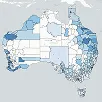

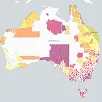


The total adult population (15 years or older) of Tullah 7321 TAS is 162, with a median age of 43. Of those, 35.80% are married, 18.52% are divorced or separated, 39.51% are single and 4.94% are widowed.
The average household size is 2.0 people per dwelling, and the median household monthly income is estimated to be $6,664. The median monthly mortgage repayment for households in this suburb is $563 which is 8.45% of their earnings.
Source: ABS Census Data (2021)