
Porepunkah, VIC 3740

Good to know:
Porepunkah is a quaint suburb in Victoria, situated at the base of Mount Buffalo in the picturesque Alpine Shire, with the postcode 3740. Known for its natural beauty, it lies along the Great Alpine Road and by the tranquil Ovens River, making it a popular destination for outdoor enthusiasts. The area offers opportunities for hiking, cycling, and river activities. Porepunkah boasts a close-knit community, complemented by a small selection of local shops and cafes. It's also a gateway to nearby attractions such as the Mount Buffalo National Park, providing stunning landscapes and diverse wildlife.
Read More
Porepunkah VIC 3740 is showing a mixed short-term picture in HtAG property market data for houses: typical price $822,982, median rent $0 and a reported yield of 0.0% (well below the 3% threshold). Key structural strengths include a high IRSAD of 1041 and a long average hold period (13.43 years), while affordability is stretched (40 years). Several supply / demand indicators are contradictory — extremely low Stock on Market (0.22% - tight supply) coexists with Inventory of 7.16 months (elevated months-of-supply) and longer days on market (103 days). Confidence in the data is Medium, so interpret low-rental metrics cautiously.
Property market outlook
Porepunkah houses: expect a market driven primarily by owner-occupiers and infrequent sales rather than an active long-term rental sector. The high IRSAD (1041) supports price resilience and a favourable long-term capital growth bias for affluent small-town markets, but the zero median rent and 0.0% yield flag the absence of recorded long-term rental cashflow in official listings. Low Stock on Market (0.22%) and a 13.4-year hold period indicate a tightly held catalogue of established houses with limited turnover — a condition that can support price stability when demand exists. However, Inventory at 7.16 months and Days on Market at 103 days point to illiquidity: when listings do appear they may remain unsold for extended periods, increasing transaction risk and lengthening expected exit timelines for investors. Vacancy rate 0.83% signals tight rental availability where long-lease rentals are active, but the zero median rent suggests the rental market may be too small or skewed to short-stay/seasonal accommodation not captured by standard rental data. Overall the market outlook is nuanced: suitable for selective capital-growth allocations and off-market buying strategies rather than yield-oriented passive portfolios.
Pros
- High IRSAD (1041): indicating relative affluence and stronger capacity for price retention and premium sales.
- Low Stock on Market (0.22%) and long Hold Period (13.43 years): suggests properties are tightly held, reducing churn and supporting scarcity value for well-positioned listings.
- Building Approvals Ratio 0.0%: minimal new supply pipeline, which can protect established property values in the long run.
- Vacancy Rate 0.83%: low recorded vacancy implies limited available long-term rental stock when such listings exist.
- Buy Search Index 5 and Clearance Rate neutral: demand metrics are broadly in-line with state averages, so price moves rely on specific listings and buyer appetite rather than speculative trading.
Cons
- Median rent reported as $0 and Yield 0.0%: indicates little to no observable long-term rental income in the dataset. This is a critical issue for investors relying on rental yield to service debt or provide cashflow.
- Affordability 40 years: above the 30-year threshold and signals local prices are stretched relative to typical incomes, increasing downside sensitivity to interest-rate driven demand shocks.
- Inventory 7.16 months and Days on Market 103: elevated selling times and months of supply indicate illiquidity and potential price pressure if multiple sellers enter market simultaneously.
- Mixed signals between very low SoM% and high Inventory: small dwelling base can distort percentage metrics — expect volatility and data sparsity issues.
- Data Confidence Medium: moderate transaction volume reduces statistical robustness; small sample sizes can create outlier metrics (e.g., zero median rent).
Investment strategies
- Capital-growth focus, selective buying: target properties with clear premium drivers (riverfront/Alpine proximity, established holiday houses, renovated period homes). The market suits buyers prepared to hold long term and accept low or absent rental income.
- Off-market and owner-occupier-sourced deals: low turnover and long hold periods mean best opportunities may come off-market. Use buyers-agent networks and vendor-liaison strategies.
- Due diligence on rental market type: confirm whether short-stay platforms dominate local accommodation. If so, evaluate the regulatory environment and realistic short-stay income versus management costs; short-stay revenue may not show in HtAG long-lease metrics but can materially change yield calculations.
- Value-add where feasible: renovations that broaden year-round rental appeal (insulation/heating in Alpine areas, better bathrooms/kitchens) can convert niche holiday assets into more reliable long-term rental candidates, improving private yield.
- Conservative finance structuring: given zero recorded yield and stretched affordability, plan for negative cashflow scenarios and ensure buffer on serviceability. Consider lower LVR or interest-only periods only if aligned with exit timelines.
- Portfolio allocation: treat Porepunkah as a satellite pick for capital appreciation or diversification into lifestyle markets rather than a core income asset. Compare relative metrics with nearby Alpine towns to find the best balance of yield and growth.
Is Porepunkah VIC 3740 a good suburb to invest in?
Porepunkah VIC 3740 can be a reasonable location for investors whose primary objective is medium-to-long-term capital growth in a tightly held, affluent small-town market — provided they accept limited recorded long-term rental income and potential illiquidity. It is not well suited to investors seeking dependable, >3% gross rental yields from traditional long-lease tenancies based on current HtAG metrics. For buyers agents and investors targeting lifestyle or holiday-driven capital gains, this market warrants targeted, off-market search strategies and careful verification of actual rental income (including short-stay channels) before acquisition.
About HtAG Analytics Data
HtAG’s base suburb metrics reported here include: Typical Price, Median Rent, Sales and Rentals counts, Yield (Gross Rental Yield), Capital Growth estimates (annualised with low/high bounds), Total RoI (Yield + Capital Growth), Rent Increase projections, Volatility Index, Confidence score, Relative Composite Score and supply/demand indicators such as Stock on Market (SoM and SoM%), Inventory (months of supply), Building Approvals and BA Ratio, Hold Period, Days on Market, Discounting, Vacancy Rate and Vacancies, Buy & Rent Search Index, Auction Clearance Rates, plus contextual metrics (Population, Estimated Dwellings, School Rank, Non-residential Approvals per Capita, Annual Sales Volume, Distance to CBD). There are additional advanced metrics beyond this base set available on HtAG suburb dashboards.
HtAG’s methodology is designed to capture both current market conditions and historical trends to support relative, point-of-purchase analysis in a way that differs from other public-data providers. For Porepunkah VIC 3740, this means metrics are curated to reflect the suburb’s trading patterns and small-sample dynamics rather than only broad, state-level narratives. While some metrics use similar names to other services, HtAG places emphasis on data curation, localized adjustments and trend-based modelling to improve relevance for buyers agents and investors selecting specific suburbs.
Note that the snapshot above reports current value metrics for houses in Porepunkah but does not incorporate metric trends over time, which can materially change the investment case; certain metrics (for example vacancy and yield) carry more weight depending on an investor’s strategy. Market selection always depends on individual budget, borrowing capacity, risk appetite and intended hold/exit timing. HtAG excels at shortlisting and comparing suburbs against bespoke investor criteria rather than offering one-size-fits-all conclusions; for serious investment decisions perform relative analysis across comparable suburbs and time horizons aligned to your objectives.
Updated: 1 Jun 2026
Read Less
Quick Area Stats

Dwellings

Population

EDI

Bushfire Risk Index

Flood Risk Index
Education & Infrastructure
Sign Up to Access

School Rank

Infra. Spend
Market Trends
Essential metrics effectively streamline the process of identifying markets that match your financial situation and investment objectives. Typical Price, Indicative Yield and Total ROI provide a swift means to shortlist areas that resonate with what you’re seeking and can afford. These metrics also serve as valuable general trend indicators, allowing you to visualise transaction volumes and dynamics of change.
1M
1Q
1Y
3Y
5Y
7Y
10Y
1M
1Q
1Y
3Y
5Y
7Y
10Y

1M
1Q
1Y
3Y
5Y
7Y
10Y
The Growth Rate Cycle (GRC) is a metric used to analyse the year-on-year change in property values, providing insights into the growth cycle of a particular area. It uses the “typical price” metric to gauge property values more accurately than median prices, and includes both actual and projected data for the current year.

Fundamental metrics play a vital role in providing a comprehensive analysis of the socio-economic environment within a specific suburb or region. Additionally, the Return on Investment (ROI) and Volatility Index are crucial metrics that aid in evaluating the prospective profitability and the level of risk or stability in the market.
Socio-economics
Sign Up to Access

IRSAD

Renter to Owner

Units to Houses
Projections
Sign Up to Access

Projected Annual ROI

Volatility Index
Quick Area Stats
Sign Up to Access

Annual Sales Volume

Annual Rentals Volume



Stock on Market

Building Approvals

Inventory

Hold Period




Supply metrics are crucial in gauging both the existing volumes of real estate listed for sale and the properties anticipated to enter the market soon. A diminished supply could signal opportunities for price appreciation, particularly when there’s corresponding buyer demand to buoy the market. The Stock on Market and Inventory level metrics (current values) are presented as a 3-month rolling average of monthly data shown in the charts. This means the last 3 months of data are averaged. The BA Ratio represents the proportion of building approvals over the latest 12 months relative to the total dwellings in the area.

Days on Market

Search Index

Vacancy Rate

Clearance Rate




Demand metrics underscore the level of interest that potential property buyers or tenants have in a specific suburb or locality. When demand outstrips the available supply, or if the supply fails to meet the intensity of buyer/renter interest, there’s a potential for prices to climb, underscoring the pivotal relationship between demand dynamics and property value trends. The Days on Market and Clearance Rate metrics (current values) are presented as a 3-month rolling average of monthly data shown in the charts. This means the last 3 months of data are averaged.
We invite you to contribute to the conversation by sharing your thoughts or raising questions about this market in the comment section below.
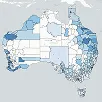

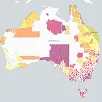


The total adult population (15 years or older) of Porepunkah 3740 VIC is 846, with a median age of 46. Of those, 54.96% are married, 8.98% are divorced or separated, 32.15% are single and 4.85% are widowed.
The average household size is 2.5 people per dwelling, and the median household monthly income is estimated to be $7,440. The median monthly mortgage repayment for households in this suburb is $1,633 which is 21.95% of their earnings.
Source: ABS Census Data (2021)