
Parkerville, WA 6081

Good to know:
Parkerville is a serene suburb located in the Shire of Mundaring, approximately 33 kilometres east of Perth, Western Australia. With a postcode of 6081, it offers a blend of natural beauty and rural charm. The suburb is renowned for the John Forrest National Park, which provides excellent hiking trails, waterfalls, and scenic views. Parkerville is also known for its historical sites, including the Parkerville Tavern, a popular local pub. The community is tight-knit and enjoys a peaceful lifestyle, making it a desirable location for those seeking a quiet retreat from city life.
Read More
Parkerville WA 6081 is a high-value outer‑peri‑urban market where house prices (typical price $1,442,160) sit well above metropolitan averages. HTAG property market data for houses in Parkerville shows a median rent of $641pw and a gross yield of 2.31% — below the commonly cited 3% yield threshold — signalling this market is driven more by capital growth than rental income. House prices in Parkerville are supported by a high IRSAD (1064) and strong buyer interest, but extreme affordability pressure (51 years to own) and elevated inventory (5.91 months) are notable constraints for near-term price appreciation.
Property market outlook
Parkerville WA 6081 houses: outlook is mixed-to-cautious. Strengths include a wealthy resident profile (IRSAD 1064) and active buyer search intensity (Buy Search Index 8) with Days on Market at 29 days indicating transactional velocity. These factors support upside for premium house prices and make Parkerville attractive to owner‑occupiers and long-hold investors seeking capital growth. Offsetting this are structural constraints: Gross yield at 2.31% is low, affordability at 51 years is extreme and likely to cap the marginal buyer pool, and Inventory of 5.91 months signals looser supply which can blunt price momentum. Vacancy (1.41%) and Stock on Market (0.43%) are broadly neutral, so rental tightness is not a decisive tailwind.
Pros
- High socio‑economic status: IRSAD 1064 (opportune) supports price resilience for premium properties and aspirational buyer demand.
- Buyer interest and transaction speed: Buy Search Index 8 (favourable) and DOM 29 days (opportune) imply properties transact quickly when marketed well.
- Owner‑occupier dominated market: Renter/Owner ratio 7% (opportune) reduces rental volatility and makes the suburb less exposed to tenant churn or investor-driven oversupply.
- Low unit competition: Units/Houses ratio 0% (opportune) — predominantly house market, fewer apartment oversupply risks.
- High confidence in the data (High), so the metrics are robust for decision-making.
Cons
- Very low gross yield: 2.31% is below a 3% practical minimum for many investors — income return is weak and negatively impacts cashflow feasibility.
- Severe affordability pressure: 51 years to own greatly exceeds the 30‑year threshold and indicates households must be high income or use significant borrowing to buy — reduces buyer depth and can increase sensitivity to rate rises.
- Elevated inventory: 5.91 months (unfavourable) points to softer short‑term supply/demand balance and potential for price moderation if listings increase.
- Limited rental market scale: low Renter/Owner ratio means fewer relocations and limited investor-driven demand for yield; exit options for an investor reliant on tenants may be narrower.
- Clearance Rate reported 0% (neutral) typical of few auctions — less transparent price discovery through auction channels.
Investment strategies
- Capital-growth focus: Parkerville houses suit long-hold investors targeting capital appreciation rather than yield. Expect low rental returns — plan for multi‑year holds and focus on properties with location premiums (larger lots, outlook, lifestyle amenity).
- Buyer‑occupier flip or premium upgrades: Given owner‑occupier demand and high IRSAD, consider value-add renovations that appeal to premium buyers rather than yield-driven repositioning.
- Selective acquisition to manage cashflow: If purchasing for yield is required, target smaller, lower‑priced nearby suburbs or consider a blended portfolio (Parkerville for growth + higher‑yield suburbs for income).
- Financing and stress‑testing: With affordability stretched, underwrite deals with conservative serviceability buffers to rate increases and slower capital growth scenarios.
- Monitor supply dynamics: Inventory and building approvals are currently neutral‑to‑soft; track new listings and approvals as an early indicator of changing price pressure.
- Exit planning: Given limited rental depth and owner‑occupier dominance, build multiple exit routes (private sale networks, buyer agent relationships) and expect longer marketing cycles if macro conditions weaken.
Is Parkerville WA 6081 a good suburb to invest in?
Parkerville WA 6081 can be a good suburb to invest in for investors whose primary objective is long‑term capital growth and who have the liquidity and risk tolerance to accept weak rental yields and stretched affordability. The suburb scores highly on socio‑economic indicators and buyer interest, which underpin premium house prices, but low yield (2.31%) and high affordability years (51) make it unsuitable for investors needing strong cashflow or short‑term returns. For buyers focused on lifestyle‑driven capital appreciation and prepared to hold for multiple market cycles, Parkerville is credible; for yield or near‑term cashflow strategies, consider alternate markets.
About HtAG Analytics Data
Base metrics shown above (per dwelling type where applicable) include: Typical Price, Median Rent, Sales, Rentals, % Change vs referent periods, Yield (Gross Rental Yield), Capital Growth (annual estimate + low/high range), Total RoI (Yield + CG), Rent Increase (annual projection), Volatility Index (MAPE-based), Confidence (data accuracy), Relative Composite Score™, IRSAD, Renter/Owner Ratio, Unit/House Ratio, Unit/House Value Ratio, Years to Own (Affordability), Growth Rate Cycle (GRC), Stock on Market (SoM & SoM%), Inventory (Months of Supply), Building Approvals & BA Ratio, Hold Period, Days on Market, Discounting, Vacancy Rate, Vacancies, Days on Rental Market, Buy & Rent Search Index, Auction Clearance Rate, Population, Estimated Dwellings, School Rank, Non‑residential Building Approvals per Capita, Annual Sales Volume, and Distance to Nearest GPO. There are additional specialised metrics on HTAG suburb dashboards beyond this base set.
HTAG metrics are designed to capture both current market conditions and historical trends to enable relative market analysis at or near the point of purchase. In practice this means our measures emphasise suburb‑level granularity and trend context rather than purely high‑level public indicators. While some providers aggregate public datasets for broad narratives, HTAG refines and curates similar inputs with distinct methodological nuances so metrics better reflect how markets behave at microscopic decision points (e.g. street or precinct level) important to investors and buyer agents.
The snapshot above summarises current value metrics for Parkerville houses but does not replace trend analysis: metric trajectories, weighting of specific indicators, and investor objectives materially change conclusions. Some metrics matter more than others depending on strategy (for example yield vs capital growth), and different investors will shortlist different suburbs according to budget, borrowing capacity, risk appetite and intended hold/exit horizons. HTAG excels at creating relative shortlists tailored to those criteria rather than offering a one‑size‑fits‑all recommendation. For rigorous decisions, perform a comparative analysis across candidate suburbs aligned to your specific strategy.
Updated: 1 May 2026
Read Less
Quick Area Stats

Dwellings

Population

EDI

Bushfire Risk Index

Flood Risk Index
Education & Infrastructure
Sign Up to Access

School Rank

Infra. Spend
Market Trends
Essential metrics effectively streamline the process of identifying markets that match your financial situation and investment objectives. Typical Price, Indicative Yield and Total ROI provide a swift means to shortlist areas that resonate with what you’re seeking and can afford. These metrics also serve as valuable general trend indicators, allowing you to visualise transaction volumes and dynamics of change.
1M
1Q
1Y
3Y
5Y
7Y
10Y
1M
1Q
1Y
3Y
5Y
7Y
10Y

1M
1Q
1Y
3Y
5Y
7Y
10Y
The Growth Rate Cycle (GRC) is a metric used to analyse the year-on-year change in property values, providing insights into the growth cycle of a particular area. It uses the “typical price” metric to gauge property values more accurately than median prices, and includes both actual and projected data for the current year.

Fundamental metrics play a vital role in providing a comprehensive analysis of the socio-economic environment within a specific suburb or region. Additionally, the Return on Investment (ROI) and Volatility Index are crucial metrics that aid in evaluating the prospective profitability and the level of risk or stability in the market.
Socio-economics
Sign Up to Access

IRSAD

Renter to Owner

Units to Houses
Projections
Sign Up to Access

Projected Annual ROI

Volatility Index
Quick Area Stats
Sign Up to Access

Annual Sales Volume

Annual Rentals Volume



Stock on Market

Building Approvals

Inventory

Hold Period




Supply metrics are crucial in gauging both the existing volumes of real estate listed for sale and the properties anticipated to enter the market soon. A diminished supply could signal opportunities for price appreciation, particularly when there’s corresponding buyer demand to buoy the market. The Stock on Market and Inventory level metrics (current values) are presented as a 3-month rolling average of monthly data shown in the charts. This means the last 3 months of data are averaged. The BA Ratio represents the proportion of building approvals over the latest 12 months relative to the total dwellings in the area.

Days on Market

Search Index

Vacancy Rate

Clearance Rate




Demand metrics underscore the level of interest that potential property buyers or tenants have in a specific suburb or locality. When demand outstrips the available supply, or if the supply fails to meet the intensity of buyer/renter interest, there’s a potential for prices to climb, underscoring the pivotal relationship between demand dynamics and property value trends. The Days on Market and Clearance Rate metrics (current values) are presented as a 3-month rolling average of monthly data shown in the charts. This means the last 3 months of data are averaged.
We invite you to contribute to the conversation by sharing your thoughts or raising questions about this market in the comment section below.
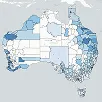

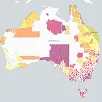


The total adult population (15 years or older) of Parkerville 6081 WA is 1,955, with a median age of 42. Of those, 54.22% are married, 11.36% are divorced or separated, 31.87% are single and 2.61% are widowed.
The average household size is 2.9 people per dwelling, and the median household monthly income is estimated to be $10,548. The median monthly mortgage repayment for households in this suburb is $2,015 which is 19.10% of their earnings.
Source: ABS Census Data (2021)