
Bedfordale, WA 6112

Good to know:
Bedfordale is a picturesque suburb located in the City of Armadale, Western Australia, with the postcode 6112. Nestled within the Darling Range, it is known for its semi-rural charm and expansive properties, often surrounded by lush natural bushland. The area offers a tranquil lifestyle with numerous outdoor recreational opportunities, including walking trails, parks, and the nearby Wungong Dam. Bedfordale is popular among families and nature enthusiasts seeking a peaceful retreat while still being accessible to the amenities of the larger Armadale region.
Read More
Bedfordale WA 6112 shows very expensive house prices (Typical Price $1,630,186) alongside an absence of reported rental returns (Median rent $0, Yield 0.0%). This combination makes Bedfordale WA 6112 property investment heavily skewed toward capital-growth and owner-occupier dynamics rather than yield-driven strategies. Typical market indicators — tight advertised stock (SoM 0.27%), fast selling (DOM 12 days) and a high IRSAD (1075) — point to a premium, tightly held suburban market; however extreme affordability pressure (Affordability 57 years) and elevated building approvals (BA Ratio 3.27%) introduce material risks to near-term market performance.
Property market outlook
Bedfordale’s house market is characterised by low visible supply and strong transactional velocity for the limited stock that appears. Stock on market at 0.27% is in the “opportune” range (tight supply) which supports upward price pressure for established houses. Days on market of 12 days corroborates strong demand for listed houses. Meanwhile Inventory at 2.78 months sits in the balanced range — sales are occurring but there isn’t a deep pool of stock. The suburb’s IRSAD of 1075 indicates a high socio-economic demographic, consistent with higher-value owner-occupier demand and lower rental market participation. On the other hand, an elevated Building Approvals Ratio (3.27%) signals above-average development activity relative to existing stock and could add supply into the market over the coming year, potentially moderating price momentum. Vacancy at 2.78% is neutral — rental market is neither undersupplied nor oversupplied by HTAG thresholds, but the reported Median Rent of $0 and a Yield of 0.0% indicate rental data are effectively non-existent or negligible for houses, reflecting a tiny rental market (RO ratio 3.0% opportune). Confidence in the underlying data is Medium, so treat micro-level rental signals cautiously.
Pros
- Tight listed supply (SoM 0.27%) and fast time-to-sell (DOM 12 days) support price resilience for established houses.
- High IRSAD (1075) — demographic profile consistent with premium pricing and strong owner-occupier demand.
- Low units-to-houses ratio (0.0%) and very low renter/owner ratio (3.0%) reduce competition from investment-grade unit stock and imply a predominantly owner-occupied market with limited investor churn.
- Hold period (8.65 years) in neutral range suggests a reasonable balance between turnover and tightly held stock — not a high-churn market.
- Buy Search Index at 6 (labelled neutral) indicates steady online demand relative to broader benchmarks.
Cons
- Median rent $0 and Yield 0.0%: rental market for houses is effectively absent or unreported — not a yield market by current data, below recommended minimums for income-focused investors.
- Affordability 57 years is extreme; house prices are out of reach for most local wage-based buyers, which may limit organic buyer pool and increase sensitivity to credit conditions.
- Building Approvals Ratio 3.27% is unfavourable — above-threshold development activity could increase supply pressure, particularly for new housing stock, and cap near-term capital gains.
- Vacancy at 2.78% is neutral but combined with negligible rental stock (RO ratio 3.0%) implies rental market metrics are thin and noisy; rental demand dynamics may change quickly once more stock is listed.
- Medium data confidence: some metrics (notably rent and yield) are likely affected by low listing volumes and should be interpreted conservatively.
Investment strategies
- Capital-growth focus: Bedfordale is primarily a long-hold capital-growth market for buyers who accept low-to-no immediate rental income. Target buyers with long horizons who prioritise location, lifestyle and land value capture.
- Off-market and owner-occupier-led acquisitions: With low visible stock and fast DOM, use off-market sourcing, relationships with local agents, and clinical negotiation to secure properties rather than relying on public listings.
- Land/value-add plays only if feasible: Given high approvals activity, investigate subdivision potential, boundary adjustments or investment in larger lots where planning upside exists; however verify local planning controls given potential developer interest.
- Avoid pure yield plays: Current median rent and yield data indicate bedrooms-holdings won’t deliver conventional rental returns. Consider joint-venture or equity strategies that focus on capital appreciation rather than immediate cashflow.
- Hedging development risk: Because BA Ratio is elevated, stagger acquisition timing or prioritise properties with unique attributes (e.g. larger land parcels, elevated outlook, strong heritage/amenity) less susceptible to generic new-supply competition.
- Due diligence on rental demand: If rental return is part of the strategy, commission local rental appraisals and investigate short-stay demand (if permitted) or niche leasing markets — but be mindful rental datasets are sparse.
Is Bedfordale WA 6112 a good suburb to invest in?
Bedfordale WA 6112 can be a good suburb to invest in for investors with a capital-growth, long‑hold mandate and the ability to source properties off-market or to execute value-adds that are insulated from rising development supply. It is not well-suited to investors seeking reliable immediate rental income or high gross yields: median rent is recorded as $0 and yield 0.0%, and the local market is overwhelmingly owner-occupied (RO ratio 3.0%). High IRSAD and rapid sales of limited stock support premium pricing, but extreme affordability (57 years) and elevated building approvals introduce downside risk if credit conditions tighten or if new supply materialises. Given Medium confidence in some metrics, prospects are best assessed with targeted local market enquiries and relative comparison to nearby suburbs offering clearer rental dynamics.
About HtAG Analytics Data
Key metrics reported at suburb/dwelling-type level include Typical Price, Median Rent, Sales and Rentals (monthly counts), Percentage Change over multiple horizons, Gross Rental Yield, Capital Growth (annualised estimate with low/high bounds), Total RoI (Yield + Capital Growth), Rent Increase (trend estimate), Volatility Index (MAPE-based), Confidence (data reliability), and the Relative Composite Score™. Fundamental contextual indicators include IRSAD, Renter/Owner ratio, Units/Houses ratio, UHV (units vs houses value), Years-to-Own (affordability), Growth Rate Cycle (GRC), Stock on Market (SoM and SoM%), Inventory (months of supply), Building Approvals and BA Ratio, Hold Period, Days on Market, Discounting, Vacancy, Buy & Rent Search Indices and Auction Clearance Rates. There are additional advanced metrics (population, estimated dwellings, school rank, infrastructure proxies, annual sales volume and distance to CBD) that supplement the base set.
HtAG’s metric methodology is designed to reflect both current micro-market conditions and historical trends so users can perform tightly localised, point-of-purchase comparisons. In the context of a suburb like Bedfordale WA 6112 this means our indicators aim to capture owner-occupier concentration, thin rental signals and local supply pressures in a way that differs from publicly focused data providers. While some organisations surface high-level public datasets for macro commentary, HTAG’s metrics are curated and measured to support direct market comparison and shortlist suburbs that align with specific investment entry points.
Note that the snapshot above reports current value metrics and doesn’t replace the importance of metric trends — rising or falling trajectories can materially alter an investment thesis. Some metrics carry greater weight for particular strategies (for example yield for cashflow investors, IRSAD and hold-period for long-term capital growth buyers). Market selection will therefore differ by budget, borrowing capacity, risk appetite and intended hold or refinance horizon. HTAG Analytics excels at producing relative shortlists tailored to those criteria rather than one-size-fits-all recommendations. For serious investors and real estate professionals, perform comparative analysis across a tailored set of locations that align with your strategy before committing capital.
Updated: 1 Jun 2026
Read Less
Quick Area Stats

Dwellings

Population

EDI

Bushfire Risk Index

Flood Risk Index
Education & Infrastructure
Sign Up to Access

School Rank

Infra. Spend
Market Trends
Essential metrics effectively streamline the process of identifying markets that match your financial situation and investment objectives. Typical Price, Indicative Yield and Total ROI provide a swift means to shortlist areas that resonate with what you’re seeking and can afford. These metrics also serve as valuable general trend indicators, allowing you to visualise transaction volumes and dynamics of change.
1M
1Q
1Y
3Y
5Y
7Y
10Y
1M
1Q
1Y
3Y
5Y
7Y
10Y

1M
1Q
1Y
3Y
5Y
7Y
10Y
The Growth Rate Cycle (GRC) is a metric used to analyse the year-on-year change in property values, providing insights into the growth cycle of a particular area. It uses the “typical price” metric to gauge property values more accurately than median prices, and includes both actual and projected data for the current year.

Fundamental metrics play a vital role in providing a comprehensive analysis of the socio-economic environment within a specific suburb or region. Additionally, the Return on Investment (ROI) and Volatility Index are crucial metrics that aid in evaluating the prospective profitability and the level of risk or stability in the market.
Socio-economics
Sign Up to Access

IRSAD

Renter to Owner

Units to Houses
Projections
Sign Up to Access

Projected Annual ROI

Volatility Index
Quick Area Stats
Sign Up to Access

Annual Sales Volume

Annual Rentals Volume



Stock on Market

Building Approvals

Inventory

Hold Period




Supply metrics are crucial in gauging both the existing volumes of real estate listed for sale and the properties anticipated to enter the market soon. A diminished supply could signal opportunities for price appreciation, particularly when there’s corresponding buyer demand to buoy the market. The Stock on Market and Inventory level metrics (current values) are presented as a 3-month rolling average of monthly data shown in the charts. This means the last 3 months of data are averaged. The BA Ratio represents the proportion of building approvals over the latest 12 months relative to the total dwellings in the area.

Days on Market

Search Index

Vacancy Rate

Clearance Rate




Demand metrics underscore the level of interest that potential property buyers or tenants have in a specific suburb or locality. When demand outstrips the available supply, or if the supply fails to meet the intensity of buyer/renter interest, there’s a potential for prices to climb, underscoring the pivotal relationship between demand dynamics and property value trends. The Days on Market and Clearance Rate metrics (current values) are presented as a 3-month rolling average of monthly data shown in the charts. This means the last 3 months of data are averaged.
We invite you to contribute to the conversation by sharing your thoughts or raising questions about this market in the comment section below.
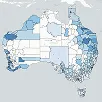

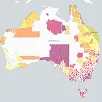


The total adult population (15 years or older) of Bedfordale 6112 WA is 2,460, with a median age of 42. Of those, 61.14% are married, 6.95% are divorced or separated, 28.90% are single and 2.97% are widowed.
The average household size is 3.1 people per dwelling, and the median household monthly income is estimated to be $11,204. The median monthly mortgage repayment for households in this suburb is $2,492 which is 22.24% of their earnings.
Source: ABS Census Data (2021)