
Mullaloo, WA 6027

Good to know:
Mullaloo, located in Western Australia with the postcode 6027, is a picturesque coastal suburb in the City of Joondalup. Known for its beautiful beaches, Mullaloo Beach is a popular spot for swimming, surfing, and family picnics, with pristine white sands and clear waters. The suburb features several parks, including Tom Simpson Park, which offers BBQ facilities, playgrounds, and ocean views. Mullaloo boasts a relaxed, family-friendly atmosphere with local cafes, shops, and easy access to public transport. Its proximity to Joondalup city centre makes it convenient for residents while maintaining a serene coastal vibe.
Read More
Mullaloo WA 6027 is a premium coastal suburb where the house market displays clear signs of tight supply and affluent demand. Mullaloo WA 6027 property market data shows a Typical Price for houses of $1,566,393, a Median Rent of $881 per week and a Gross Rental Yield of 2.92% — below the commonly cited 3% cashflow threshold. These headline figures already frame the trade-off: strong price levels underpinned by a high IRSAD (1090) and short days-on-market, but constrained rental returns and stretched affordability (54 years to own). For buyers agents and investors this suggests a capital-growth dominant market rather than a yield play; house prices in Mullaloo command a premium and transaction dynamics favour sellers.
Property market outlook
Mullaloo’s supply/demand balance is supportive of price resilience. Stock on Market at 0.38% is classified opportune (tight supply) and Days on Market of 21 days indicates brisk selling conditions. Inventory sits at 4.2 months (neutral), while Building Approvals Ratio of 0.81% is neutral — not signalling a material near-term wave of new stock. Demographically and socio‑economically the suburb is strong: IRSAD 1090 places Mullaloo in an affluent cohort, and the Renter/Owner ratio of 14.0% is opportune for owner-occupier dominance. Vacancy at 1.13% is in the balanced band, so rental demand is steady but not overheated. Confidence in the data is High, so these signals are reliable for shortlisting and comparative analysis.
Pros
- Tight listed supply: SoM 0.38% supports price stability and gives vendors pricing power.
- Affluent catchment: IRSAD 1090 signals a higher-income buyer base that can sustain premium house prices.
- Rapid transaction velocity: DOM 21 days implies strong buyer interest and low transaction friction.
- Low unit penetration: Units/Houses ratio 1.0% (opportune) reduces risk of oversupply from higher‑density stock and helps protect house values.
- High-quality owner-occupier market: Renter/Owner 14% indicates fewer purely rental-driven price cycles; appeals to long-term owner-occupiers.
Cons
- Low gross yields: 2.92% is below the 3% threshold — weak for income-focused investors and increases reliance on capital growth.
- Extreme affordability pressure: 54 years to own is very high and indicates entry barriers for local buyers, which can constrain buyer pool depth and resale liquidity over time.
- Neutral inventory and approvals: Inventory (4.2 months) and BA Ratio (0.81%) are not suppressing future supply risks entirely; any uptick in approvals or resale stock could soften pricing.
- Rental market not exceptional: Vacancy 1.13% is balanced — acceptable but not a high-demand rental hotspot; marginal rental growth potential relative to price base.
- Clearance Rate recorded as 0.0% (reported neutral) may reflect low auction volume — limited auction data can obscure some demand signals.
Investment strategies
- Capital-growth core: Target long-hold, low-leverage positions where capital appreciation driven by coastal premium and tight supply is the primary return engine. Expect lower initial yield; structure financing and cash buffers accordingly.
- Owner-occupier-led flips/re-sales: Use buyers‑agent expertise to identify houses with appeal to owner occupiers (school catchments, coastal access, renovation upside) to exploit shorter DOM and premium pricing.
- Renovation and amenity upgrade: Select properties where cosmetic or layout improvements can increase marketability in an affluent buyer pool—this can compress time-on-market and extract premium sale prices.
- Avoid yield-only plays: Mullaloo houses are a poor fit for investors requiring strong immediate cashflow. If yield is essential, consider searching neighbouring suburbs with lower price base or purpose-built units where UHV Ratio and yields may be more favourable (but only after unit-market specific analysis).
- Hedged portfolio approach: Combine Mullaloo exposure with higher-yielding assets elsewhere to balance portfolio cashflow while retaining access to Mullaloo’s anticipated capital growth.
- Due diligence checklist: Verify recent comparable sales, inspect coastal erosion/flood planning overlays, confirm local school catchments, and model stress-tested servicing at higher interest rates given the high price base and long affordability years.
Is Mullaloo WA 6027 a good suburb to invest in?
Yes — if your strategy is focused on capital growth and you can accept low immediate rental yields and higher entry price. Mullaloo’s tight stock on market, affluent demographics (IRSAD 1090), and quick DOM point to a seller’s market and ongoing demand for premium houses. No — if you require positive cashflow from day one or need rapid liquidity; the sub-3% yield and 54-year affordability metric mean this market is less suitable for yield-first investors or those with short sell/refinance horizons. Buyers agents should treat Mullaloo as a target for lifestyle or growth allocations within a diversified portfolio, and use relative suburb analysis to optimise entry price and timing.
About HtAG Analytics Data
Base metrics used in this summary (per dwelling type unless stated) include: Typical Price, Median Rent, Sales, Rentals, Δ Change (period % change), Gross Rental Yield, Capital Growth (annualised estimate with low/high bounds), Total RoI (Yield + CG), Rent Increase (annualised estimate), Volatility Index, Confidence, Relative Composite Score™, IRSAD, Renter/Owner ratio, Units/Houses ratio, Years to Own (Affordability), Growth Rate Cycle, Stock on Market (SoM) & SoM%, Inventory (months), Building Approvals & BA Ratio, Hold Period, Days on Market, Discounting, Vacancy Rate, Vacancies, DoRM, Buy & Rent Search Index, Auction Clearance Rate, Population and Estimated Dwellings. There are additional advanced metrics and variations recorded on HtAG suburb dashboards; the list above represents the core set reported in our standard suburb summaries.
HtAG metrics are designed to capture both current market conditions in the suburb and its historical trends to enable robust relative market analysis at the point of purchase. In practice this means our measurement and curation choices — while sometimes sharing metric names with public providers — are tuned to shortlists that matter to buyers agents and professional investors. Public datasets that drive media coverage typically emphasise broad trends; HtAG’s approach weights suburb‑level supply/demand signals, transaction velocity and confidence measures to better reflect what matters when underwriting a specific Mullaloo WA 6027 house purchase.
The market snapshot above reports current value metrics for Mullaloo houses but does not substitute for trend analysis: metric direction and volatility can materially change the attractiveness of a suburb. Some metrics carry more weight depending on strategy (for example yield versus capital growth), and individual investor outcomes vary with budget, borrowing capacity, risk tolerance and intended hold/refinance horizons. HtAG excels at shortlisting and ranking suburbs against specific criteria rather than offering one-size-fits-all conclusions — for serious investors and buyers agents we recommend relative analysis across comparator suburbs that match your investment parameters.
Updated: 1 May 2026
Read Less
Quick Area Stats

Dwellings

Population

EDI

Bushfire Risk Index

Flood Risk Index
Education & Infrastructure
Sign Up to Access

School Rank

Infra. Spend
Market Trends
Essential metrics effectively streamline the process of identifying markets that match your financial situation and investment objectives. Typical Price, Indicative Yield and Total ROI provide a swift means to shortlist areas that resonate with what you’re seeking and can afford. These metrics also serve as valuable general trend indicators, allowing you to visualise transaction volumes and dynamics of change.
1M
1Q
1Y
3Y
5Y
7Y
10Y
1M
1Q
1Y
3Y
5Y
7Y
10Y

1M
1Q
1Y
3Y
5Y
7Y
10Y
The Growth Rate Cycle (GRC) is a metric used to analyse the year-on-year change in property values, providing insights into the growth cycle of a particular area. It uses the “typical price” metric to gauge property values more accurately than median prices, and includes both actual and projected data for the current year.

Fundamental metrics play a vital role in providing a comprehensive analysis of the socio-economic environment within a specific suburb or region. Additionally, the Return on Investment (ROI) and Volatility Index are crucial metrics that aid in evaluating the prospective profitability and the level of risk or stability in the market.
Socio-economics
Sign Up to Access

IRSAD

Renter to Owner

Units to Houses
Projections
Sign Up to Access

Projected Annual ROI

Volatility Index
Quick Area Stats
Sign Up to Access

Annual Sales Volume

Annual Rentals Volume



Stock on Market

Building Approvals

Inventory

Hold Period




Supply metrics are crucial in gauging both the existing volumes of real estate listed for sale and the properties anticipated to enter the market soon. A diminished supply could signal opportunities for price appreciation, particularly when there’s corresponding buyer demand to buoy the market. The Stock on Market and Inventory level metrics (current values) are presented as a 3-month rolling average of monthly data shown in the charts. This means the last 3 months of data are averaged. The BA Ratio represents the proportion of building approvals over the latest 12 months relative to the total dwellings in the area.

Days on Market

Search Index

Vacancy Rate

Clearance Rate




Demand metrics underscore the level of interest that potential property buyers or tenants have in a specific suburb or locality. When demand outstrips the available supply, or if the supply fails to meet the intensity of buyer/renter interest, there’s a potential for prices to climb, underscoring the pivotal relationship between demand dynamics and property value trends. The Days on Market and Clearance Rate metrics (current values) are presented as a 3-month rolling average of monthly data shown in the charts. This means the last 3 months of data are averaged.
We invite you to contribute to the conversation by sharing your thoughts or raising questions about this market in the comment section below.
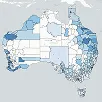

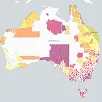


The total adult population (15 years or older) of Mullaloo 6027 WA is 4,966, with a median age of 41. Of those, 56.93% are married, 9.44% are divorced or separated, 30.65% are single and 3.00% are widowed.
The average household size is 2.8 people per dwelling, and the median household monthly income is estimated to be $11,084. The median monthly mortgage repayment for households in this suburb is $2,383 which is 21.50% of their earnings.
Source: ABS Census Data (2021)