
Burnside, SA 5066

Good to know:
Burnside, located in the eastern suburbs of Adelaide, South Australia, with postcode 5066, is an affluent, leafy area known for its picturesque scenery and community charm. Established in the mid-19th century, it boasts a blend of historic and modern homes. Key attractions include the Burnside Village Shopping Centre and sprawling parks, such as Hazelwood Park, which features the popular Burnside Swimming Centre. The suburb is well-serviced by quality schools, making it a preferred choice for families. Its proximity to the Adelaide CBD, just 7 kilometres away, adds to its appeal.
Read More
Burnside SA 5066 shows a high-value house market: Typical price $1,741,825, median rent $790 pw and a gross yield of 2.36% — the yield sits below a commonly-cited 3% cashflow threshold. This Burnside SA 5066 property market combines very tight supply (SoM 0.12%, inventory 1.13 months) with low vacancy (0.83%) and a high socio-economic score (IRSAD 1112) — characteristics that generally support premium house prices in Burnside but also push affordability to extreme levels (Years to Own 66).
Market signals point to capital-growth orientation rather than yield: tight listings and low rental vacancy create price support and low downside from oversupply, while the low yield and 66-year affordability estimate increase sensitivity to interest-rate rises and limit the pool of yield-focused buyers.
Property market outlook
Burnside houses sit in the high-end tier of Adelaide’s inner-eastern suburbs. Inventory and stock-on-market are in the opportune range (very low supply), which historically supports price firmness and upward pressure on house prices in Burnside when demand is steady. Vacancy at 0.83% signals elevated rental tightness — positive for capital growth and for selective investors seeking rental security, but the 2.36% gross yield is materially below typical yield expectations, meaning rental income will not cover a large portion of holding costs. IRSAD 1112 indicates a wealthy demographic profile and correlates with premium pricing and stronger preservation of capital; conversely the affordability estimate (66 years) is an extreme outlier that limits local buyer pool and increases reliance on well-capitalised purchasers. Days on market (55) and hold period (9.6 years) are neutral: sales are not ultra-rapid, but properties are not churned frequently either. Overall the outlook favours long-term capital growth for cash-rich investors or owner-occupiers, while cashflow-sensitive strategies face headwinds.
Pros
- Very tight supply: SoM 0.12% and inventory 1.13 months — supports price resilience and lower downside from increased listings.
- Strong socio-economic profile: IRSAD 1112 — tends to correlate with sustained demand for quality housing and better long-term capital growth prospects.
- Low rental vacancy: 0.83% — indicates rental demand and lower landlord downtime between tenancies.
- High data confidence: Confidence is High — the dataset is robust for strategic decision-making.
- Neutral building approvals (0.81%) and hold period (9.6 years) reduce risk of near-term oversupply from new builds while showing established ownership patterns.
Cons
- Low gross yield: 2.36% — below the 3% cashflow threshold; expect negative or minimal cashflow unless financed very conservatively.
- Extremely poor affordability: Years to Own 66 — a structural barrier limiting owner-occupier demand and increasing exposure to shifts in finance conditions.
- Buyer search and auction signals muted: Buy Search Index 5 (neutral) and Clearance Rate 0% (neutral due to low-auction market) — liquidity can be constrained for certain property types and price points.
- Renter/Owner ratio 17% (neutral) suggests a mixed tenure profile; combined with high prices this can reduce the depth of the investor market.
Investment strategies
- Growth-focused buy-and-hold (suitable): Target well-located, larger houses or renovated period homes that appeal to wealthy owner-occupiers. Tight supply and strong socio-economic fundamentals support long-run capital appreciation. Accept low short-term yield and plan for long hold horizons.
- Renovation / value-add for margin: Consider properties with scope for modernisation or better floorplans to capture price premium in a high-IRSAD suburb. Renovations that increase appeal to owner-occupiers will align with the buyer pool.
- High-equity acquisitions: Use low LTV or cash to reduce refinancing and interest-rate risk given weak yield and extreme affordability pressures. This suits investors with strong balance sheets or those using gearing conservatively.
- Avoid yield-first strategies: Do not plan on relying on rental return for cashflow-driven models unless you can boost yield via subdivision, secondary dwellings, or converting uses (subject to approvals and market fit).
- Buyers agents / selective bidding: For practitioners, prioritise off-market and discreet opportunities; auctions are not the primary clearance mechanism here, and competition comes from well-funded owner-occupiers.
- Portfolio diversification: If adding Burnside to a broader portfolio, size the exposure to limit interest-rate sensitivity and hedge with higher-yield assets elsewhere.
Is Burnside SA 5066 a good suburb to invest in?
It depends on your strategy and balance-sheet. For investors focused on long-term capital growth, low supply, low vacancy and a high IRSAD make Burnside an appealing market where house prices in Burnside are likely to hold up and appreciate over time. For yield- or income-focused investors, Burnside houses are unattractive in isolation because the 2.36% gross yield is below typical cashflow requirements; expect ongoing negative carry unless you have substantial equity or very favourable finance. Liquidity can be constrained at the upper end, so this market suits well-funded, patient investors or owner-occupiers rather than leveraged yield-seekers.
About HtAG Analytics Data
Base metrics reported by HtAG include Typical Price, Median Rent, Sales, Rentals, Change (% over time), Gross Rental Yield, Capital Growth (annual forecast with low/high bounds), Total RoI (yield + growth), Rent Increase (forecast), Volatility Index (MAPE-based), Confidence (data reliability), and the Relative Composite Score™. Fundamental context metrics reported include IRSAD ranges, Renter/Owner ratio, Unit/House mix and value ratios, Years to Own (affordability) and Growth Rate Cycle classifications. Supply signals include Stock on Market (SoM and SoM%), Inventory (months), Building Approvals and BA Ratio, and Hold Period. Demand signals include Days on Market, Discounting, Vacancy Rate and Vacancies, Days on Rental Market, Buy & Rent Search Index, and Auction Clearance Rates. There are more advanced metrics available on suburb dashboards (school rank, population, non-residential approvals per capita, annual sales volume and distance to CBD) beyond this base set.
The guiding principle behind HtAG metrics is to capture both current market conditions and historical trends so investors and buyers agents can perform relative analysis close to the point of purchase. In practice this means HtAG combines typical price and rental dynamics with supply and demand indicators to produce suburb-level signals that differ from providers focused mainly on public aggregates or media narratives. Although metric names may look similar across providers, HtAG’s curation and measurement choices prioritise comparability between suburbs at transaction-relevant scales.
Note also that the snapshot above reports current value metrics but does not show their trend paths — trends can materially change the investment case. Some metrics carry more weight than others depending on strategy and timeframe, and different investors will shortlist different suburbs based on budget, borrowing capacity, risk appetite and intended sell or refinance horizons. HtAG’s tools are designed to shortlist and rank markets according to individual criteria rather than offering one-size-fits-all conclusions; for serious investors and buyer agents we recommend running relative analyses across a set of candidate suburbs aligned to your objectives.
Updated: 1 May 2026
Read Less
Quick Area Stats

Dwellings

Population

EDI

Bushfire Risk Index

Flood Risk Index
Education & Infrastructure
Sign Up to Access

School Rank

Infra. Spend
Market Trends
Essential metrics effectively streamline the process of identifying markets that match your financial situation and investment objectives. Typical Price, Indicative Yield and Total ROI provide a swift means to shortlist areas that resonate with what you’re seeking and can afford. These metrics also serve as valuable general trend indicators, allowing you to visualise transaction volumes and dynamics of change.
1M
1Q
1Y
3Y
5Y
7Y
10Y
1M
1Q
1Y
3Y
5Y
7Y
10Y

1M
1Q
1Y
3Y
5Y
7Y
10Y
The Growth Rate Cycle (GRC) is a metric used to analyse the year-on-year change in property values, providing insights into the growth cycle of a particular area. It uses the “typical price” metric to gauge property values more accurately than median prices, and includes both actual and projected data for the current year.

Fundamental metrics play a vital role in providing a comprehensive analysis of the socio-economic environment within a specific suburb or region. Additionally, the Return on Investment (ROI) and Volatility Index are crucial metrics that aid in evaluating the prospective profitability and the level of risk or stability in the market.
Socio-economics
Sign Up to Access

IRSAD

Renter to Owner

Units to Houses
Projections
Sign Up to Access

Projected Annual ROI

Volatility Index
Quick Area Stats
Sign Up to Access

Annual Sales Volume

Annual Rentals Volume



Stock on Market

Building Approvals

Inventory

Hold Period




Supply metrics are crucial in gauging both the existing volumes of real estate listed for sale and the properties anticipated to enter the market soon. A diminished supply could signal opportunities for price appreciation, particularly when there’s corresponding buyer demand to buoy the market. The Stock on Market and Inventory level metrics (current values) are presented as a 3-month rolling average of monthly data shown in the charts. This means the last 3 months of data are averaged. The BA Ratio represents the proportion of building approvals over the latest 12 months relative to the total dwellings in the area.

Days on Market

Search Index

Vacancy Rate

Clearance Rate




Demand metrics underscore the level of interest that potential property buyers or tenants have in a specific suburb or locality. When demand outstrips the available supply, or if the supply fails to meet the intensity of buyer/renter interest, there’s a potential for prices to climb, underscoring the pivotal relationship between demand dynamics and property value trends. The Days on Market and Clearance Rate metrics (current values) are presented as a 3-month rolling average of monthly data shown in the charts. This means the last 3 months of data are averaged.
We invite you to contribute to the conversation by sharing your thoughts or raising questions about this market in the comment section below.
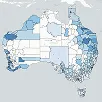

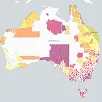


The total adult population (15 years or older) of Burnside 5066 SA is 2,464, with a median age of 43. Of those, 57.39% are married, 9.17% are divorced or separated, 27.80% are single and 5.52% are widowed.
The average household size is 2.7 people per dwelling, and the median household monthly income is estimated to be $11,320. The median monthly mortgage repayment for households in this suburb is $2,400 which is 21.20% of their earnings.
Source: ABS Census Data (2021)