
Hectorville, SA 5073

Good to know:
Hectorville, located in South Australia and bearing the postcode 5073, is a residential suburb nestled approximately 10 km east of Adelaide’s CBD. Known for its family-friendly atmosphere, the suburb blends suburban tranquility with convenient urban access. Hectorville features a mix of older and newer homes, parks like Daly Street Reserve, and local amenities, including schools, shops, and eateries. It's well-served by public transport, making commutes straightforward. Rich in Italian heritage, Hectorville is a multicultural community with a welcoming vibe, ideal for families and professionals seeking a balanced lifestyle.
Read More
Hectorville SA 5073 shows a tight, low-inventory house market with a typical house price of $1,224,270, median rent $725 per week and a gross yield of 3.08%. The Hectorville property market combines strong socio-economic indicators (IRSAD 976) and very low stock on market (0.11%, inventory 0.63 months) with high measured unaffordability (67 years), producing a market that favours well‑capitalised, growth‑oriented buyers rather than yield seekers or entry‑level purchasers.
Property market outlook
Hectorville SA 5073 house prices are being supported by structurally tight supply and quick turnover. Stock on market at 0.11% and inventory of 0.63 months are both in the “opportune” range — these are clear supply-side constraints that tend to support price resilience and upside when demand persists. Days on market of 16 days confirms strong transaction velocity; vendors are able to transact quickly which compresses negotiation margins.
At the same time affordability sits at an extreme (67 years to own under our standard measure), meaning local income levels relative to house prices severely constrain the addressable buyer pool. That limits broad-based demand and increases reliance on higher‑income buyers, investors with capacity, or external buyer flows. Yield of 3.08% is marginally above our 3% floor but low in absolute terms for investors focused on cash flow. Vacancy at 1.43% is neutral — the rental market is balanced, so rental risk is moderate but not negligible.
Neutral building approvals (BA ratio 1.12%) and hold period near 10 years (9.94) suggest established stock is relatively stable and forthcoming new supply is unlikely to rapidly loosen the market. Overall, Hectorville is a supply-constrained, higher‑priced Adelaide suburb that tends to reward long-term, well-funded investors and owner-occupiers seeking capital growth rather than short-term yield plays.
Pros
- Tight supply dynamics: SoM 0.11% and inventory 0.63 months indicate scarce available stock — supportive of capital growth for well-priced properties.
- Quick sales: DOM 16 days signals strong transactional demand and limited vendor discounting.
- Strong socio-economic profile: IRSAD 976 (opportune) supports premium pricing and buyer quality.
- Rental market balance: Vacancy 1.43% is within balanced range, lowering extreme rental risk.
- Data confidence: High confidence in the metrics increases reliability of tactical decisions.
Cons
- Severe affordability constraint: 67 years to own is a pronounced outlier — reduces the volume of owner‑occupier entrants and increases exposure to price sensitivity if financing conditions tighten.
- Low gross yield: 3.08% is only just above our minimum guideline; cash-flow negative scenarios are more likely unless the investor has strong servicing capacity or can add value.
- Buyer profile concentration: Neutral renter/owner (38%) and unit/house mix (20% units) suggest demand is concentrated in owner-occupiers and houses — less diversity in tenant demand.
- Limited upside from approvals: BA ratio 1.12% is neutral — new supply is unlikely to materially increase, but it also won’t add a major positive stimulus to activity.
- Clearance rate reported as 0% (neutral), which can indicate few auctions — makes market price discovery different from traditional auction-driven markets.
Investment strategies
- Capital growth orientation (preferred): Target quality, well-located houses that trade quickly in low supply environments. Expect to hold 7–15+ years to capture the full benefit of supply constraints and socio-economic premium.
- Buyers agent approach: Prioritise off‑market opportunities and be prepared to act fast with pre-approved finance or cash to win competitive processes; quick due diligence is essential given 16‑day DOM.
- Value‑add for yield improvement: If yield is a constraint, focus on renovations that increase rent (kitchen/bath upgrades, adding bathrooms or living spaces) or consider subdividing/dual-income options only where zoning and approvals allow.
- Finance risk management: Maintain conservative serviceability buffers. High price and low yield increase sensitivity to interest rate rises — structure loans with contingency and staggered refinances.
- Tenant strategy: Given balanced vacancy, aim for quality tenant profiles (families/professionals) to reduce churn — target properties near amenity and schools if available.
- Alternative: Yield-seeking investors should consider smaller nearby suburbs with lower entry prices or unit stock with higher yields; Hectorville is less suitable where cash-flow positive outcome is primary.
Is Hectorville SA 5073 a good suburb to invest in?
It depends on investor objectives. For long‑term capital-growth investors with capacity to withstand low initial yields and who prioritise quality, low‑supply suburbs, Hectorville SA 5073 is attractive: tight inventory, quick sales and a high IRSAD support price resilience. For investors prioritising immediate positive cashflow, short hold periods, or entry-level purchases, Hectorville is less suitable due to its very poor affordability (67 years) and modest gross yields (~3.08%). Buyers agents will find the market competitive but predictable — success requires speed, selectivity and a willingness to pay a premium for quality and location.
About HtAG Analytics Data
HtAG reports a set of core suburb metrics designed for relative market comparison and shortlist creation. Key metrics (base set shown here) include Typical Price, Median Rent, Sales and Rentals counts, Δ Change over time, Gross Rental Yield, Capital Growth (annualised with low/high bounds), Total RoI (yield + CG), Rent Increase (projected p.a.), Volatility Index (MAPE‑based), Confidence (data reliability), and a Relative Composite Score™. There are additional supply, demand and demographic measures available on our dashboards.
Selected metric ranges and interpretations we use (examples from our dictionary): IRSAD — opportune above 950, neutral 920–950, unfavourable below 920; Renter/Owner ratio — opportune <15%, neutral 15–45%, unfavourable >45%; Unit/House share — opportune <10%, neutral 10–50%, unfavourable >50%; Years to Own (affordability) — >30 years indicates low affordability; Stock on Market % — low supply <0.4%, balanced 0.4–1.3%, high supply >1.3%; Inventory months — low supply <2.1 months, balanced 2.1–4.5, high >4.5; Days on Market — high demand 0–35 days, balanced 35–90, low demand >90. These are a selection — HTAG dashboards contain more metrics and granularity.
HtAG’s methodology is built to capture both current market conditions and historical behaviour to enable tight, point‑of‑purchase comparison between suburbs. In a suburb context like Hectorville SA 5073, that means our metrics blend recent transaction velocity, supply metrics and socio-economic indicators to assess how a specific locality performs relative to nearby markets. While other providers (for example some public data aggregators) focus on broader trend narratives, HTAG’s measures are curated and calibrated to support decisions at the suburb and dwelling‑type level — the same metric names can be produced differently depending on the curation and measurement choices we make.
Finally, the numbers above are a snapshot and do not replace trend analysis. Metric trends (direction and volatility), the relative weight of individual measures, and investor-specific factors (budget, borrowing capacity, time horizon, risk appetite) materially change where a suburb sits on your shortlist. HTAG specialises in shortlist generation and relative comparison tuned to an investor’s criteria rather than a one‑size‑fits‑all recommendation. For serious investors and buyer agents we recommend combining this snapshot with trend diagnostics and comparative analysis across multiple candidate suburbs.
Updated: 1 May 2026
Read Less
Quick Area Stats

Dwellings

Population

EDI

Bushfire Risk Index

Flood Risk Index
Education & Infrastructure
Sign Up to Access

School Rank

Infra. Spend
Market Trends
Essential metrics effectively streamline the process of identifying markets that match your financial situation and investment objectives. Typical Price, Indicative Yield and Total ROI provide a swift means to shortlist areas that resonate with what you’re seeking and can afford. These metrics also serve as valuable general trend indicators, allowing you to visualise transaction volumes and dynamics of change.
1M
1Q
1Y
3Y
5Y
7Y
10Y
1M
1Q
1Y
3Y
5Y
7Y
10Y

1M
1Q
1Y
3Y
5Y
7Y
10Y
The Growth Rate Cycle (GRC) is a metric used to analyse the year-on-year change in property values, providing insights into the growth cycle of a particular area. It uses the “typical price” metric to gauge property values more accurately than median prices, and includes both actual and projected data for the current year.

Fundamental metrics play a vital role in providing a comprehensive analysis of the socio-economic environment within a specific suburb or region. Additionally, the Return on Investment (ROI) and Volatility Index are crucial metrics that aid in evaluating the prospective profitability and the level of risk or stability in the market.
Socio-economics
Sign Up to Access

IRSAD

Renter to Owner

Units to Houses
Projections
Sign Up to Access

Projected Annual ROI

Volatility Index
Quick Area Stats
Sign Up to Access

Annual Sales Volume

Annual Rentals Volume



Stock on Market

Building Approvals

Inventory

Hold Period




Supply metrics are crucial in gauging both the existing volumes of real estate listed for sale and the properties anticipated to enter the market soon. A diminished supply could signal opportunities for price appreciation, particularly when there’s corresponding buyer demand to buoy the market. The Stock on Market and Inventory level metrics (current values) are presented as a 3-month rolling average of monthly data shown in the charts. This means the last 3 months of data are averaged. The BA Ratio represents the proportion of building approvals over the latest 12 months relative to the total dwellings in the area.

Days on Market

Search Index

Vacancy Rate

Clearance Rate




Demand metrics underscore the level of interest that potential property buyers or tenants have in a specific suburb or locality. When demand outstrips the available supply, or if the supply fails to meet the intensity of buyer/renter interest, there’s a potential for prices to climb, underscoring the pivotal relationship between demand dynamics and property value trends. The Days on Market and Clearance Rate metrics (current values) are presented as a 3-month rolling average of monthly data shown in the charts. This means the last 3 months of data are averaged.
We invite you to contribute to the conversation by sharing your thoughts or raising questions about this market in the comment section below.
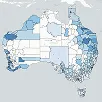

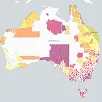


The total adult population (15 years or older) of Hectorville 5073 SA is 3,611, with a median age of 38. Of those, 45.42% are married, 11.88% are divorced or separated, 36.33% are single and 6.18% are widowed.
The average household size is 2.3 people per dwelling, and the median household monthly income is estimated to be $7,152. The median monthly mortgage repayment for households in this suburb is $1,700 which is 23.77% of their earnings.
Source: ABS Census Data (2021)